REVIEW · GENOA
Genoa: Columbus Trail Urban Trekking with Wine & Local Tastings
Book on GetYourGuide →Operated by BioTigullio5Terre - BioTigullio5Terre · Bookable on GetYourGuide
Columbus Trail in Genoa feels like theatre. You’ll stitch together street-level history and Liguria’s flavors on a calm, small-group loop that avoids the usual tourist rush.
I especially love how the route mixes big-name landmarks with the quieter texture of old Genoa—narrow alleys, votive shrines built into walls, and the changing scenery as you climb toward Castelletto. The final stop is equally memorable: Genoese focaccia, pesto made in a mortar, cheeses and cold cuts, plus two glasses of local wine.
One consideration: this is a real walking tour. Cobblestones, slopes, and stairs mean it’s not a good fit if you have limited mobility or you hate uphill.
In This Review
- Key points at a glance
- Why this Genoa walk feels local (and not like a checklist)
- Before you start: where the loop begins near Porta Soprana
- Palazzo San Giorgio and the Old Port core: power meets salt air
- Piazza Sarzano to the oratory and architecture faculty: the quiet layers
- San Giacomo della Marina and San Cosimo: walking through religious geography
- Via del Campo to Piazza Don Gallo: Genoa through artists’ footsteps
- The short but intense climb to Castelletto: earn the big view
- Castelletto Elevator: a fun descent that changes your pacing
- Piazza Fontane Marose to Via Garibaldi (UNESCO) and Piazza De Ferrari
- Ending back at Porta Soprana: passing Palazzo Ducale and Carlo Felice
- The included tasting at BioTigullio5Terre: pesto, wine, and the right timing
- Price and value: why $77 feels fair here
- Who should book this Columbus Trail trek
- What about weather? It runs, but you should be ready
- Booking advice: when this is the best use of your time
- Should you book this tour?
- FAQ
- Where does the tour start?
- How long is the walk?
- Is the route circular?
- How far do you walk?
- What’s included in the tasting?
- What wine is included?
- What languages is the guide available in?
- Is it suitable for people with reduced mobility?
- What should I wear for this tour?
Key points at a glance
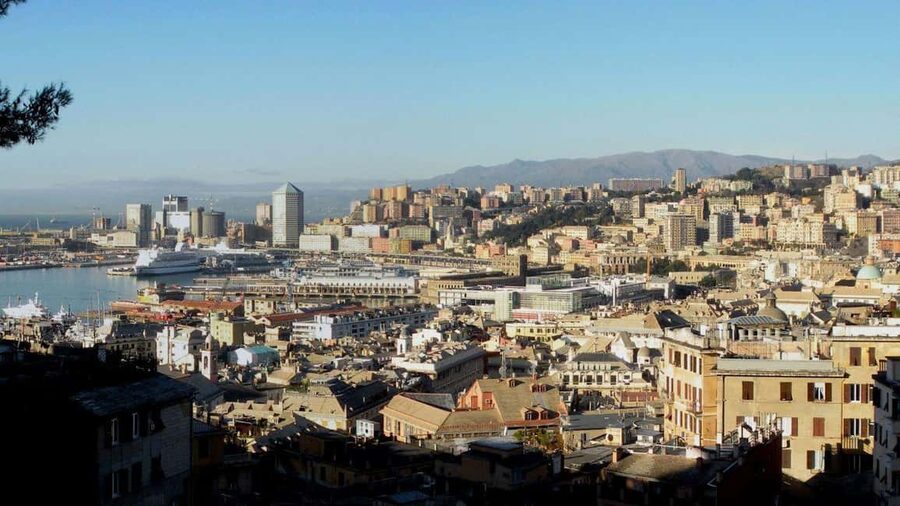
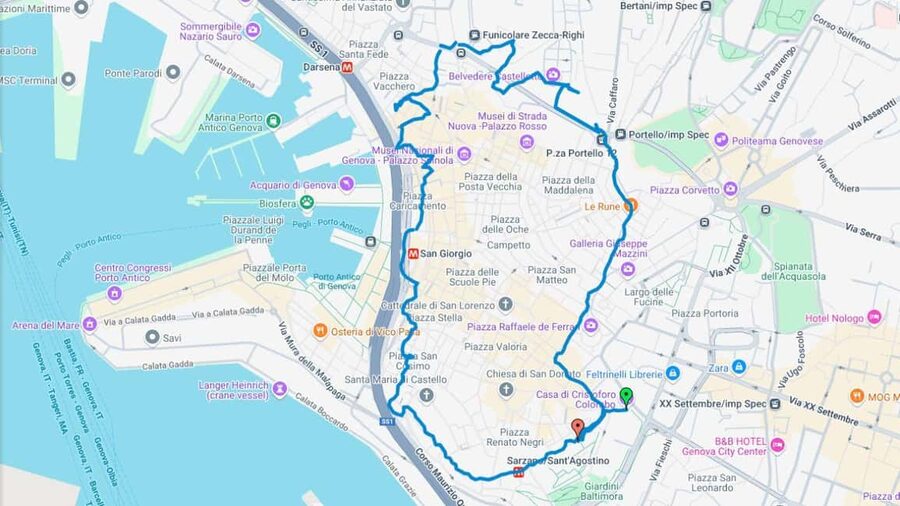
- Circular route, about 4 km, designed for an unhurried pace over roughly 3 hours
- Small group (up to 6) for a more personal, ask-a-question kind of experience
- Castelletto Elevator descent gives you a fun, scenic change of pace on the way back
- Wine tasting included with two specific Ligurian grapes: Vermentino/Pigato and Ciliegiolo/Rossese
- Official trail stamp at BioTigullio5Terre, starting and ending point on Via di Ravecca
- UNESCO-listed Via Garibaldi shows a different side of Genoa near the end of the loop
Why this Genoa walk feels local (and not like a checklist)
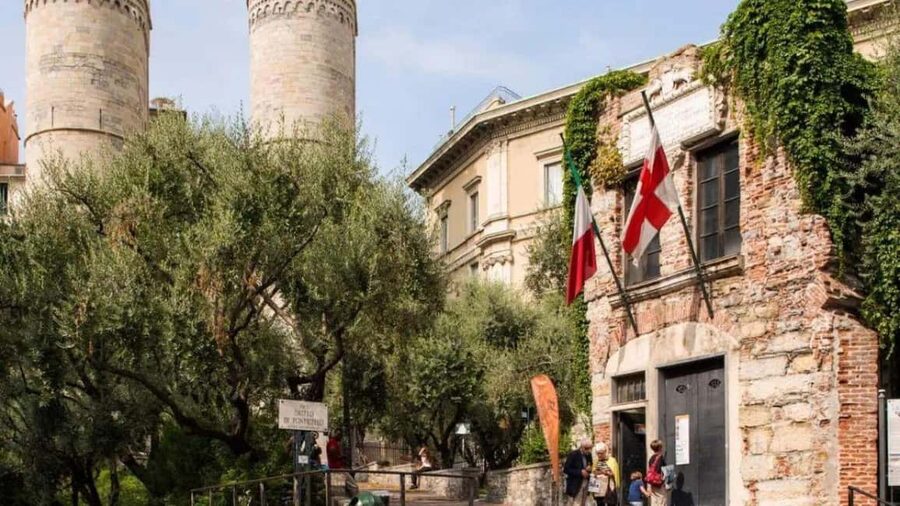
Genoa can be a little overwhelming at first. The streets are tight, the names pop up in unexpected places, and the city feels layered—medieval angles, port-era power, aristocratic buildings, then sudden modern bustle.
What I like about the Columbus Trail format is that it gives you a human pace for understanding Genoa. You walk as an urban traveler, not a passenger on a bus. And because the route is circular, you gradually build a mental map instead of getting lost every few turns.
The food part doesn’t feel like an afterthought either. The tasting lands at the end at BioTigullio5Terre, so you’re not distracted from the walk—you’re rewarded after you’ve seen where the flavors belong.
Before you start: where the loop begins near Porta Soprana
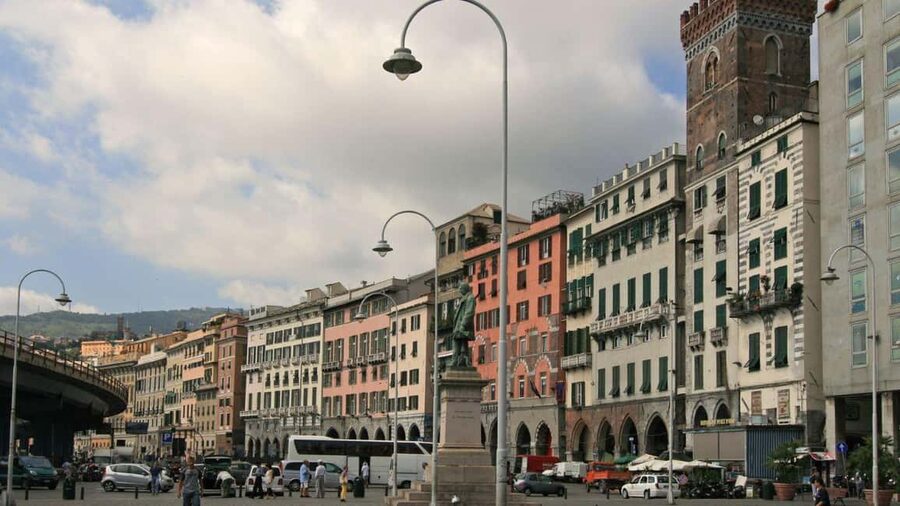
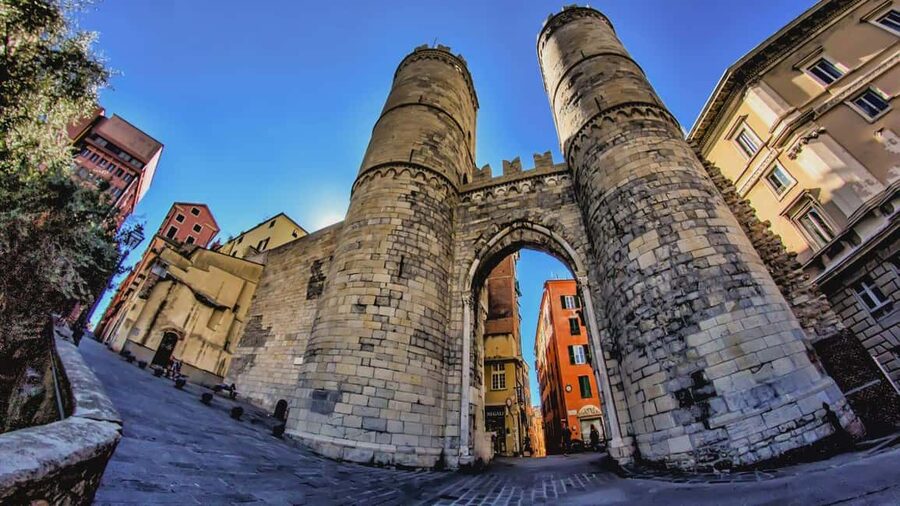
The tour’s meeting point is Casa di Cristoforo Colombo, near Porta Soprana, with the practical starting hub at Via di Ravecca 51/r. Plan to arrive about 10 minutes early so you’re not rushed at the beginning.
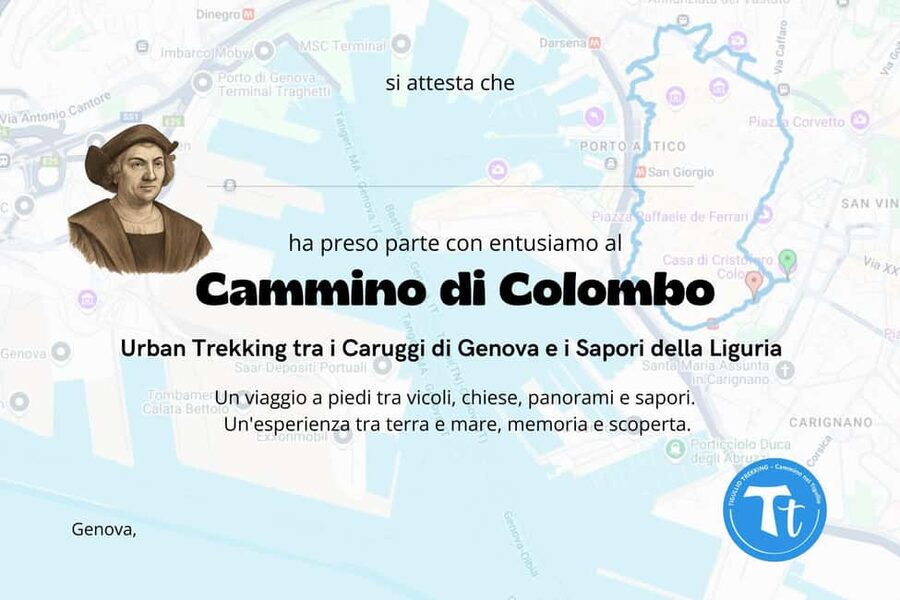
Right away, you’ll get the “legend of the walk” and an official stamp at BioTigullio5Terre. That little ritual matters more than you’d think. It turns the route into something you’re following with intention, not just moving through.
Tip: wear comfortable shoes that handle cobblestones. You’ll be on uneven ground and short climbs. If you’re the kind of person who hates laces-you-can’t-tie-or-unfriendly soles, treat this tour like you’re training for a casual hike.
Palazzo San Giorgio and the Old Port core: power meets salt air
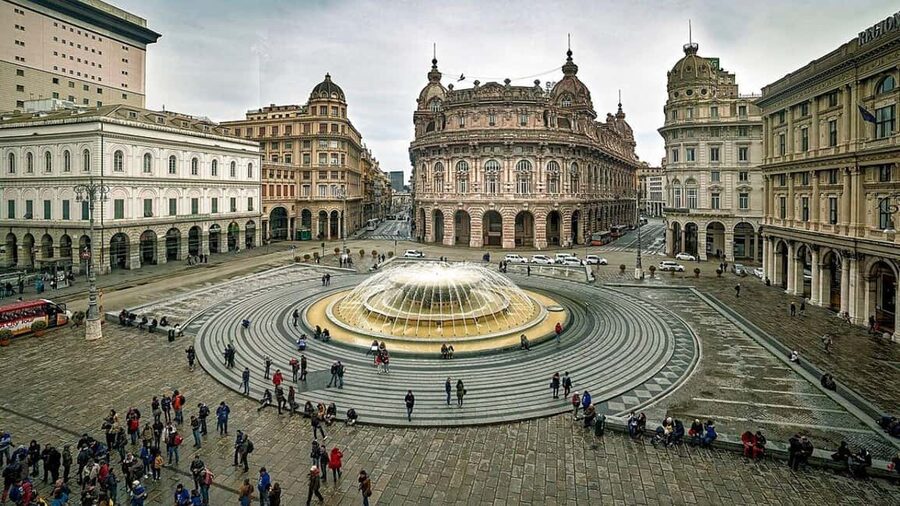
One of the smartest things about this itinerary is how it threads Genoa’s “big story” through real walking. You start with the Columbus theme, then the route pulls you into the older, more maritime heart of the city.
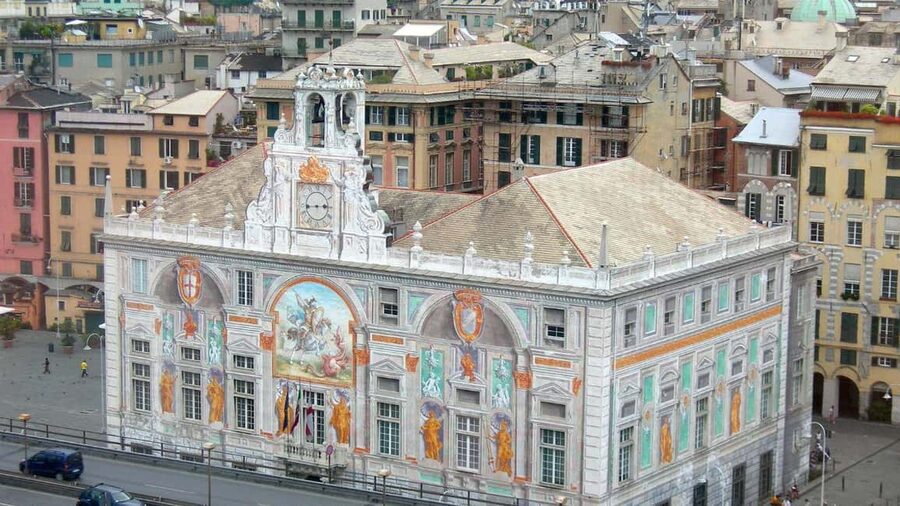
A key stop is Palazzo San Giorgio, a centerpiece on the route and the kind of place where Genoa’s historic wealth becomes visible even if you don’t know every detail yet. From here, you move toward the Old Port area, where the scenery makes more sense because you’re seeing it from street level.
You’ll also pass by the entrance to the Genoa Aquarium as you cross the port zone. Even if you don’t go inside, it gives you a real sense of how the city’s waterfront now balances heritage with modern tourism.
Practical note: this portion is visually rich, so you may be tempted to stop for photos constantly. That’s okay—just remember the tour is paced as a slow walk. If you want the full experience, keep your “photo stops” quick and let the guide manage the rhythm.
Piazza Sarzano to the oratory and architecture faculty: the quiet layers
Genoa isn’t just monumental views. It’s also the in-between spaces where people lived, prayed, worked, and argued. The Columbus Trail passes through several of those “layers.”
You’ll work through areas like Piazza Sarzano, the Oratory of Sant’Antonio Abate, and the Faculty of Architecture. These stops aren’t about forcing you into museum mode. They’re about showing you how the city’s culture sits in plain sight, right beside everyday life.
You’ll also spot details like votive shrines set into the walls along streets such as Via Mura delle Grazie. Those little elements are easy to miss alone, but on a guided loop they become signposts. They help you understand how Genoa expresses faith and memory in public space.
If you love cities where the “small stuff” means as much as the major landmarks, this mid-route section is a highlight.
San Giacomo della Marina and San Cosimo: walking through religious geography
As the route continues, it leans into the spiritual and historical geography of the city. Stops like San Giacomo della Marina and the Church of San Cosimo help you connect the dots between neighborhood identities and the older structures that still shape how Genoa feels.
This part of the walk also gives you variety in architecture and street atmosphere. The vibe can shift quickly—one lane feels hushed and shaded, another opens into a more exposed stretch where you catch sea air or broader views.
Downside? If churches and religious sites aren’t your thing, this can feel like “more wandering.” But the tradeoff is that you leave with a fuller sense of Genoa as a living city, not a theme park.
Via del Campo to Piazza Don Gallo: Genoa through artists’ footsteps
Then the tour swings into a street you’ll recognize even if you don’t know it yet: Via del Campo, famously linked with Fabrizio De André. This stop is a great example of how the Columbus Trail connects culture beyond architecture—music, identity, and street life.
You’ll continue toward Piazza Don Gallo, which also ties into the birthplace of Giuseppe Mazzini. That mix—artist one moment, political figure the next—keeps you from getting bored with one type of storytelling.
As you walk, pay attention to how the streets “bend” your perception. Genoa’s angles are part of the experience. You’re learning the city’s layout by moving through it, not by staring at a map for too long.
The short but intense climb to Castelletto: earn the big view
Eventually, you face the part that makes this tour worth it: the climb to Spianata di Castelletto. It’s described as short but intense—and I agree with that general idea. Don’t show up in sneakers that give you no grip, because you’ll feel the incline.
Once you reach Castelletto, the reward is a panoramic overlook that lets you see Genoa from sea to hinterland. This viewpoint step matters because it resets your understanding of the city. Up to this point, you’ve been “inside” Genoa. Now you get to see how everything connects.
If you like skyline views but hate lining up with hundreds of people, this is a calmer way to get the drama of elevation without turning the climb into a crowded event.
Castelletto Elevator: a fun descent that changes your pacing
After the view, the route becomes more playful. You descend by riding the Castelletto Elevator, referenced with cultural flair from poet Giorgio Caproni. Even if you’re not thinking about that connection, the elevator does its main job: it breaks the physical effort and keeps the loop from dragging.
This is also when you notice how the neighborhood “drops away.” The city starts to feel different—more street-level again, more lived-in, less about grand sightlines.
It’s a smart design choice for a 3-hour experience. You get the payoff of altitude and still arrive for the tasting without feeling wrecked.
Piazza Fontane Marose to Via Garibaldi (UNESCO) and Piazza De Ferrari
Back in the lower part of the city, the tour keeps its momentum. You’ll pass Piazza Fontane Marose, then head along Via Garibaldi, a UNESCO World Heritage Site for its historic buildings.
Via Garibaldi is one of those stretches where you stop saying “this is pretty” and start saying “oh, that’s why Genoa got powerful.” Even from the outside, the scale and style of the buildings tell you the city’s story.
The route then climbs via Via XXV Aprile and reaches Piazza De Ferrari, which functions as the heart of modern Genoa. That contrast is useful. It reminds you that Genoa isn’t frozen in time—it keeps evolving.
And yes, this part is still walking, so keep your pace steady. If you sprint uphill, you’ll pay for it later at the tasting.
Ending back at Porta Soprana: passing Palazzo Ducale and Carlo Felice
The tour closes the circle by dropping you back near Porta Soprana, with passes by Palazzo Ducale, the Carlo Felice Theater, and the Palazzo della Borsa. This final leg helps you see the full “old to present” arc without needing extra transport.
It’s also a good mental wrap-up. You started near Columbus’ house and ended in the same general zone, but your perspective is completely different now. You know why streets feel like corridors, why certain squares matter, and how the port and aristocratic buildings connect to the present.
The included tasting at BioTigullio5Terre: pesto, wine, and the right timing
Now for the part you’ll actually plan your day around: the food and wine.
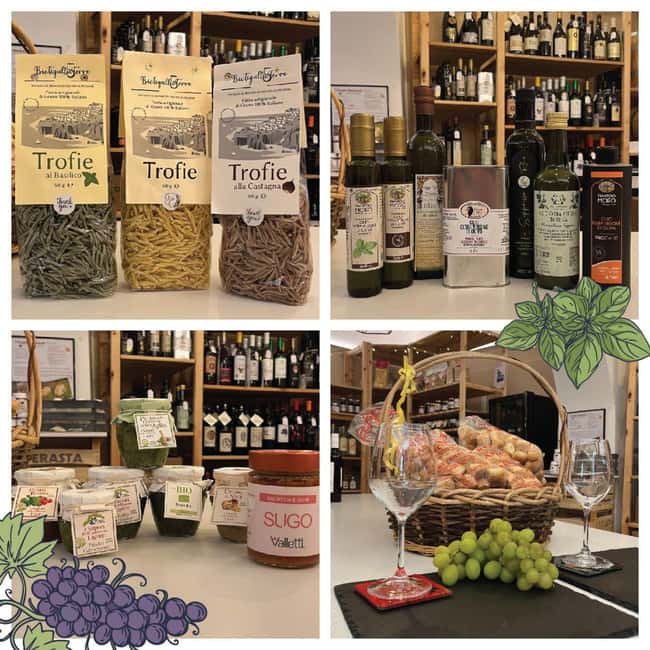
The tasting takes place at BioTigullio5Terre at Via di Ravecca 51/r. You’ll sample Genoese focaccia, pesto made in a mortar, artisanal cold cuts and cheeses, and you’ll get two glasses of Ligurian wine:
- one white (Vermentino/Pigato)
- one red (Ciliegiolo/Rossese)
I like that this isn’t a random platter. It’s built around classic Genoese staples, and the pesto detail matters. When pesto is made in a mortar, it feels more hands-on and more traditional than what you get in mass-prepared versions.
Two glasses of wine also make sense for a 3-hour walk: you get the local pairing without turning the tour into a sleepy nightcap. You’ll be finishing while still alert enough to keep exploring Genoa afterward.
Food tip: plan your next meal lightly. Once you’ve had focaccia, pesto, cheese, and cold cuts, you won’t want a huge dinner right away.
Price and value: why $77 feels fair here
At $77 per person for about 3 hours, the value comes from what’s bundled together.
You’re getting:
- a guided urban trek through multiple key areas of Genoa
- a small-group format (limited to 6)
- the map plus official trail legend and stamp
- a structured tasting with substantial items (not just a bite)
- two included glasses of Ligurian wine with named grapes
In many parts of Europe, a guided walking tour alone can cost close to this, and food + wine is usually extra. Here, the tasting is part of the experience arc, which makes the price feel more like “one package” than “pay again later.”
Who should book this Columbus Trail trek
This tour is a great fit if you want:
- a walk you can actually enjoy (not a sprint)
- real neighborhood texture in Genoa, away from only the headline attractions
- history and culture that connect to food, not history lectures
It’s also a nice choice for first-time visitors who feel a bit lost. The route gives you clear orientation while still feeling authentic.
It’s not ideal for:
- anyone needing step-free or reduced-mobility access
- young kids (the activity is not suitable for children under 16, and babies under 1 aren’t listed as appropriate)
What about weather? It runs, but you should be ready
The experience runs in light rain, and you’ll want an umbrella or raincoat. That’s a normal Genoa reality. If weather turns truly bad, it can be rescheduled or refunded.
Either way, the key is your footwear. Rain + cobblestones can be slippery, so bring something with grip and accept that your day might include a bit of damp air.
Booking advice: when this is the best use of your time
If you only have a short window in Genoa, I’d treat this as a “choose-your-story” tour. It’s not trying to cover everything. It focuses on a loop that teaches you the city through Columbus-linked landmarks, port-era power, and Genoese flavors.
Best timing: do it earlier rather than later. The panoramic view from Castelletto plus the UNESCO segment on Via Garibaldi will make your later self-guided wandering much easier.
And if you hate crowded tours, the small group limit is a big part of the appeal. You’ll get more chances to ask questions and more room to enjoy street-level Genoa.
Should you book this tour?
Yes—if you want Genoa in motion, with food that’s actually tied to the city and a route that makes sense in one sitting. The Castelletto viewpoint, the Castelletto Elevator descent, and the tasting with pesto made in a mortar are the kind of combinations that leave you satisfied without needing extra planning.
Skip it if you’re not comfortable with uphill walking on cobblestones or you need accessibility support that the route can’t provide.
If you’re choosing between a big, crowded “highlights” tour and a calmer, local-feeling walk, the Columbus Trail is the one that fits the day you’ll remember.
FAQ
Where does the tour start?
It starts at Casa di Cristoforo Colombo near Porta Soprana, with the route hub at Via di Ravecca 51/r (BioTigullio5Terre).
How long is the walk?
The experience lasts about 3 hours.
Is the route circular?
Yes. It’s a circular loop that returns to the starting area near Porta Soprana.
How far do you walk?
The walking route is about 4 km.
What’s included in the tasting?
The tasting at the end includes Genoese focaccia, pesto made in a mortar, artisanal cold cuts and cheeses, and two glasses of Ligurian wine.
What wine is included?
You get one white wine (Vermentino/Pigato) and one red wine (Ciliegiolo/Rossese).
What languages is the guide available in?
The tour guide leads in Italian and English.
Is it suitable for people with reduced mobility?
No. The tour is not suitable for people with reduced mobility due to the walking conditions and route.
What should I wear for this tour?
Wear comfortable shoes for walking on cobblestones and slopes and bring an umbrella or raincoat if the weather looks wet.