REVIEW · URUBAMBA
From Cusco: Salkantay trek 5 days/4 nights meals included
Book on GetYourGuide →Operated by Libertrek Peru Travel Agency · Bookable on GetYourGuide
Weather changes fast here. One day is mountains; the next is something else entirely. I love the climate swing as you climb to the Salkantay Pass and then drop into greener valleys, and I also love how this trip feeds you like a real expedition, with a professional chef and proper meals at camp. One drawback to flag upfront: this trek is demanding. If you’re not fit for long uphill days at altitude, you’ll feel it.
What makes it especially compelling is the full storyline: Humantay Lake, the high pass, valley hiking, then original Inca routes that build toward Machu Picchu. You get a small group (up to 18) and guided time at Machu Picchu with an expert guide, plus camping nights with real comfort features. Still, you should go in with the right mindset: this is a hike-first adventure, not a comfort-first sightseeing bus ride.
In This Review
- Key takeaways before you commit
- Cusco to Salkantay Pass: why this route feels so different
- Day-by-day: what you actually do on each trek morning
- Day 1: Cusco → Soraypampa → Humantay Lake → Quiswarniyoc camp
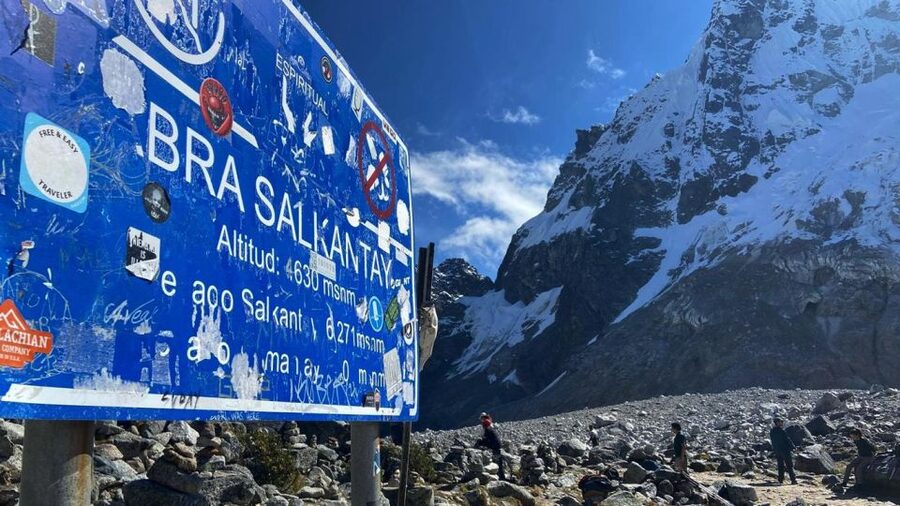
- Day 2: Quiswarniyoc → Salkantay Pass (4,650 m) → Chaullay camp
- Day 3: Chaullay → Playa Sahuayaco → Santa Teresa (plus hot springs option)
- Day 4: Santa Teresa → Lucmabamba → Llactapata → Hidroeléctrica → Aguas Calientes
- Day 5: Machu Picchu morning from Puente Ruinas → guided citadel tour → Cusco
- Sleeping setup and camp comfort: better than you’d expect at altitude
- Food on the trail: the part you’ll thank yourself for
- Logistics that can trip you up: tickets, fees, and the 7-kilo duffel rule
- Humantay Lake entrance fee
- Machu Picchu transport cost (if you take the shortcut)
- The duffel bag moved by horses (7 kilos)
- What you must bring
- Machu Picchu morning: the Puente Ruinas checkpoint flow
- Price and value: what $460 buys you (and what you still pay)
- Who should book this Salkantay to Machu Picchu trek
- Should you book? My straight answer
- FAQ
- How long is the Salkantay trek from Cusco?
- What is included in the tour meals?
- Do I need to pay extra for Humantay Lake?
- Is the Machu Picchu ticket included?
- Is a sleeping bag included?
- Are hot springs part of the plan?
- How much luggage can I bring?
- Will I hike with a guide and in what languages?
- Is this trek suitable for everyone?
Key takeaways before you commit
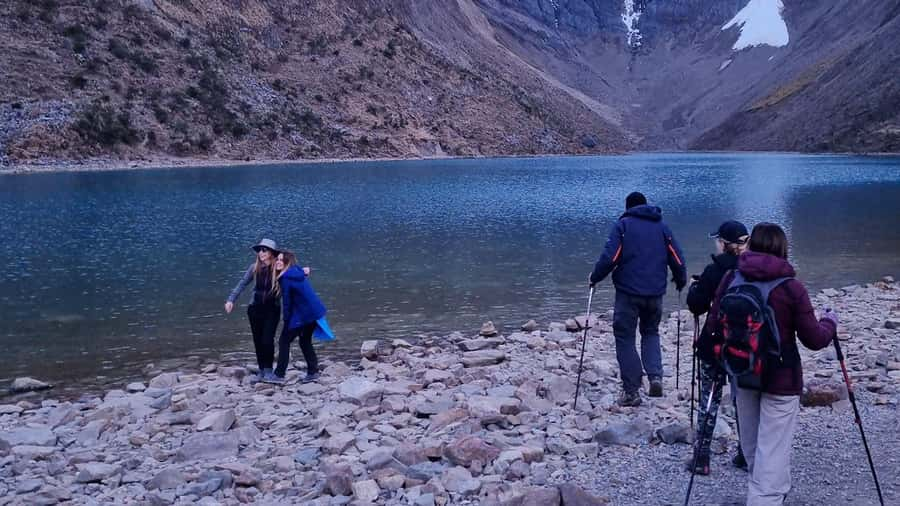
- Salkantay Pass at 4,650 m: expect a serious high point and big views once your lungs catch up.
- Real meals at camp: breakfast, lunch, dinner included, plus hot tea and a chef who takes it seriously.
- 7-kilo duffel support: you pack light for the first 3 days while horses move your gear.
- Machu Picchu with a guide: you get an arranged entrance and a ~2.5-hour guided circuit of the main areas.
- Andean ritual and mountain-god stories: you’ll hear the meanings behind the route, not just the facts.
- Small group energy (max 18): you’ll walk together more smoothly than on giant tours.
Cusco to Salkantay Pass: why this route feels so different
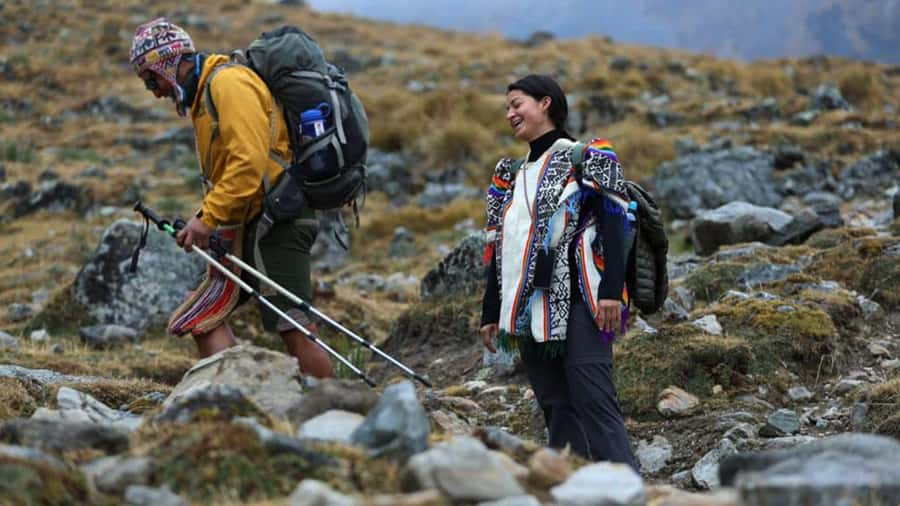
The Salkantay trek earns its reputation because it’s not just “a nice hike.” It’s a roller coaster of elevation and terrain that changes your senses every day. Day 1 starts with an early departure from Cusco and a ride toward the trailhead, then you’ll hike up to Humantay Lake and back down again. That first day is a gentle intro to altitude pressure and thin-air effort—still challenging, but it sets you up for the big swing coming next.
Day 2 is where the trek turns into the main event. You climb for about 4 hours to the Salkantay Pass (4,650 m) and then descend for about 4 hours to Chaullay. This is the moment many people remember most, because the air gets thinner, the views widen, and the weather can flip fast. You’ll go from a cold high zone into a lower, warmer camp valley.
Then the trek keeps switching gears. Day 3 drops you into the Santa Teresa area and follows the Santa Teresa Valley formed by the Salkantay River, with a long walk to Playa Sahuayaco and then transport onward to your camp. Day 4 continues the story: Inca ruins at Llactapata, then lunch at Hidroeléctrica, then a walk along train tracks into Aguas Calientes. It’s a very human-paced route to Machu Picchu that feels like you earned your arrival.
You can also read our reviews of more tours and experiences in Urubamba.
Day-by-day: what you actually do on each trek morning
Day 1: Cusco → Soraypampa → Humantay Lake → Quiswarniyoc camp
You leave Cusco around 5:45 am, ride about 2 hours to Mollepata, and have breakfast there. After that, you continue roughly 1 hour to Soraypampa. From Soraypampa it’s about a 2-hour uphill hike to Humantay Lake, then 2 hours downhill back toward camp.
Once you arrive in Quiswarniyoc, lunch is served and you get free time to explore the area before sleeping outside. Humantay Lake is not just scenic; it’s a good early altitude test, and it also helps you understand the trek’s theme: water, cold air, and wide views. One important money note: entry to Humantay Lake is charged by the local government of Mollepata and is 20 soles (not included).
Day 2: Quiswarniyoc → Salkantay Pass (4,650 m) → Chaullay camp
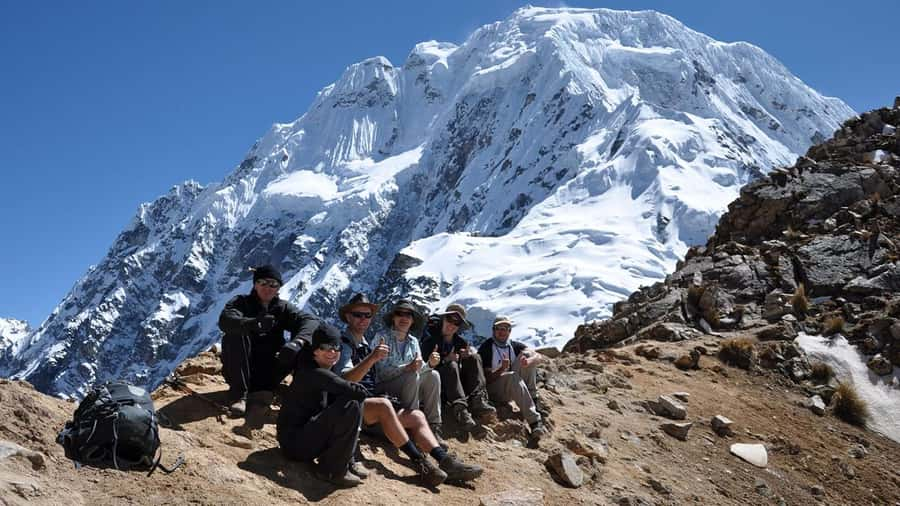
After breakfast, you begin a 4-hour climb to the Salkantay Pass at 4,650 meters. This is the highest point on the trek, so pace matters. Don’t try to “win” the climb. Let your breathing do the work.
At the top you start descending for about 4 hours to Chaullay, around 2,900 meters. When you arrive, the team sets you up with camping gear, and you’ll get hot tea and dinner. This is also a day where the trek’s camp comfort becomes more important. You’ll want your body to recover well, because Day 3’s walking time is longer.
Also, keep an ear open for cultural moments: this trip includes learning about mountain gods and a small Andean ritual during the journey.
Day 3: Chaullay → Playa Sahuayaco → Santa Teresa (plus hot springs option)
You start with breakfast and then hike about 5 hours through the Santa Teresa Valley, following the Salkantay River system. After that stretch you reach Playa Sahuayaco.
From there, you take tourist transportation to your third camp in Santa Teresa. At camp you eat lunch, and then you can choose to go to the hot springs at Colcampayo (optional). The hot springs require an extra fee (entrance and transportation to Santa Teresa hot springs are listed as 10 USD, not included), so consider them as a bonus, not a requirement.
This day is a good “breather” in terms of altitude compared to Day 2, but it still demands steady walking stamina. If your legs feel a little heavy, it’s normal. This is the trek where your pacing habits start showing.
Day 4: Santa Teresa → Lucmabamba → Llactapata → Hidroeléctrica → Aguas Calientes
Day 4 starts early, around 5:30 am with breakfast. You then take transport for about 45 minutes to Lucmabamba. From there, it’s about 3 hours uphill to the Inca ruins of Llactapata.
Llactapata is worth the effort. From the ruins you’ll get views of Machu Picchu and Huayna Picchu Mountain. Then you hike 2 hours downhill to Hidroeléctrica for lunch. After lunch, you walk about 3 hours along the train tracks to Aguas Calientes (Machu Picchu town).
Once you arrive, you can rest in the hotel and dinner is at 7:00 pm. This is the day where many people feel the emotional payoff. You’ve been walking toward this for days, and now the town logistics are finally real—showers, beds, and a chance to reset.
Day 5: Machu Picchu morning from Puente Ruinas → guided citadel tour → Cusco
You wake up around 4:00 am for a packed breakfast. Then you walk about 30 minutes to the Puente Ruinas checkpoint. You’ll need your passport, your Machu Picchu ticket, and student ID if applicable.
After Puente Ruinas, there’s about 1 hour of stairs to reach the main gate, which is timed for arrival around 6:00 am. Then you start the guided Machu Picchu tour with an expert guide. The tour is around 2.5 hours and covers the main areas such as the main square, urban sector, circular tower, solar clock, and Inca cemetery.
After the tour, you move back toward Aguas Calientes. The trip then returns to Cusco (by train or walking and car, depending on your choice).
Sleeping setup and camp comfort: better than you’d expect at altitude
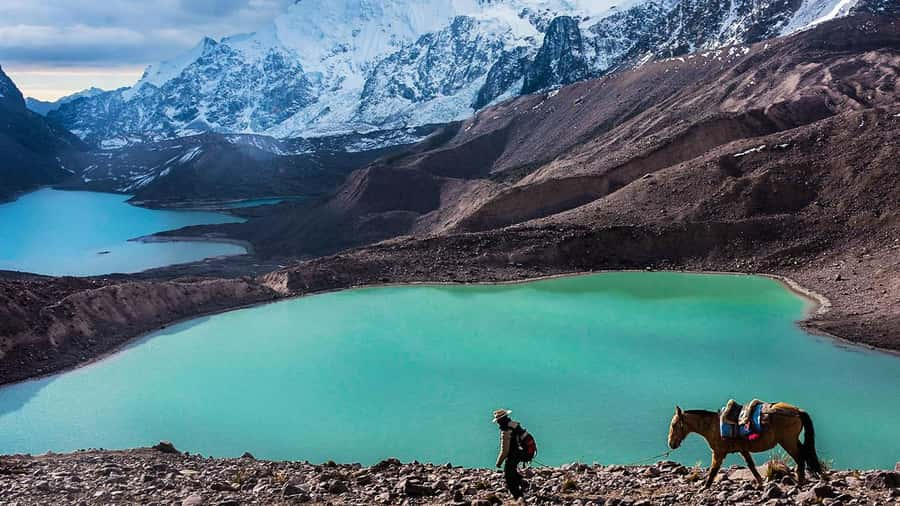
Camping on the Salkantay route can mean everything from “rough” to “surprisingly decent.” Here, the first two nights use Mountain Sky cabins with thick mattresses, glass doors, and night/panoramic lighting. You also get a personal pad (double foam, 2.5 inches thick). That matters, because altitude hiking is hard enough without sleeping on rock-hard ground.
You still camp for three nights total, but the equipment support is clearly part of the design. On Day 2 (Chaullay), the team provides camping equipment and hot tea as you settle in. On Day 1 night, your setup is in those Mountain Sky cabins. On Day 3 night, you sleep at the Santa Teresa camp. And then on Day 5 you get one night in an Aguas Calientes hotel, which is a welcome buffer before the Machu Picchu morning.
One practical thought: you’ll want to bring your own sleeping bag if you have one. If you don’t, sleeping bags can be rented for 10 USD.
Food on the trail: the part you’ll thank yourself for
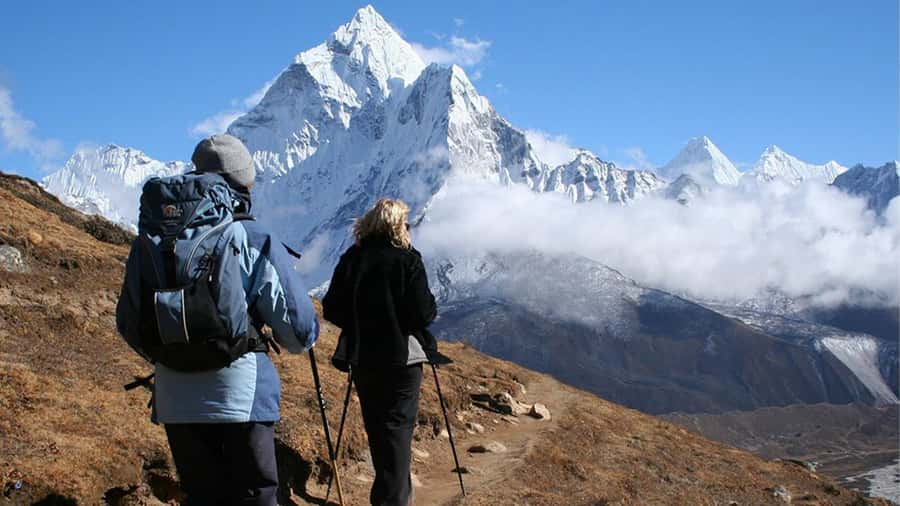
This itinerary includes 4 breakfasts, 4 lunches, and 4 dinners. That might sound routine until you’re actually hiking uphill all day and realized you’d normally be buying snacks one by one. Instead, you’re on a schedule.
Day by day, the pattern is straightforward: breakfast before the climb, lunch during a travel transition or mid-day rest point, and dinner after you’ve landed at camp. On Day 2 especially, you’ll get hot tea when you arrive in Chaullay, which is the kind of small comfort that keeps your morale from turning into survival mode.
There’s also a chef and kitchen team running the show. One participant feedback I found particularly encouraging was about how seriously the kitchen worked—proper meals, and even a celebratory dessert at the end. That’s not guaranteed every trip, but it does suggest the food culture is taken seriously here, not treated as a checkbox.
Vegetarian and vegan options are available on request at no extra charge, so you don’t have to gamble your diet on what’s available.
Logistics that can trip you up: tickets, fees, and the 7-kilo duffel rule
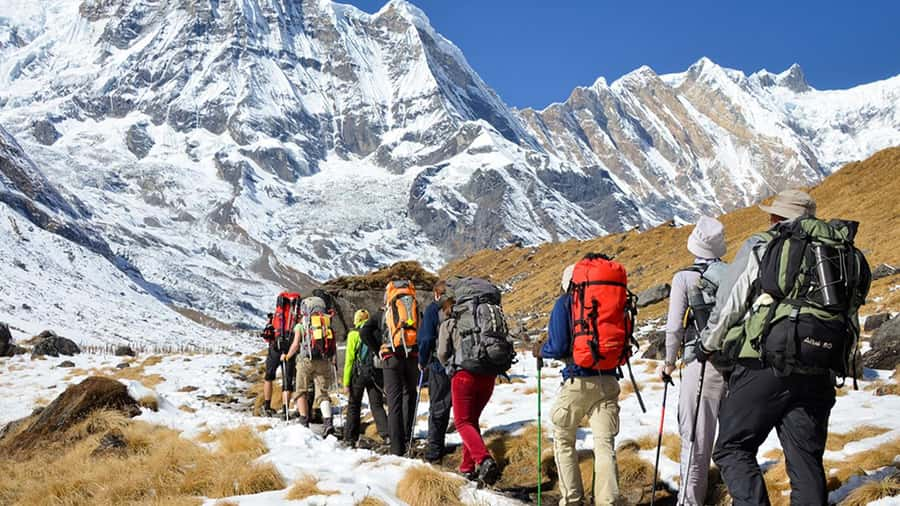
This trek is arranged with private transport to the trail and a clear step-by-step schedule, but there are a few items that need your attention.
Humantay Lake entrance fee
Humantay Lake entrance is 20 soles and not included. If you hate surprises, carry some cash early.
Machu Picchu transport cost (if you take the shortcut)
The main Machu Picchu experience is included with the ticket and guided tour. But there’s also an extra listed item: 24 USD for transport up and down between Aguas Calientes and Machu Picchu. The itinerary describes walking/stairs for the entrance morning, so this extra fee likely applies if you choose transport rather than the walk.
The duffel bag moved by horses (7 kilos)
Here’s a smart design detail: you get a duffel bag to pack 7 kilos of belongings that are transported by horses during the first 3 days. That means you can hike with less weight. It’s a big deal when you’re climbing and descending for multiple days and your energy should go to moving, not carrying.
What you must bring
Bring your passport (or ID), comfortable hiking shoes, sunglasses, sunscreen, a jacket, insect repellent, long pants, and hiking clothes. If there’s any one item that makes or breaks your comfort, it’s shoes with real grip. You’re on trail, then you’re on long stretches afterward near transport and train tracks.
Machu Picchu morning: the Puente Ruinas checkpoint flow
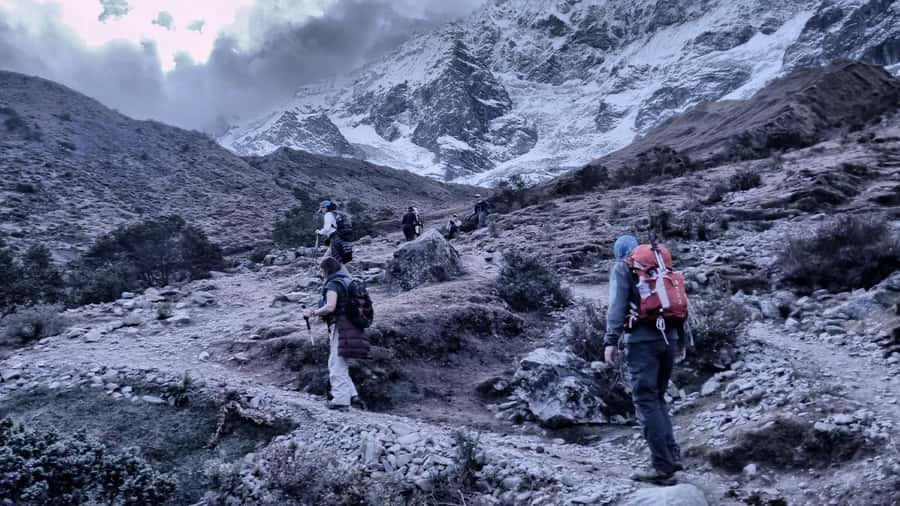
The Machu Picchu day is set up like this: packed breakfast, walk to Puente Ruinas, checkpoint with documents, then stairs to the main gate at about 6:00 am.
That checklist matters. You’ll present your passport, Machu Picchu ticket, and student ID if you’re eligible. Don’t treat that bag like a suggestion. Keep your documents together and easy to grab.
Once inside, your expert guide gives you about 2.5 hours to see the main areas. You’ll cover key spots like the main square, urban sector, circular tower, solar clock, and the Inca cemetery. Even if you’ve read about Machu Picchu already, having a guide help you map what you’re seeing is usually the difference between snapping photos and actually understanding the place.
Also, you won’t be wandering alone: the tour timing is controlled, which helps your morning feel calmer than if you were improvising everything at sunrise.
Price and value: what $460 buys you (and what you still pay)
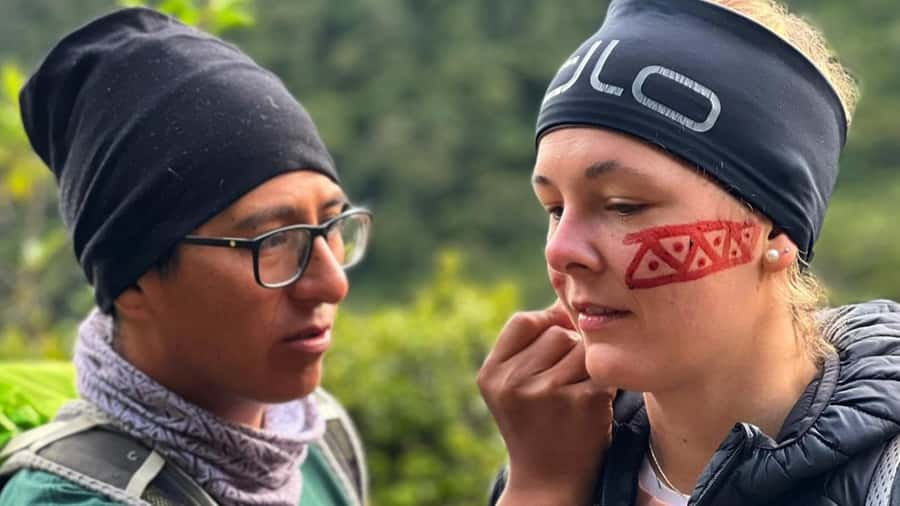
At $460 per person for a 5-day trek, this price is strongest when you consider what’s bundled:
- Guiding for the trek and a guided Machu Picchu tour
- Ticket to Machu Picchu
- Transport from Cusco to the trek and private trail logistics
- Meals (multiple breakfasts, lunches, dinners)
- Camping setup and more comfortable sleeping pads on the first two nights
- First aid kit and oxygen bottle for emergencies
What you still need to budget is mostly small but real add-ons:
- Humantay Lake entrance: 20 soles
- Sleeping bag rental if you lack one: 10 USD
- Hot springs: 10 USD (optional)
- Aguas Calientes ↔ Machu Picchu transport: 24 USD (if you choose it)
In other words, this trek feels like good value for what it replaces. Doing it independently often means more coordination risk: finding guides, arranging food, managing camp gear, and protecting your Machu Picchu timing. Here, your schedule is built for you. The trade-off is that you commit to the hike plan as written.
Who should book this Salkantay to Machu Picchu trek
You’ll be happiest if you’re:
- Fit and used to hiking with elevation. This is not a casual walk.
- Excited by route variety: lakes, pass, valleys, ruins, and then Machu Picchu.
- Comfortable with basic camp life, especially since the first two nights are in cabins with thick mattresses and lighting.
You might want to look elsewhere if:
- You’re pregnant or have mobility limitations, since the trek is listed as not suitable for those situations.
- You want mostly flat walking and minimal altitude effort.
One practical note from real-world experience: there can be days where your guide’s availability isn’t perfect due to illness. If you want heavy explanations every single hour, consider asking in advance how the team handles that kind of disruption. The bigger picture here is that the itinerary still runs, and you still get guided time where it counts.
Should you book? My straight answer
Book this tour if you want the classic Salkantay-to-Machu Picchu experience with strong logistics, good food, and a guided Machu Picchu visit. The $460 price feels fair for how much is included—especially meals, Machu Picchu ticket, and the supported camp setup.
Skip it if your fitness level is borderline or you’re hoping for a gentle stroll. This is a serious 5-day hike with the Salkantay Pass as the centerpiece. If you’re ready for that, the reward is huge: a multi-day build-up to one of South America’s most famous ruins, reached by walking the route rather than just arriving.
FAQ
How long is the Salkantay trek from Cusco?
It runs 5 days with 4 nights total.
What is included in the tour meals?
The tour includes 4 breakfasts, 4 lunches, and 4 dinners, plus a packed breakfast on the Machu Picchu morning.
Do I need to pay extra for Humantay Lake?
Yes. The Humantay Lake entrance is charged by the local government and costs 20 soles.
Is the Machu Picchu ticket included?
Yes. Entrance to Machu Picchu is included, along with a guided tour of about 2.5 hours.
Is a sleeping bag included?
Sleeping bags are not included. If you don’t have one, you can rent a sleeping bag with the tour for 10 USD.
Are hot springs part of the plan?
Hot springs at Santa Teresa (Colcampayo) are optional. Entrance and transportation are listed as 10 USD and are not included.
How much luggage can I bring?
You receive a duffel bag to pack 7 kilos. That duffel is transported by horses during the first 3 days.
Will I hike with a guide and in what languages?
Yes. You’ll have a professional English/Spanish tour guide, and the group is limited to 18 participants.
Is this trek suitable for everyone?
No. It is listed as not suitable for pregnant women and people with mobility impairments.
If you tell me your hiking experience level (and whether you plan to take hot springs or optional transport on Day 5), I can help you sanity-check whether this pace matches you.