REVIEW · CHANIA
From Chania: Full-Day Samaria Gorge Trek Excursion & Guide
Book on GetYourGuide →Operated by PLATANOS TOURS · Bookable on GetYourGuide
Samaria Gorge is a long, rocky way to the sea. This full-day trip from Chania sends you up into the White Mountains, lines you up for one of Europe’s longest gorges, and then lands you by the water in Agia Roumeli. You get a real hiking day, a lot of nature, and an easy-to-follow finish with ferry and bus back to town.
I like the fact that you hike at your own pace with an English guide working from the back of the group to help if you need it. I also love the practical pacing: breakfast before the gorge, then real down-time after in Agia Roumeli for swimming, snorkeling, and a casual lunch.
The main drawback to plan for is crowding inside the gorge, plus basic restroom situations once you’re in park mode. If you’re sensitive to tight paths and waits, this part can feel less relaxing than the views.
In This Review
- Key things I’d plan around in Samaria Gorge from Chania
- Why Samaria Gorge feels like one long payoff (and not just sightseeing)
- The drive to Omalos and breakfast: what makes the start worth it
- Entering Samaria Gorge National Park: the hike is long, rocky, and mostly downhill
- What can make your feet miserable (and how to avoid it)
- Wildlife, forest, and rock formations: what to look for while you’re working hard
- Agia Roumeli after the trek: swim time makes the day feel complete
- Ferry to Sougia and the ride back: the part that feels like a reward
- Price and value: $41 is mainly the transport plan (plus guidance)
- What to bring for a rocky downhill day (and what to skip)
- Who this Samaria Gorge trek is best for (and who should skip it)
- Samaria closes sometimes: how to handle weather changes without losing your day
- Should you book the Samaria Gorge day trip from Chania?
- FAQ
- How long is the Samaria Gorge trek excursion from Chania?
- How far is the hike inside Samaria Gorge?
- What’s included in the price?
- What tickets cost extra?
- Do I get free time in Agia Roumeli?
- Is there an English-speaking guide during the hike?
- Where do we start the hike?
- How is the return arranged after the trek?
- What should I bring for this tour?
- Who should not book this trip?
Key things I’d plan around in Samaria Gorge from Chania
- A 5–6 hour, mostly downhill gorge trek on rocks and stones, not a casual walk
- Omalos breakfast before you start, so you begin with energy instead of guessing
- An English guide at the end of the group, helpful for pacing and questions
- Agia Roumeli swim and snack time before the ferry takes you to Sougia
- Ferry-to-Sougia sea time, usually the payoff after all that descending
- Extra park and boat costs (separate tickets), even if transport is included
Why Samaria Gorge feels like one long payoff (and not just sightseeing)
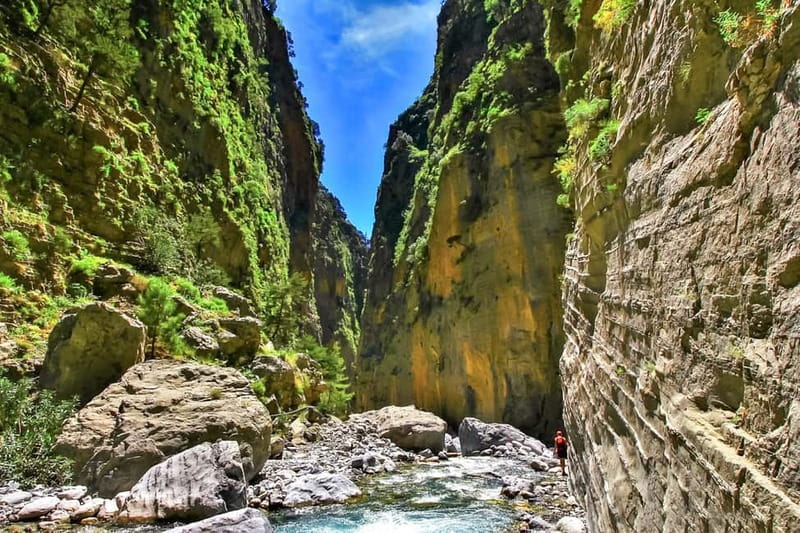
Samaria Gorge is the kind of place where you stop looking at your phone and start reading the ground. The whole experience is built around a long descent, river edges, and the sense that the gorge keeps unfolding—one bend, one rock crossing, then another. If you want a “walk to a view” day, this delivers.
I love how the day mixes serious hiking with real recovery time. You’re not stuck in a van pretending it’s an itinerary. You get the push into the gorge, then you actually get to relax afterward in Agia Roumeli.
Your biggest “maybe” is also part of the magic: Samaria draws crowds. Narrow paths inside the gorge can slow you down, and that’s not always fun when your feet are already complaining.
You can also read our reviews of more tours and experiences in Chania.
The drive to Omalos and breakfast: what makes the start worth it
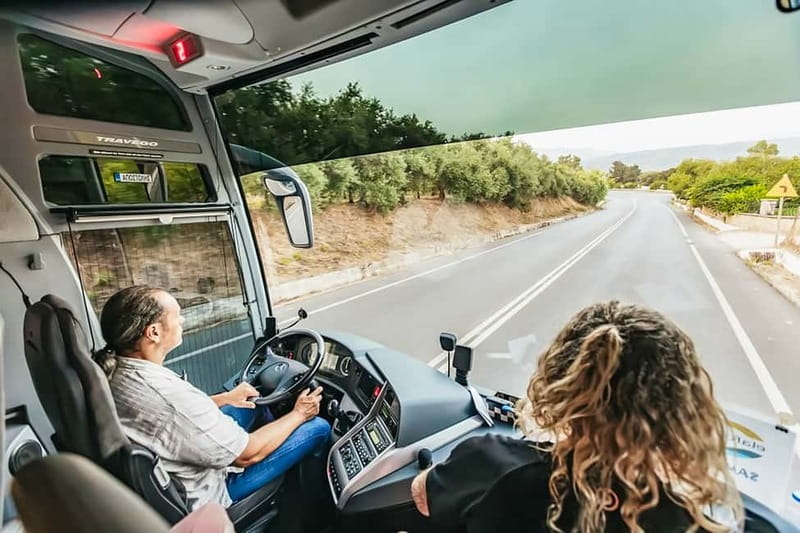
Your day typically starts with hotel pickup from many Chania-area locations, then a smooth ride into the White Mountains region. The bus transfer is about 100 minutes, and the drive matters because it sets expectations. You’re building altitude and moving from coast life toward gorge terrain.
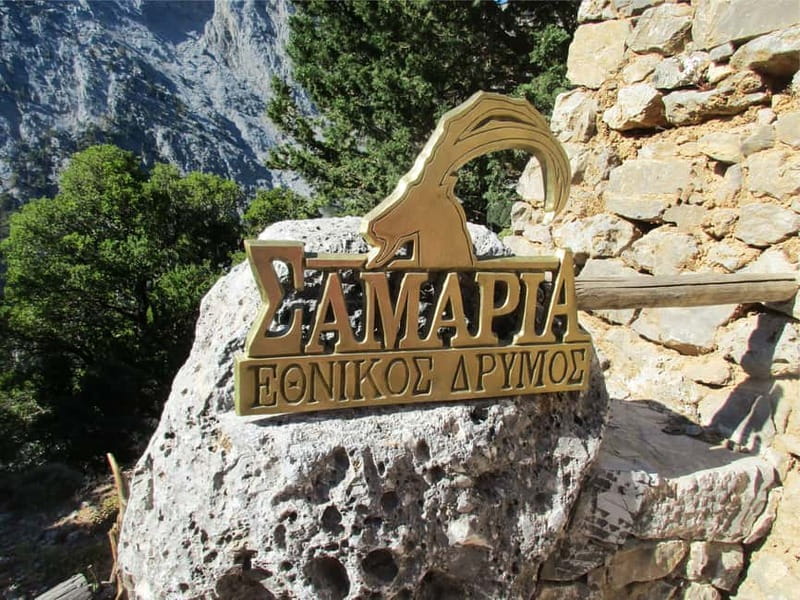
Once you reach Omalos, you get a break with scenic views and breakfast before you enter Samaria Gorge National Park. Starting with food is a quiet win. A lot of hiking days fail because people treat breakfast like an optional detail. Here, you’re meant to fuel up first, then start the descent.
There may also be a short cafe stop before you enter the gorge, so you can grab a sandwich or snack if breakfast doesn’t cover you. Either way, bring a water bottle you can actually drink from while walking.
Entering Samaria Gorge National Park: the hike is long, rocky, and mostly downhill
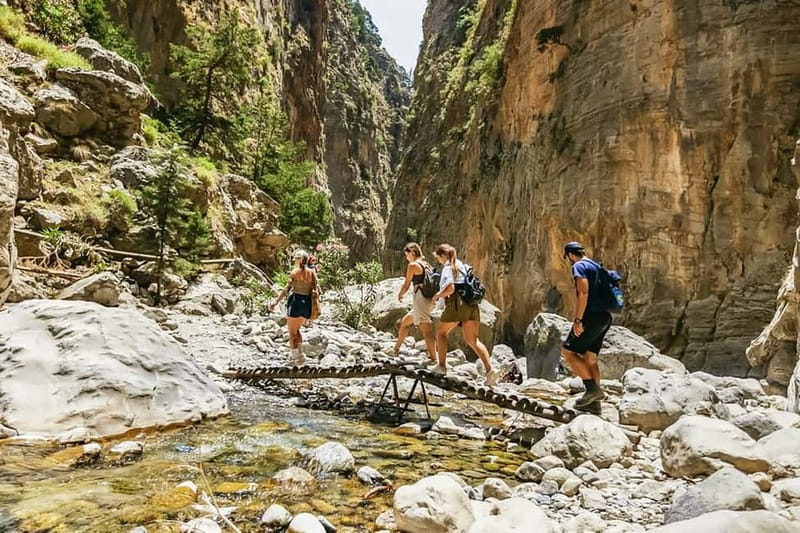
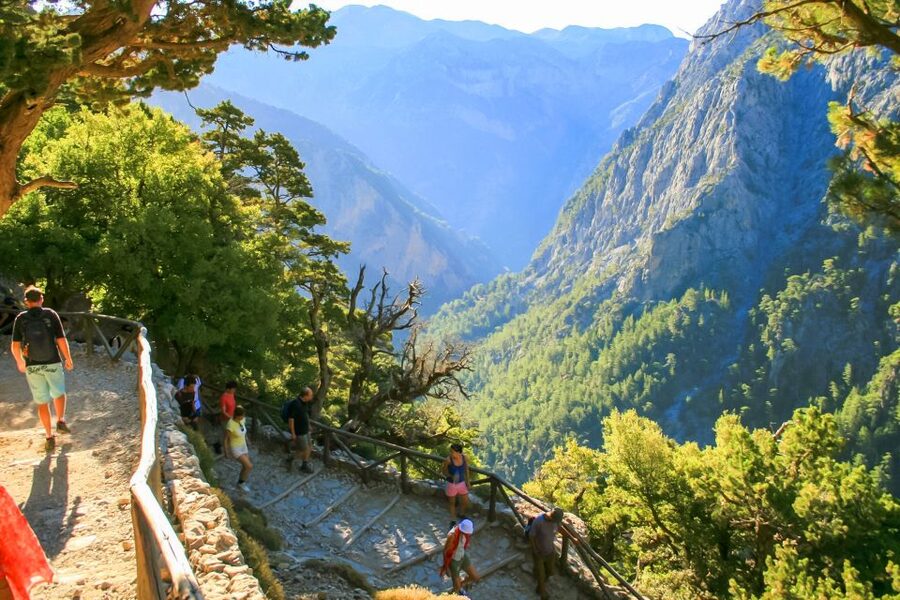
The hike portion is challenging—plan on about 17 km (around 10–11 miles) of walking with rocky terrain. The gorge trek is often around 4.5 hours in the national park section, but your total time on feet for the hike can feel more like 5–6 hours once you add time at crossings, pauses, and photo stops.
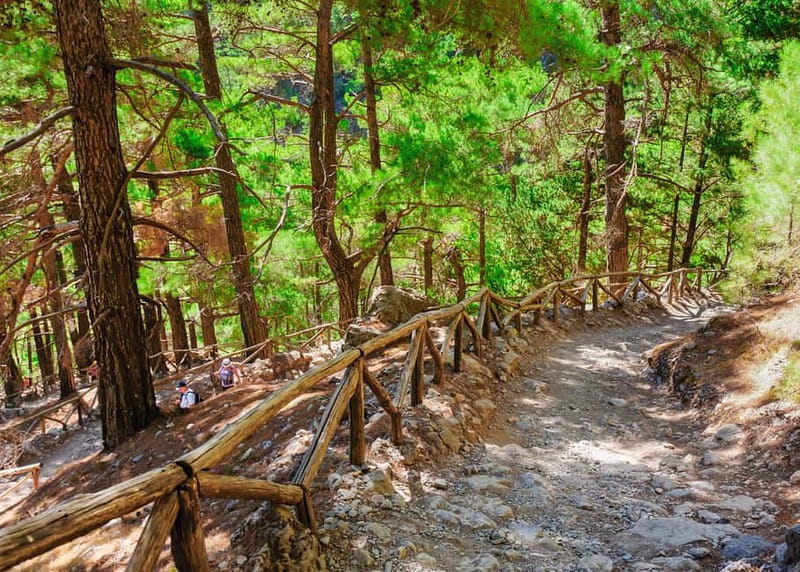
Here’s what you’re really signing up for: an extended downhill hike. You’ll step over stones and rocks, move along a river corridor, and pass freshwater springs along the way. This is not flat trekking. Even when the views are stunning, your ankles and calves stay in the job.
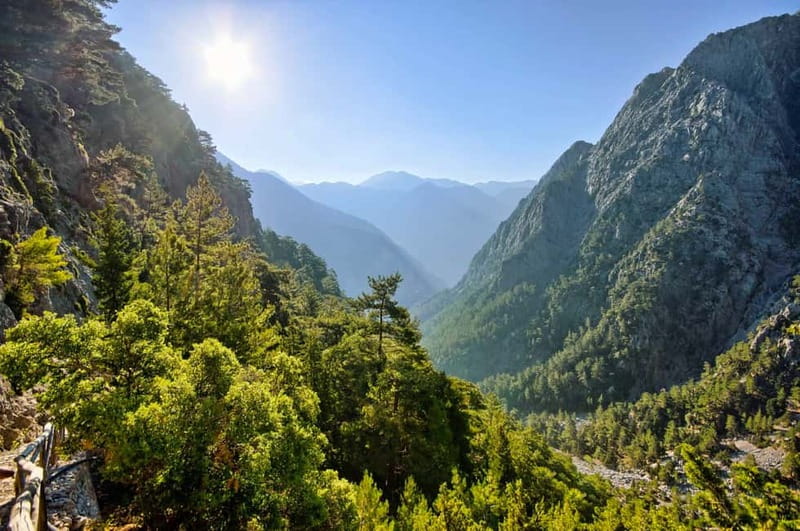
The nature side is a big part of why people rave about Samaria. You’ll hike through a forest with very old trees—described as about 1,000 years old—and you may spot mountain goats in the wild. One of the more educational touches is the focus on indigenous plants and birdlife, including rare species, so it’s not just a photo walk.
Timing helps. A strong guide will often suggest when to hit major checkpoints so the group stays within manageable limits. And if you get a guide like Sara or Christina (names I’ve seen with especially high praise), you’ll likely feel confident about safety and pace.
What can make your feet miserable (and how to avoid it)
You’ll see a lot of people underestimate this because the gorge is “just a hike.” It’s long and rocky, and it’s steep in places. I’d treat proper footwear like non-negotiable gear. Use hiking shoes with good tread and ankle support, and consider hiking poles for stability.
Even if you’re fit, expect sore calves and possible toe friction by the end. One of the most repeated “do this” tips from real hikers is simple: wear shoes you trust on uneven ground, not your best-for-street sneakers.
Wildlife, forest, and rock formations: what to look for while you’re working hard
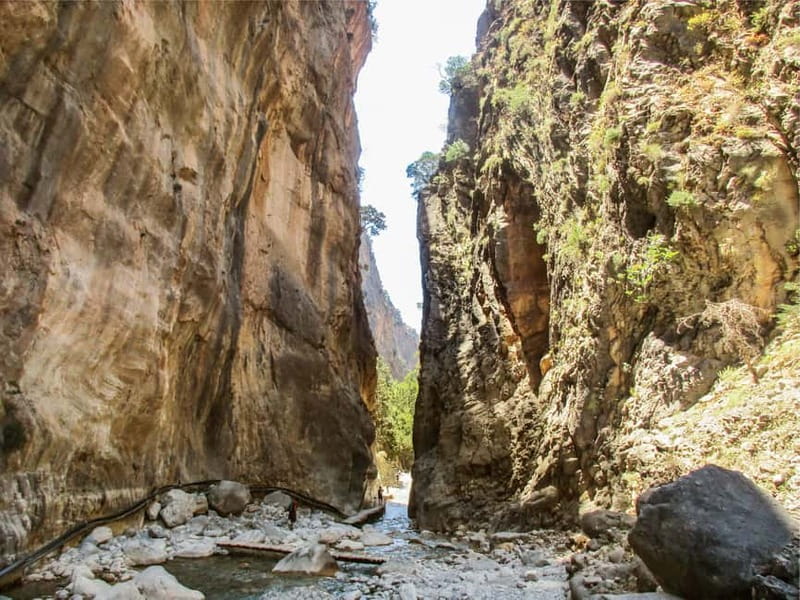
Samaria’s value isn’t only that it’s long. It’s the variety you see while you’re still moving. You’re walking from high mountain settings down into a river-like corridor, with changing light and rock shapes all day.
Keep your eyes open for fresh-water springs as you go by. If your group is paced well, you’ll get little moments where nature feels close—water sounds, shade from old trees, and abrupt views that make you stop whether you planned a photo or not.
The rock formations are extraordinary, and you’ll feel the “wow” even when you’re tired. The gorge walls create a natural funnel effect. That makes everything feel more dramatic than a standard valley trail.
If your guide talks about indigenous rare plants, take that as a prompt to slow down. You’ll spot more when you’re not rushing to the finish line.
Agia Roumeli after the trek: swim time makes the day feel complete
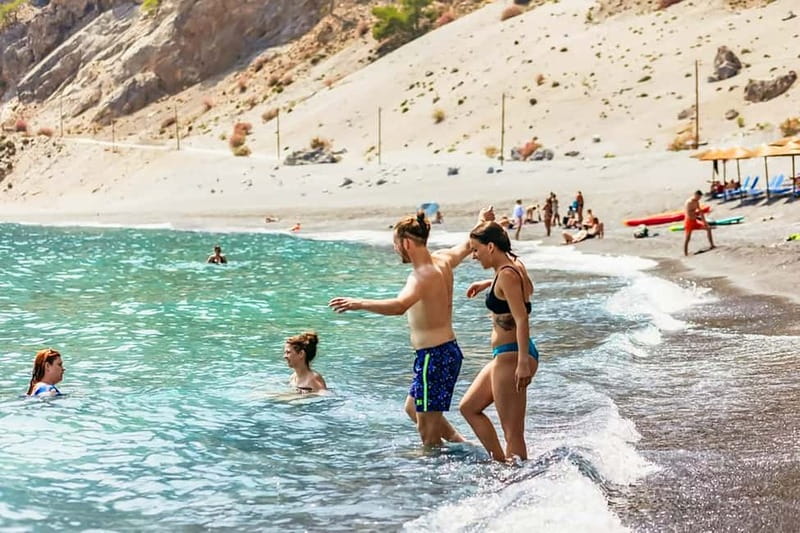
When you exit the gorge, the day doesn’t immediately turn into bus-only fatigue. You go to Agia Roumeli, a village set up for exactly what you need after a hard hike: food, shade, and water.
You’ll have a couple hours of free time. There are taverns, bars, and shops, plus enough space to grab lunch without feeling rushed. The best part is that you can swim or snorkel, and you’ll usually have time for a slow reset—something you rarely get on “big hike + big drive” days.
This is also where the day’s energy flips. Inside the gorge, the focus is foot placement and pacing. In Agia Roumeli, the focus becomes choosing your speed: quick swim, long lunch, or just sitting and letting your calves recover.
A practical note: if you’re sensitive to crowds, this is still a busy village day. It’s just a nicer kind of busy.
Ferry to Sougia and the ride back: the part that feels like a reward
Late in the afternoon, you board a boat from Agia Roumeli to Sougia. The ferry ride is about 1 hour, and it’s a helpful transition: you’re off your feet, but you’re not stuck in a stuffy transfer the whole time. You also get coast views that feel like a payoff for all that downhill work.
After you arrive in Sougia, a bus waits to bring you back toward Chania. The timeline you should plan for is roughly return around 8:30 PM, depending on pickup/drop-off locations and any small schedule adjustments.
This is also where your day’s earlier effort comes together. If you timed the gorge well and didn’t spend too much time “stuck,” you’ll likely have more comfortable rest time on the boat and less stressful waiting on the dock.
Price and value: $41 is mainly the transport plan (plus guidance)
The tour price is listed at $41 per person, and the best way to think about the value is simple: you’re paying for transport, timing, and guides—not for all the park and boat costs.
What’s separate:
- Samaria Gorge National Park entrance: pay onsite (shown as €10 for ages 18–64; free for 0–17 and 65+)
- Boat ticket: shown as €14 (with a reduced fare mentioned for children up to 12)
Food and drinks are also not included. That’s normal for this kind of day trip, but it affects how much “extra budget” you should carry.
So is it worth it? For most people, yes—if you can handle the difficulty. You’re getting:
- Air-conditioned bus transport from Chania-area hotels
- An English-speaking guide
- A structured plan that gets you into the gorge day correctly
- A boat + transfer finish
If you already hike regularly and you’d rather DIY, you can save money by arranging parts on your own. But if you want less stress, more safety support, and a clear flow from pickup to ferry, this format is usually the easier win.
What to bring for a rocky downhill day (and what to skip)
This trek punishes sloppy prep. Bring hiking shoes (not just any sneakers), plus sunscreen, a hat, and water. Trekking gear is a good idea, but you don’t need fancy climbing gear.
My practical packing list for Samaria Gorge:
- Hiking shoes with grip and ankle support
- Hiking poles if you have them (they help on slippery downhill sections)
- Sunscreen and a hat (the gorge still has sun exposure)
- Water bottle you can keep drinking from while moving
- Small snacks, especially if you tend to get hungry mid-hike
- Sunglasses and hiking socks to reduce blister risk
Skip flip-flops, skip thin soles, and skip the plan to “tough it out.” When the ground turns slick, footwear is what stands between you and a slower, more painful day.
Also, consider the day’s difficulty honestly. It’s described as very challenging and includes rocky terrain, so it’s not a good “recovery walk” option.
Who this Samaria Gorge trek is best for (and who should skip it)
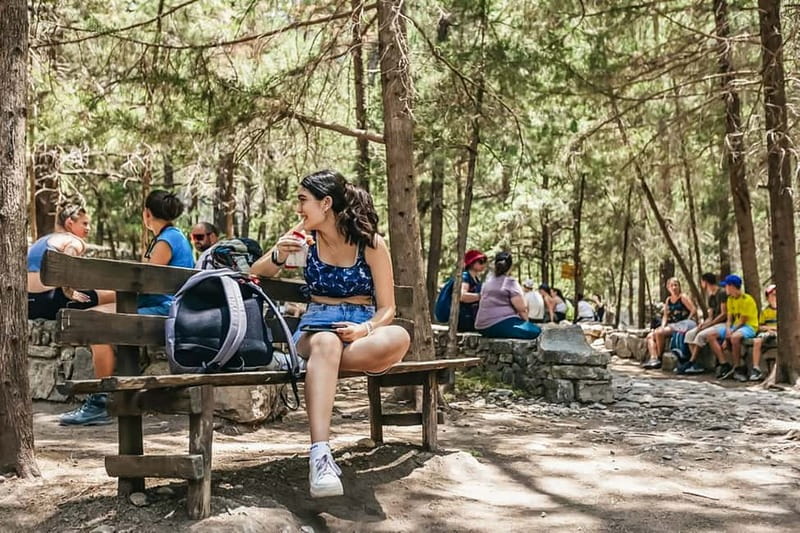
This trip is best for active hikers who want a real challenge and can handle a long, mostly downhill walk. If you enjoy moving for hours and you want nature that feels earned, you’ll probably love it.
It is not recommended for:
- Children under 6
- Pregnant women
- People with back problems
- People with mobility impairments
- People with heart problems
If any of those apply, skip this one and look for a gentler Crete hiking option instead.
Also, be honest about your comfort on uneven ground. Even seasoned hikers can end up with sore calves and blistered toes if they underestimate how rocky and steep parts can be.
Samaria closes sometimes: how to handle weather changes without losing your day
Samaria Gorge National Park can close due to adverse weather such as heavy rainfall, extreme heat, strong winds, or snow/ice. The operator will try to reschedule your tour during your stay, and if rescheduling isn’t possible, you get a full refund.
In at least some cases, guides have offered an alternative hike such as Imbros Gorge, followed by time in a town like Hora Sphakia. That’s the kind of pivot that keeps your holiday from turning into a long disappointment.
If you’re planning a trip, it helps to book this early in your Crete stay so you have spare days if weather forces changes.
Should you book the Samaria Gorge day trip from Chania?
Book it if you want a true hiking day with a clear payoff: gorge descent, river-edge scenery, goats and old trees, then swim time and a ferry ride to end strong. I’d especially recommend it if you like guided structure but still want flexibility to walk at your own pace.
Skip it if you can’t commit to long downhill walking on rocks, or if health issues make uneven terrain risky. And if crowds inside tight paths would stress you out, plan your mindset for a busy day in the gorge.
If you’re a good fit, this is one of those rare tours where the whole schedule feels built around movement—then comfort—then views from the sea.
FAQ
How long is the Samaria Gorge trek excursion from Chania?
The duration is listed as 9 to 12 hours.
How far is the hike inside Samaria Gorge?
It’s described as a very challenging trek with 17 kilometers of walking and some rocky terrain.
What’s included in the price?
Included items are hotel pick-up and drop-off, an English live guide, air-conditioned bus transfers with bus tickets, and a hiking excursion.
What tickets cost extra?
You’ll need to pay an entrance ticket to Samaria Gorge National Park onsite (shown as €10 for ages 18–64, free for 0–17 and 65+), and a boat ticket from Agia Roumeli to Sougia (shown as €14; reduced fare of €7 mentioned for children up to 12).
Do I get free time in Agia Roumeli?
Yes. You’ll have about 2 hours of free time in Agia Roumeli, with options to swim, snorkel, and have lunch.
Is there an English-speaking guide during the hike?
Yes. The tour includes a live English guide, and the hike includes a guide (noted as working at the end of the group to help if needed).
Where do we start the hike?
You arrive in Omalos in the White Mountains, have breakfast, and then enter Samaria Gorge National Park.
How is the return arranged after the trek?
After time in Agia Roumeli, you take a boat to Sougia. A bus then transfers you back toward the starting area, with return noted as around 8:30 PM.
What should I bring for this tour?
Bring a hat, hiking shoes, sunscreen, water, and trekking gear.
Who should not book this trip?
It’s not suitable for children under 6, pregnant women, people with back problems, people with mobility impairments, or people with heart problems.