REVIEW · LINGUAGLOSSA
Etna Summit 3300m: Trekking on the Active Volcano
Book on GetYourGuide →Operated by Trip on Top Etna · Bookable on GetYourGuide
Etna’s summit feels close to the edge of reality. This Etna trek lets you walk over active craters on the north side of Sicily, mixing off-road 4×4 transport with high-altitude hiking. I especially like the small group size (up to 10), which keeps the pace manageable and the guide’s attention focused.
I also like how the route starts high, with a 4×4 ride up to about 2900 meters before your boots hit volcanic ground. One thing to think about: conditions and volcanic activity can change what you reach and how long you stay, so the trek is more “adventure plan” than guaranteed straight line to the very top.
Why this trek works (and who it’s for)
- Small group pace: up to 10 people, so you’re not stuck behind a crowd on uneven ground.
- 4×4 first, hiking second: you save energy by starting the trek around 2900m.
- Active volcano terrain: summit craters plus lateral craters, and time around real volcanic features.
- Big views with high altitude: on clear days you can see the Aeolian Islands and the Calabrian coast from around 3400m.
- Descent through sand gullies: the return route includes Pizzi Deneri and a view over Valle del Bove.
In This Review
- Walking Etna’s active craters at 3300m: what you’re really signing up for
- Piano Provenzana meeting point: how the day starts and why it matters
- The 4×4 ride to 2900m: trading time and energy for real volcano terrain
- Trekking across lava fields: where the adventure starts
- Summit area 3300m: craters, lateral craters, and the 3400m view
- Descent via sand gullies to Pizzi Deneri and Valle del Bove
- What’s included (boots, jacket, helmet): how value shows up in real comfort
- Price and the extra €50 you may need to budget for return access
- Small group, live guide, and the language mix that helps you feel confident
- Getting ready: clothing, fitness, and who should think twice
- A realistic way to set expectations about volcanic activity
- Should you book Etna Summit 3300m with Trip on Top Etna?
- FAQ
- What is the duration of the Etna Summit 3300m trek?
- Where do I meet for the tour?
- How high does the 4×4 go before the hike starts?
- What does the hike include at the summit area?
- Is the summit route guaranteed no matter what?
- What is included in the price?
- What should I bring?
- Is there an additional payment for return transport?
- What group size is this tour?
- Who should not take this tour?
Walking Etna’s active craters at 3300m: what you’re really signing up for
This is not a walk-through-the-park kind of volcano trip. You’re trekking on the active slopes of Europe’s highest and largest active volcano, and your route can shift depending on volcanic activity and weather. That uncertainty is part of the point: it keeps the experience real, and it keeps you from expecting a paved “summit stroll.”
If you like experiences that feel both dramatic and educational, you’ll appreciate the volcanological or alpine guide leading the way. They’re there not just to point out views, but to help you move safely across volcanic terrain and understand what you’re seeing as you go.
The altitude is a major factor. Even if the hike portion is only a few hours, you’ll feel the thin air at this elevation, and you’ll need to keep a steady effort. This one is best for people with decent fitness and comfort walking on uneven ground.
Piano Provenzana meeting point: how the day starts and why it matters
You’ll meet at the Chalet Sole Neve Souvenir shop, at the first parking lot once you arrive at Piano Provenzana on Etna North. Arriving a bit early helps, because you’ll want time for the initial check-in before you’re put into the flow of the day.
After meeting, there’s a briefing and an equipment check. This is practical stuff: it’s not just rules and logistics. It sets expectations for the terrain ahead—what kind of footing you’ll face, how the guide wants you to move, and how to prepare for high-altitude conditions.
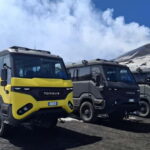
Then comes the off-road part: special 4×4 vehicles take you up to around 2900 meters. That jump in elevation is exactly why this tour feels efficient. You’re not burning all your energy getting “up to” the volcano experience. You save that effort for the trekking itself.
You can also read our reviews of more tours and experiences in Linguaglossa.
The 4×4 ride to 2900m: trading time and energy for real volcano terrain
The off-road transfer is more than transportation. It’s the setup. The tour is designed so you start the hike in the volcanic zone at altitude rather than starting near the base and climbing for hours.
On the ride and then during the hike, you’ll be surrounded by the wild, less-frequented side of Etna. The route includes views toward northern and eastern Sicily, plus visibility toward the Aeolian Islands and even the Calabrian coast on clear days. Those views matter because they help you “place” the volcano in the bigger geography around it.
Also, the 4×4 segment changes the vibe of the day. You’re not spending the whole time fighting uphill fatigue before seeing anything dramatic. You get time on foot at the points that feel most volcanic and most elevated.
Trekking across lava fields: where the adventure starts
Once you hit the trekking start around 2900m, the experience shifts into movement. You’ll cross lava fields as you work your way toward the summit area, and the footing can be unpredictable depending on conditions. This is why long pants are recommended, and why you’ll want sturdy gear.
The volcanic terrain is the main draw here. You’re not just hiking beside the volcano. You’re moving over its surfaces and toward crater zones where you can see the shapes and features that define Etna’s activity.
As you go higher, the air gets thinner and the temperature can swing, even if you’re coming from warmer coastal Sicily. One clue from the experience: in November, people reported walking on snow and needing proper outerwear rather than relying on “Sicily weather” assumptions.
This is also where the guide’s step-by-step teaching becomes valuable. In at least one case, Fabio was singled out for being especially helpful in explaining the route segments clearly and walking the group through what to expect at each stage. Even if you’re a confident hiker, it helps to know where you’re going and why.
Summit area 3300m: craters, lateral craters, and the 3400m view
The goal is the summit area of Etna, where you can see summit craters and lateral craters. That’s the key difference between this and a basic sightseeing stop: you’re getting access to the crater-world up close, not just observing it from far away.
From the higher points—around 3400 meters when conditions allow—you can enjoy wide-ranging views. The tour description highlights the possibility of seeing Sicily with the Aeolian Islands from that height, and also the Calabrian coast. In plain terms: you’re looking out over water and coastlines while standing in one of Europe’s most active volcanic settings.
Now, the honest consideration: volcanic activity and weather can affect what’s possible. The tour notes that trekking may be modified depending on conditions in the summit area. Some days you may spend more time in the crater zones you can reach safely; other days you might not hit every point you were hoping for.
That’s why this tour is best if you’re flexible. If your personal priority is a dramatic view, you’ll likely get it. If your priority is a specific summit coordinate no matter what, you might end up disappointed.
Descent via sand gullies to Pizzi Deneri and Valle del Bove
After time around the summit area, you start descending. The route includes sand gullies leading you toward the Pizzi Deneri area. This part can feel different from the climb: the ground can be softer, and your focus shifts from gaining altitude to controlling your steps.
The payoff is the view over Valle del Bove. This is one of those moments where the “active volcano” idea becomes bigger than the summit crater itself. You’re looking out over a dramatic valley carved by volcanic processes, and the perspective from this side of Etna helps you understand the scale of the volcano.
Think of the descent as part of the storytelling. You don’t just go up to see craters; you come down with a changing view, moving from high crater features to wider volcanic geography.
What’s included (boots, jacket, helmet): how value shows up in real comfort
The price structure makes more sense when you look at what’s included. Your ticket includes hiking boots, a jacket, a volcanological or alpine guide, insurance, and a helmet. That’s a lot of practical gear bundled into a single fee, which is one reason this can feel good value.
On this kind of terrain, footwear and head protection matter. Boots help with grip and support on uneven volcanic surfaces, and the helmet fits the safety expectations for an area with active activity and rocky ground.
The included jacket is also a big deal because temperatures and wind can change quickly near the summit. In higher-altitude trekking, you don’t want to improvise with a thin hoodie and hope for the best.
You still need long pants. That’s the one clear personal item called out. And if your visit timing is cooler—especially late fall—plan for cold enough conditions that feel serious at altitude. The review examples underline that even when Sicily seems warm, you may walk through snow or cold ground near the summit.
Price and the extra €50 you may need to budget for return access
The listed price is $65 per person, and the experience lasts about 4.5 hours. That’s a relatively compact time window for a high-altitude volcano trek with guide support and off-road transport.
But there’s an extra cost you should not ignore. Cable car tickets or 4×4 bus return tickets are not included and are listed at 50 EUR. The return ticket for the 4×4 Unimog requires a mandatory supplement of 50 EUR per person, to be paid on site, described as necessary for the return trip from Piano Provenzana up to around 2900 meters.
So the value math usually looks like: base tour price plus that onsite transport supplement. Even then, you may find it’s still worth it because you’re paying for guided access plus gear, not just for a view.
Also note: the tour mentions skipping the ticket line. That can save time on a day when you’re already working within a tight schedule.
Small group, live guide, and the language mix that helps you feel confident
This is a small-group experience limited to a maximum of 10 participants. In practice, that matters on uneven ground. Fewer people means you can keep a comfortable pace, and the guide can stop to explain and regroup without losing control of the day.
The guide is live and provided in Italian, English, or French. That language flexibility helps if you want to understand what you’re seeing rather than just following footprints.
And the guide’s role isn’t just safety. The reviews highlight how step-by-step explanations can make the route clearer and reduce stress when the terrain gets challenging. When someone like Fabio is mentioned for being attentive and competent, that lines up with the idea that this tour works best when you feel informed during the hike, not only after you return.
Getting ready: clothing, fitness, and who should think twice
The tour advises long pants. That’s the baseline. But long pants alone won’t cover the real issue here: conditions at altitude can be cold, even snowy, and winds can change your comfort fast.
The experience is not suitable for pregnant women, people with heart problems, people with respiratory issues, people diving up to 24 hours prior, or people with low level of fitness. That list is your clue that altitude and exertion are core parts of the experience, not optional extras.
If you have any medical concerns, take them seriously and talk to your doctor. And if you’re on the edge fitness-wise, you’ll likely have a harder time with uneven volcanic ground plus high altitude.
A realistic way to set expectations about volcanic activity
Etna is active, and the tour makes that explicit by stating that trekking may be modified depending on volcanic activity. In the real world, that means your exact crater route and possibly your summit reach can shift.
One of the most useful decisions you can make is mental flexibility. If you treat this as a guided encounter with Etna’s crater zone rather than as a guaranteed “I must reach point X,” you’ll be much happier.
Also, pay attention to how weather interacts with terrain. Cold, wind, and visibility affect comfort and safety, and they can shorten or redirect parts of the day. This isn’t a failure mode—it’s how volcano travel stays responsible.
Should you book Etna Summit 3300m with Trip on Top Etna?
If you want a high-altitude, guided walk on an active volcano crater zone, this is a strong choice. I’d book it if you like hands-on terrain experiences, you can handle altitude, and you’re comfortable with the idea that conditions can change the route.
I would skip it if you’re very sensitive to cold, you struggle with uneven footing, or you fall into the health and fitness categories listed as not suitable. And if you’re the type who needs a guaranteed summit outcome no matter what, this tour’s volcanic reality may be frustrating.
On balance, the combination of included boots and jacket, a small group, crater-focused access, and the chance to see Sicily plus the Aeolian Islands from around 3400m makes it good value for the kind of day you’ll remember.
FAQ
What is the duration of the Etna Summit 3300m trek?
The duration is 4.5 hours.
Where do I meet for the tour?
You meet at the Chalet Sole Neve Souvenir shop at the first parking lot when you arrive at Piano Provenzana (Etna North).
How high does the 4×4 go before the hike starts?
The trekking begins at about 2900 meters.
What does the hike include at the summit area?
The tour focuses on the summit craters of Etna and lateral craters, and you can reach summit area viewpoints around 3300–3400 meters depending on conditions.
Is the summit route guaranteed no matter what?
No. Trekking may be modified depending on volcanic activity and weather conditions.
What is included in the price?
Included are hiking boots, a jacket, a volcanological or alpine tour guide, insurance, and a helmet, plus the tour of the summit of Etna.
What should I bring?
You should bring long pants.
Is there an additional payment for return transport?
Yes. Cable car tickets or 4×4 bus return tickets are not included and are listed at 50 EUR, with a mandatory 50 EUR supplement for the 4×4 Unimog return on site.
What group size is this tour?
It’s a small group limited to a maximum of 10 participants.
Who should not take this tour?
It’s not suitable for pregnant women, people with heart problems, people with respiratory issues, people who have been diving up to 24 hours prior, or people with low level of fitness.