REVIEW · MINDELO
Cova–Paúl Valley Trek: Santo Antão Day Trip by Ferry
Book on GetYourGuide →Operated by Green Line Tours Cabo Verde · Bookable on GetYourGuide
A day on Santo Antão can be a real eye-opener. This trek balances a high, volcanic crater viewpoint, a long walk down through the island’s most productive valley, and a stop at Grogue so you can connect the scenery to how people actually live and work. You’ll likely remember the moment you look out over the lush green bowl of the Cova de Paúl crater.
What I like most is how the day builds in layers: ferry crossing with marine life sightings, then a guided hike that focuses on what you’re seeing—not just where you’re going. A second favorite is the human side of the valley—small villages, working fields, and the kind of island hospitality that shows up through guides like Sonia (with her patient pacing and humor) and Madu (full of stories about nature and daily life).
One key consideration: the walk is mostly a descent, and parts of it can be rocky and uneven, so you’ll want solid hiking shoes and a head for heights. If you’re sensitive to steep drop-offs, it may feel like too much.
In This Review
- 5 key things you’ll notice on this Santo Antão trek
- Why Cova de Paúl and Paúl Valley are the right combo for a day trip
- Mindelo departure and the ferry to Santo Antão (Porto Novo)
- Getting to Cova de Paúl: the crater briefing and the rim-edge moment
- The descent into Paúl Valley: farms, villages, and working life
- Ribeira Grande lunch stop: a break that also makes practical sense
- Grogue distillery and the village-to-spirit connection in Paul
- The coastal road return and your ride back to São Vicente
- Price and value: what $141 covers (and why it’s not just a walk)
- Who this trek fits best (and who should think twice)
- What to bring so the day feels good, not hard
- Should you book the Cova–Paúl Valley Trek with Green Line Tours Cabo Verde?
- FAQ
- How long is the Cova–Paúl Valley Trek day trip?
- Where does the tour start and end?
- Is lunch included?
- What’s included besides the ferry and transport?
- Do I need a passport?
- What should I bring for the hike?
- Who should not take this tour?
5 key things you’ll notice on this Santo Antão trek
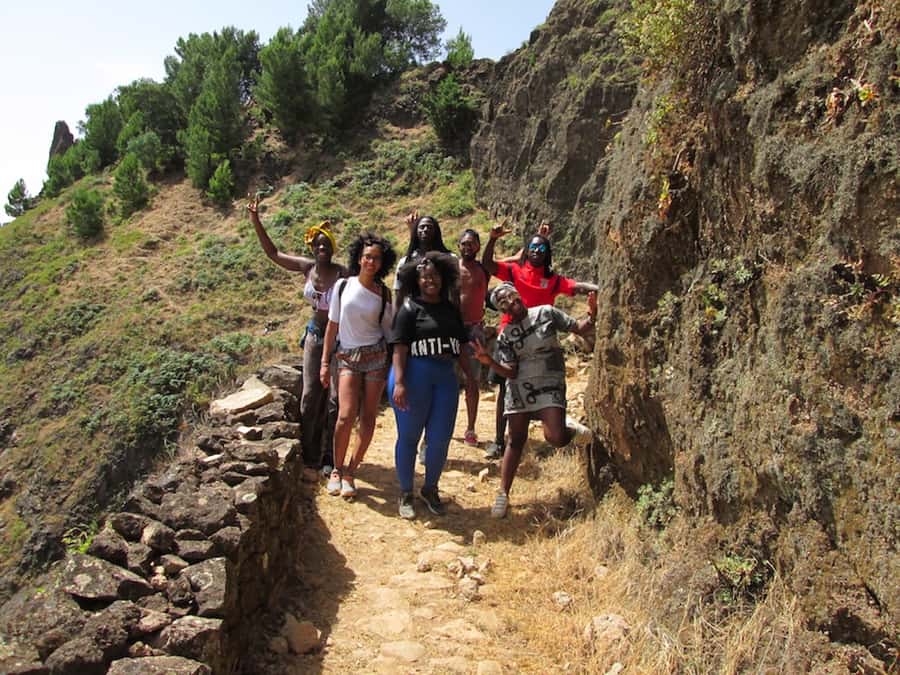
- Cova de Paúl crater views: a dramatic rim-top outlook over the valley and toward the sea
- A real working valley walk: fruit trees and crops you can see in production, village to village
- Hands-on rum context at Grogue: a distillery entrance included, linking land, water, and spirit-making
- Guides who pace for the group: guides like Sonia and Madu are described as attentive and adaptable
- Ferry ride with wildlife potential: dolphins and flying fish may appear from the deck, if conditions cooperate
Why Cova de Paúl and Paúl Valley are the right combo for a day trip
Santo Antão doesn’t do sightseeing from a bus window very well. This day trip earns its keep by putting you where the island’s contrasts are easiest to understand: volcanic crater heights above, then the dense greenery of the valley below.
At the top, Cova de Paúl gives you that “how is this even here?” perspective. Then the walk through the Paúl Valley turns it from a pretty picture into a working landscape, where you can spot crops and farming habits as you pass small settlements.
The other smart move is timing. You’re out early from Mindelo, so you hit the crater viewpoint with daylight and a less crowded feel, then roll through lunch and the distillery before the ferry back.
Mindelo departure and the ferry to Santo Antão (Porto Novo)
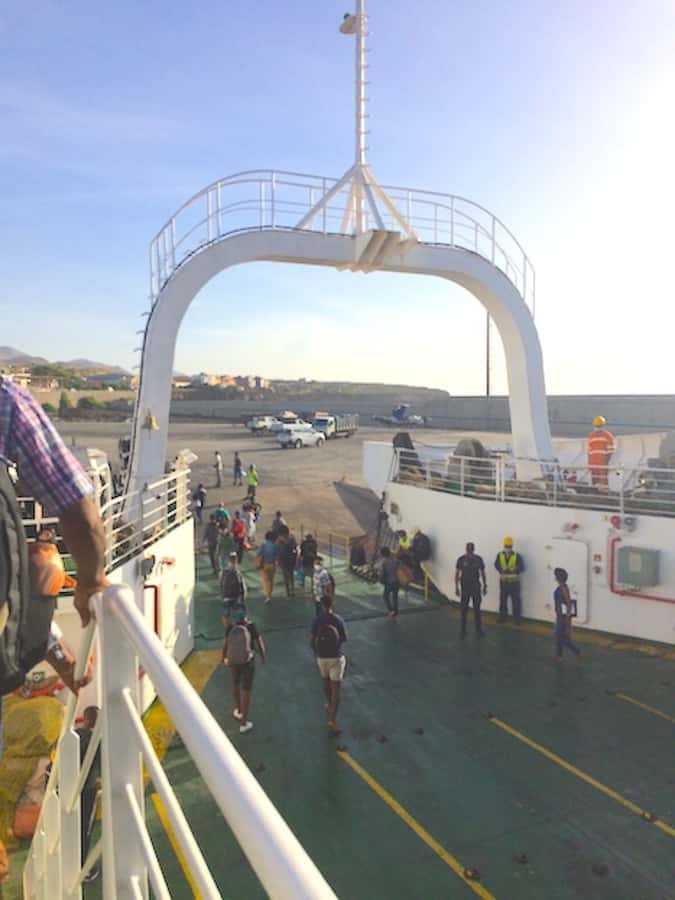
You start in Mindelo with an early pickup, then transfer to the harbor for the ferry over to Santo Antão. The crossing takes up to about 1 hour, and it’s worth planning to be on deck when you can—marine life sightings are possible, including dolphins and flying fish.
If you prefer comfort over chasing wildlife, you can stay seated with music and relax on the chairs. Either way, bring the right mindset: the ferry depends on wind. If you’re prone to seasickness, prepare ahead of time, even if the ride is often described as calm.
When you arrive, you exit the terminal and meet your local guide. From there it’s straight into mountain driving toward the crater start point—so the ferry isn’t just transportation. It’s also part of the day’s atmosphere.
Getting to Cova de Paúl: the crater briefing and the rim-edge moment
Once you reach the crater area, you’ll get a guided segment that includes a safety briefing and time to orient yourself before walking. This matters because the scenery here is spectacular, but the terrain can be uneven.
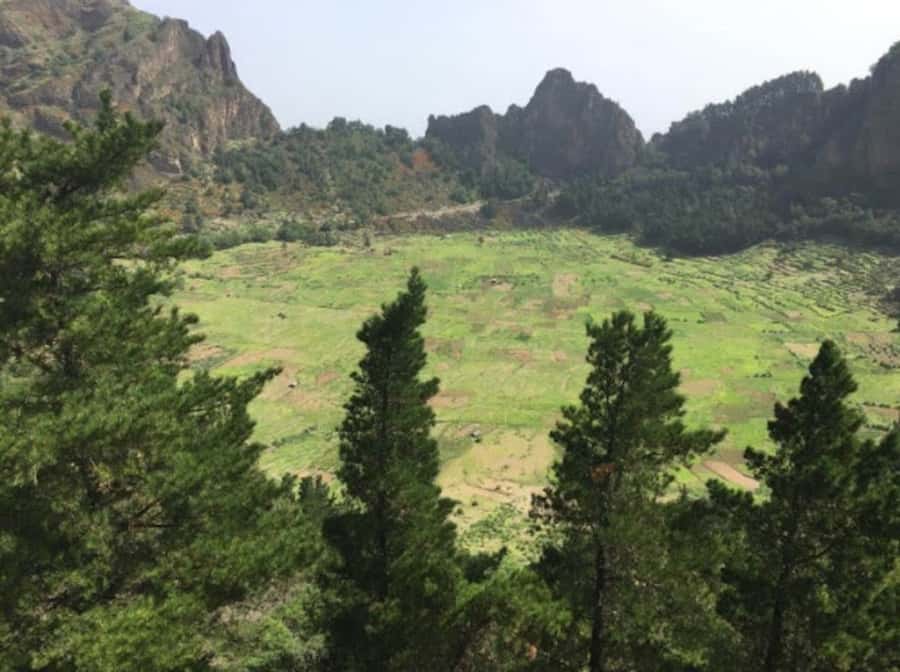
The crater itself is what you came for. The viewpoint above Cova de Paúl is described as breathtaking: you look down into the immense green valley, and you can see the sea in the distance toward Vila das Pombas. That rim-top perspective is the payoff that makes the long drive and ferry feel worth it.
Guides can make a big difference on this kind of hike. In the experience reports, guides such as Madu are praised for keeping things friendly while explaining island life, flora, and how the landscape works. With pacing-minded guides like Sonia, the group tempo tends to feel controlled, not rushed.
The descent into Paúl Valley: farms, villages, and working life
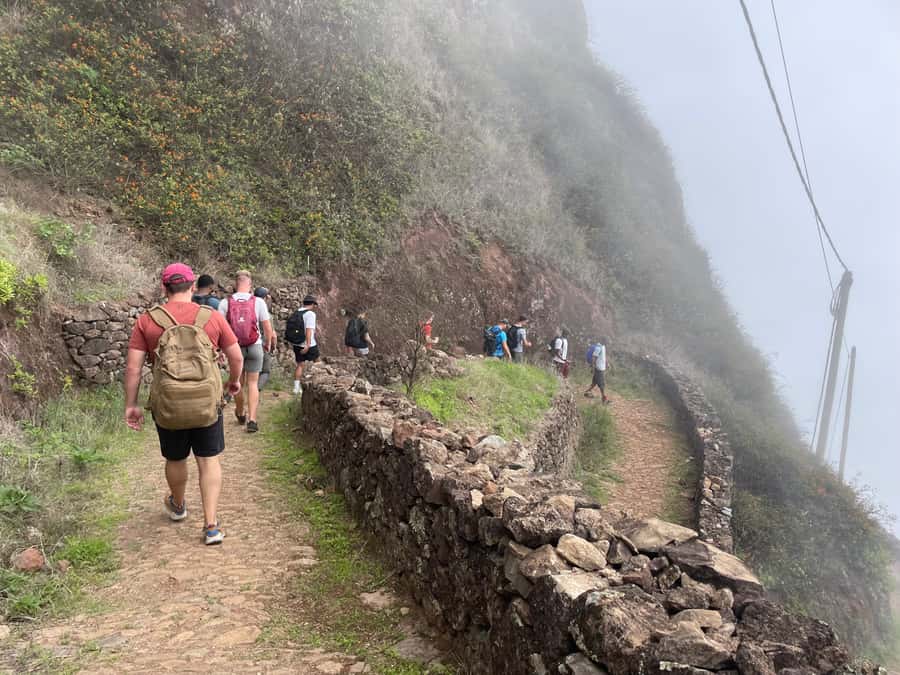
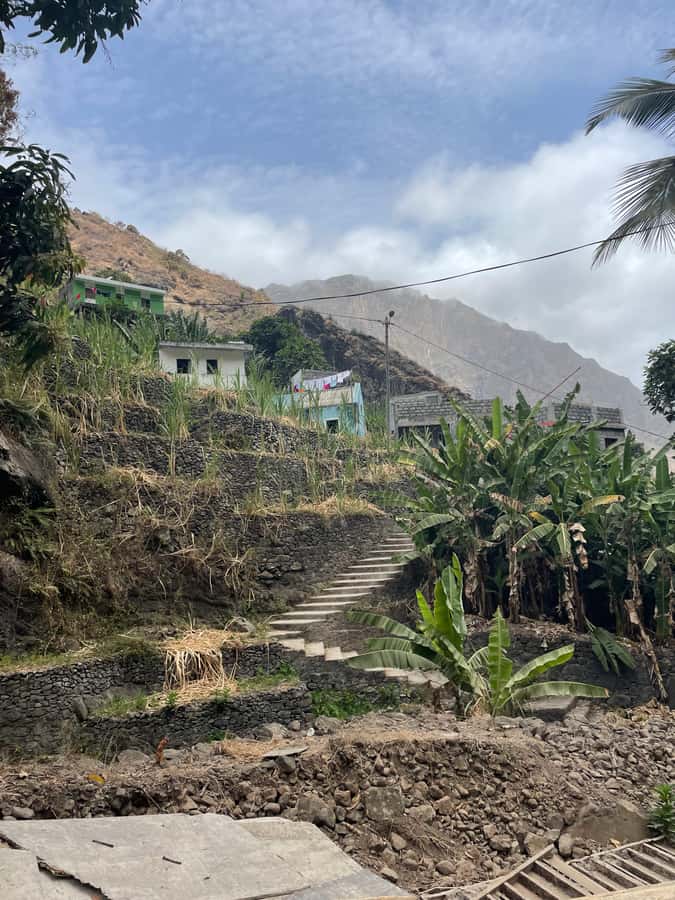
This is the heart of the tour: mostly descending down from the crater toward Cabo de Ribeira, walking into the Valley of Paúl. As you go, you pass through small villages where agriculture is the daily rhythm—this isn’t a quick photo stop. You’re moving through the valley as it functions.
The kind of crops you’ll see along the way include mango, papaya, goiaba, oranges, apples, passion fruit, avocado, sugarcane, banana, and coffee plants. Seeing these repeatedly as you hike helps you understand why Santo Antão has a reputation for fertile pockets—water management and hillside farming are clearly part of the story.
A useful way to enjoy this section is to slow your thinking down. Don’t just scan for pretty views. Notice how the farms seem arranged, how villages sit in relation to the slopes, and what grows in clusters. Your guide’s explanations can turn the walking into a living map.
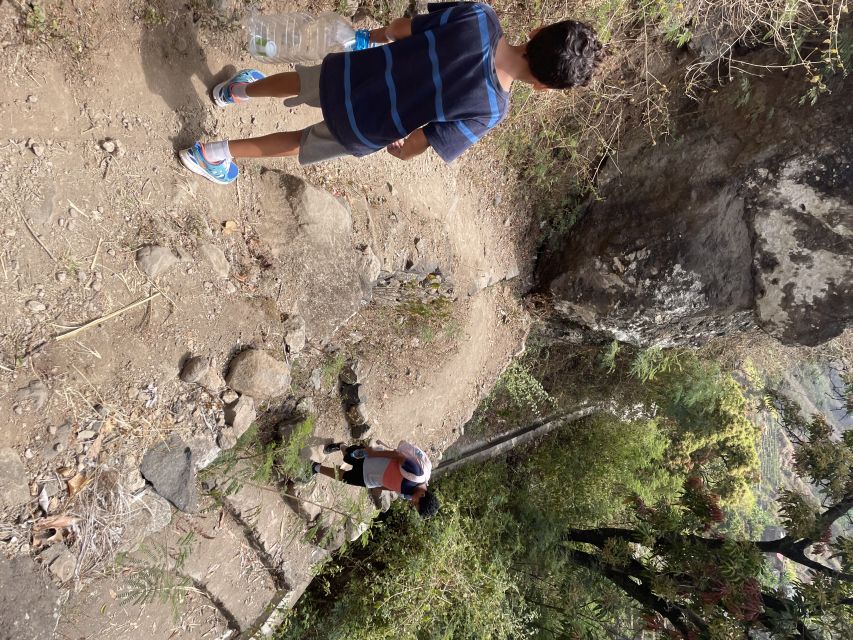
You’ll want to treat this part like a proper hike. Even though it’s a descent, the footing can be challenging, and you’ll get the best experience from shoes with strong grip and ankles that feel supported. A walking stick is optional, but it can help on uneven ground.
Ribeira Grande lunch stop: a break that also makes practical sense
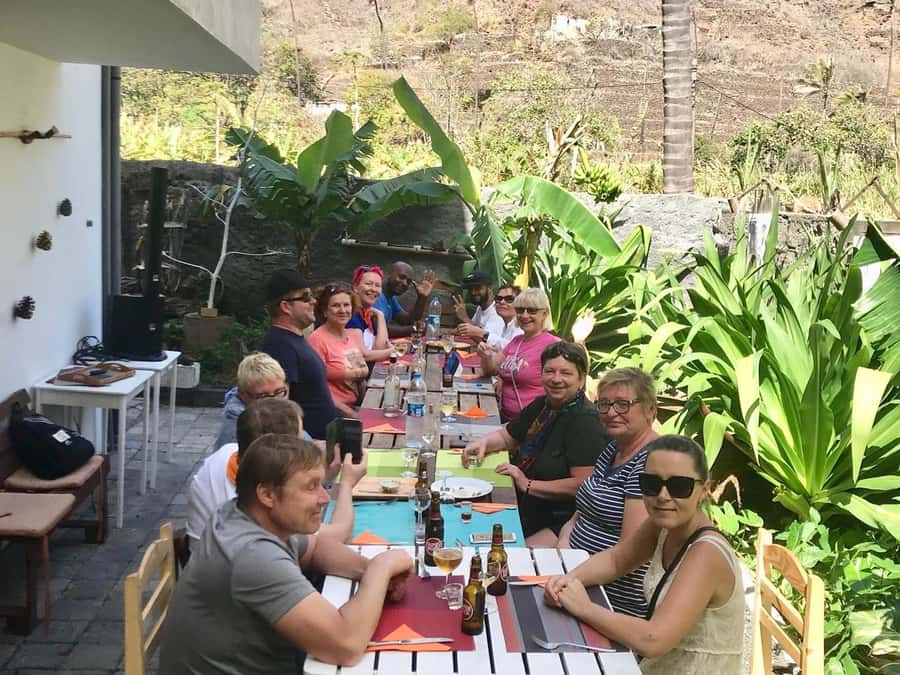
After the hike section, you’ll enjoy lunch at a typical local restaurant in Ribeira Grande. It’s built into the flow so you’re not trying to eat later on the run—by this point, you’ll likely be ready for something warm, filling, and simple.
Lunch itself is not included, and the restaurant accepts euros and escudos, but not credit cards (so bring cash). If you have dietary restrictions or allergies, let the operator know ahead of time.
If you’re choosing what to order, I’d keep it straightforward: pick something local that matches what you’ve been seeing around you. This is one of those days where the food feels more meaningful when it comes from the same island rhythm.
Grogue distillery and the village-to-spirit connection in Paul
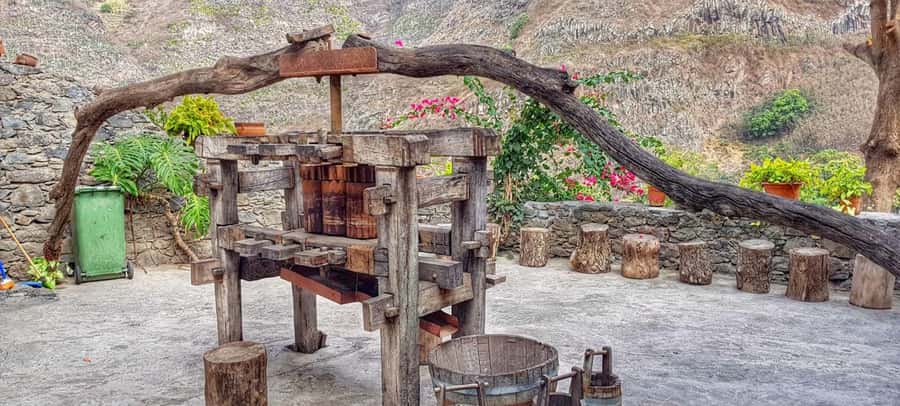
Later you’ll head to Paul for a spirits stop at the Grogue distillery (entrance included). This is the moment where the tour gives you a different kind of insight: not just what the land grows, but how the island turns ingredients into something people share and sell.
Even if you don’t go deep on spirits, the distillery visit gives you context. You’ll understand how rum fits into Cape Verde’s economy and culture, not as a souvenir but as a made-on-island product.
In practice, the distillery portion is shorter than the hike and lunch, so it doesn’t drag. It slots in as a satisfying cultural add-on before your return journey.
The coastal road return and your ride back to São Vicente
After the distillery stop, you return toward Porto Novo via the coastal road, passing mountain tunnels and colorful villages. This driving section matters because it relaxes your legs and gives you a different angle on the island than the hiking path.
Then it’s back to the ferry at Porto Novo, with about 1 hour on the water again. Once you arrive back at São Vicente, you’ll get a transfer back to your accommodation in Mindelo.
This end-of-day structure is part of the tour’s value: you don’t have to figure out connections between multiple pieces of your day. It’s planned as one continuous circuit—ferry out, hike and stops, ferry back.
Price and value: what $141 covers (and why it’s not just a walk)
At $141 per person, this is not a bargain tour, but it’s also not just “pay for a guide.” You’re getting:
- roundtrip ferry tickets
- pickup and drop-off from Mindelo
- private transportation between key points on Santo Antão
- a local guide with multiple language options (English, Portuguese, Spanish, French)
- Grogue distillery entrance
- liability insurance
The one big thing not included is lunch and drinks. That’s normal for a day like this, but it’s the part you’ll want to budget for so you’re not surprised at the restaurant.
When you add up the ferry + transport + guided hiking + distillery access, the price starts to look like paying for a whole-day system. The tour makes the day easier to manage, especially on an island where you’d otherwise spend time figuring out routes, timing, and local guidance.
Who this trek fits best (and who should think twice)
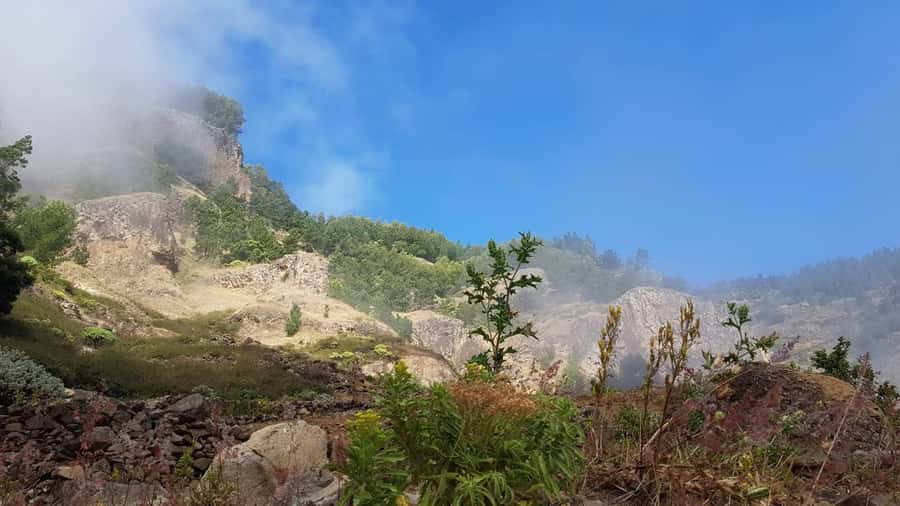
This is a strong match if you want real scenery and real daily life in one day: crater views, fruit and farming, and a distillery stop that connects back to the island’s land.
You’ll enjoy it most if:
- you like guided walking with explanations
- you’re comfortable on uneven, rocky paths (even on a descent)
- you don’t mind a long day—about 11 hours
And you should think twice if you have any of these issues:
- back problems
- mobility impairments
- fear of heights
- altitude sickness concerns
- children under 5
Also plan clothing for changing air. The day includes ocean and mountain air, and it can be cooler during November through March, so a jacket or sweater helps.
What to bring so the day feels good, not hard
Bring these and you’ll reduce the small stress that can ruin a long walk.
Essentials:
- Passport (for ferry travel)
- Hiking shoes with grip
- water (bring a bottle)
- hat and sunglasses for sun protection
- jacket/sweater for cool mountain and ocean air
Optional:
- walking stick (helpful for uneven ground)
Practical tip: pack with the assumption you’ll be moving, then eating later. Don’t plan to buy gear on the fly.
Should you book the Cova–Paúl Valley Trek with Green Line Tours Cabo Verde?
If your goal is a full, coherent Santo Antão day—crater-to-valley views, farming villages, and a rum distillery stop—this is a solid pick. The guides’ reported style (Sonia’s thoughtful pacing, Madu’s big-picture island storytelling, Danny’s ability to answer questions) is a big part of why the experience seems to land well.
Book it if you:
- want guided hiking without handling the logistics
- enjoy being outside for most of the day
- are ready for a descent that needs real shoes
Skip it if:
- you’re uncomfortable with steep exposure
- you can’t manage uneven ground
- you have health limits related to altitude or back/foot issues
FAQ
How long is the Cova–Paúl Valley Trek day trip?
The experience lasts about 11 hours.
Where does the tour start and end?
It includes pickup and drop-off in Mindelo, and it runs via ferry between São Vicente and Santo Antão (Porto Novo).
Is lunch included?
No. Lunch is not included, and the restaurant accepts euros and escudos but not credit cards.
What’s included besides the ferry and transport?
Included items are a local guide, private transportation, roundtrip ferry tickets, Grogue distillery entrance, and liability insurance.
Do I need a passport?
Yes. You must bring your passport for ferry travel, and you’ll be asked for passport details at least 24 hours before the excursion.
What should I bring for the hike?
Bring hiking shoes, water, a jacket (cooler air is possible), a hat and sunglasses, and trekking gear. A walking stick is optional.
Who should not take this tour?
It is not suitable for children under 5, people with back problems, people with mobility impairments, people afraid of heights, or people who may be affected by altitude sickness.
If you want, tell me your hiking comfort level (easy, moderate, or tough) and travel month, and I’ll help you decide what to prioritize—shoes, layers, and how to time your day on Santo Antão.