REVIEW · PORT MORESBY
ADVENTURE KOKODA 10-Day Premium Kokoda Campaign Trek Australian Led
Book on Viator →Operated by Adventure Kokoda · Bookable on Viator
If you want your hiking to mean something, Kokoda fits.
This Adventure Kokoda campaign trek follows the original wartime trail across Papua New Guinea, with major sites like Isurava Memorial, ridge battles, logistic areas, and the Lake Myola region built right into the route. I love that it’s not just walking the jungle trail; you get structured battle briefings and a solemn Dawn Service that helps the history land in a real, human way.
Two things I especially like: the pacing around the Lake Myola segment, including two nights at Bombers campsite for exploring both lakes and seeing the American P40 Kittyhawk crash details on the northern edge of the lakes, and the fact that the leadership mix is local and military-focused, including an Australian expedition leader plus a PNG guide/carrier team. One possible drawback: this is physically demanding country with steep days and long travel legs, so if you’re expecting an easy “scenic walk,” you’ll find it tough.
In the end, the value isn’t just the trek—it’s the planning, the included gear and meals, and the safety systems for a remote route. And yes, you’ll want the right mindset, because Kokoda asks for respect, not just good photos.
In This Review
- Key points that matter before you go
- What you’re really signing up for on the Kokoda Track
- Port Moresby warm-up: Sogeri Lodge, briefings, and your first PNG night
- Day 2: McDonald’s Corner to Owers Corner and the start of the campaign trail
- Days 3–6: The ridgelines—Imita Ridge, Maguli Range (Mogolonumu), Nauro Lookout, and Efogi 2
- Imita Ridge and Fortress Imita (Day 3)
- Maguli Range (Day 4) and breakfast at Banana Camp
- Nauro Lookout and Menari Gap (Day 5)
- Efogi 2 Village and the Japanese monument (Day 6)
- Days 7–9: Moss Forest, Lake Myola, and the Bush that slows your thinking
- Moss Forest and Bombers campsite (Day 7)
- Mt Bellamy junction and Kokoda Gap (Day 8)
- Vagebau Creek, Vabula Ridge, and delaying defenses (Day 9)
- Day 10: Dawn Service at Isurava Memorial and the walk to Isurava Village
- The Dawn Service at Isurava Memorial
- Trek to Isurava Village
- Day 11: Hoi to Kokoda, the two battles for Kokoda, and the monuments
- Day 12: Back to Port Moresby—finish with a flight of relief
- Price and value: why $3,443 can make sense here
- Who this trek suits best (and who should reconsider)
- Should you book Adventure Kokoda?
- FAQ
- FAQ
- Where is the meeting point for this trek?
- How long is the experience?
- What does this tour cost?
- What is the maximum group size?
- Is the Dawn Service at Isurava Memorial included?
- Are permits and trek authorisation included?
- Is accommodation and food included?
- Is emergency support included?
- Is a mosquito-proof tent included?
- Do I need to bring anti-malarial medication?
Key points that matter before you go
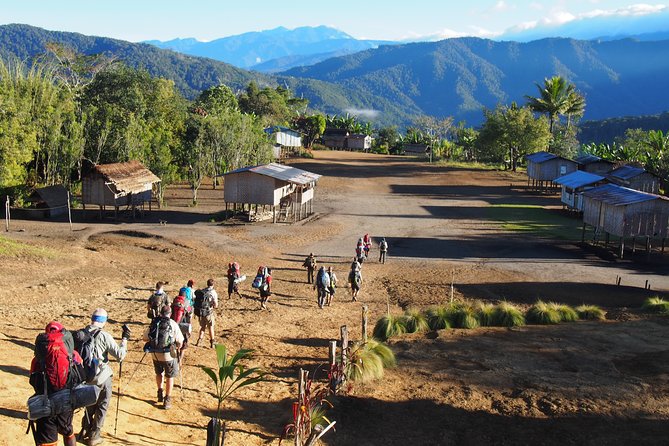
- Dawn Service at Isurava Memorial is built into the schedule and treated as the emotional highlight
- Two nights at Bombers campsite with time to explore Lake Myola and inspect the P40 Kittyhawk crash site
- Specialist battlefield/historical guiding with daily trek briefings through major WWII locations
- All core logistics included: transfers in PNG, permits, topographic map, group gear, meals, and trek support
- Serious safety setup: first-aid support plus satellite phone and UHF radios with a 24-hour rear link
- Small group size (max 15) keeps the trek feeling managed, not crowded
What you’re really signing up for on the Kokoda Track
This trip is about walking the Kokoda campaign trail with an eye for what happened there. That sounds obvious until you see how many battle-relevant stops you’re moving between—ridge after ridge, creek after creek, and named positions tied to the 1942 fighting.
What makes Adventure Kokoda feel different is the structure. You’re not left to “interpret” the land on your own. You get daily trek briefings, specific site inspections, and a specialist Australian battlefield/historical guide who frames what you’re seeing. Add an experienced Koiari trek leader and the PNG guide/carrier team, and you get a balance of local knowledge and campaign-level context.
You’ll also notice the tour keeps respect front and center. That’s not just a vibe. The schedule includes visits connected to WWII remembrance, including Bomana War Cemetery and the Dawn Service at Isurava Memorial, where trekkers and PNG guides/carriers participate.
And because this is Papua New Guinea, “adventure” is real logistics. This isn’t a self-guided stroll. The price reflects that: permits, maps, group equipment, meals, accommodation, emergency communications, and transfers are included so you can focus on moving safely and steadily.
Port Moresby warm-up: Sogeri Lodge, briefings, and your first PNG night
You’re in Port Moresby first. The itinerary has you arriving at around 2:00 pm and checking into Sogeri Lodge. That matters because it gives you a night to reset before the track day starts.
On the evening schedule, you get a trek briefing and then dinner for introductions. Those first conversations can be surprisingly important. When you’re about to hike steep terrain with long days, you want clarity on how the group will run—timing, how pace works, and what to expect in the bush.
Also, don’t ignore the “small stuff” on Day 1: this is where you confirm basics like how you’ll manage your personal items, clothing, and mosquito protection. Your personal mosquito proof tent is included later, but you still need to bring (or plan) the items that protect you day to day.
Day 2: McDonald’s Corner to Owers Corner and the start of the campaign trail
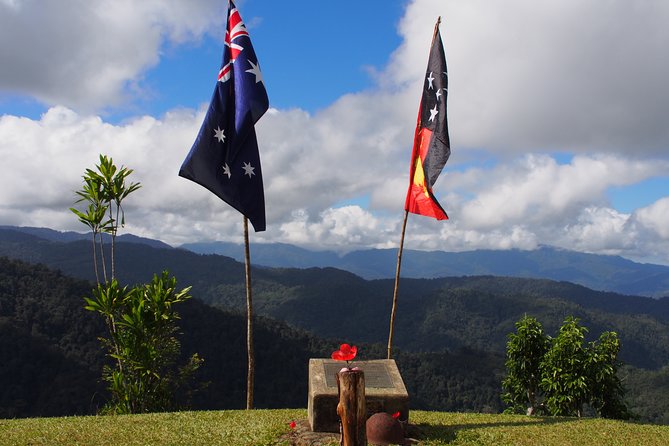
Day 2 begins with an early start: reveille at 5:30 am, breakfast at 6:30, then you depart by vehicle from Sogeri Lodge. You drive to McDonald’s Corner, inspect the monument, and continue to Owers Corner.
At Owers Corner, you meet your guides and porters and inspect a relocated 25-pound artillery gun. That’s a strong way to open the trek because it anchors you in hardware and logistics, not just sweeping jungle views. WWII on the Kokoda campaign wasn’t only infantry fighting; it was movement, positioning, and resupply under extreme conditions.
The trade-off is that Day 2 is still about getting your legs and rhythm. It’s not a “relax day,” and it sets the expectation for the rest of the route: short breaks, steady effort, and constant reminders you’re walking through named, specific places.
Days 3–6: The ridgelines—Imita Ridge, Maguli Range (Mogolonumu), Nauro Lookout, and Efogi 2
The heart of Kokoda is the ridges. You feel it in your body and you learn it in the briefings.
Imita Ridge and Fortress Imita (Day 3)
You follow the wartime trek to the Golden Staircase and then climb up to Imita Ridge at 860m. The stop at Imita is about weapon pits and the Australian brigade position along a dramatic rock face. This is where “the trail” starts feeling like an actual front line.
A practical note: days like this reward smart pacing. You don’t need to sprint. The briefings help, because you understand what you’re climbing toward, but the terrain is still steep and unforgiving.
Maguli Range (Day 4) and breakfast at Banana Camp
Day 4 is built around the grinding climb to the crest of the Maguli Range, also known as Mogolonumu, at 1,335m. The itinerary calls out false ridges and spectacular views, plus breakfast at Banana Camp.
The false ridges are where many people feel their energy drop. You’ll keep climbing, but the “ridge” you want keeps shifting under your feet. If you’ve never done jungle terrain before, this is where you learn to trust small milestones rather than big “tomorrow is easy” promises.
It also includes inspecting Japanese delaying positions. So you’re not just climbing; you’re learning the fight’s geography—how the defenders traded ground for time.
Nauro Lookout and Menari Gap (Day 5)
Day 5 tracks to Hehomuri Creek (listed as known as 5 Creeks) at the base of the Ladavi Saddle. Then you get a sharp climb to Nauro Lookout at 1,035m for a break.
After that, you continue to Menari Gap in the Ladavi Saddle area. Again, it’s not random hiking. Each named spot connects to how forces moved and stalled through the campaign.
Efogi 2 Village and the Japanese monument (Day 6)
Day 6 takes you down to Kavai Creek and then up to Efogi 2 Village (Laununumu) at 1,385m. You inspect the Japanese monument erected by Corporal Nishimura and get a battlesite briefing focused on the Japanese assembly and fighting context.
This is the kind of stop where the silence matters. If you find yourself getting emotionally heavy, that’s normal. Kokoda memorializes people on both sides, and the briefing tone is meant to keep that fact present.
Days 7–9: Moss Forest, Lake Myola, and the Bush that slows your thinking
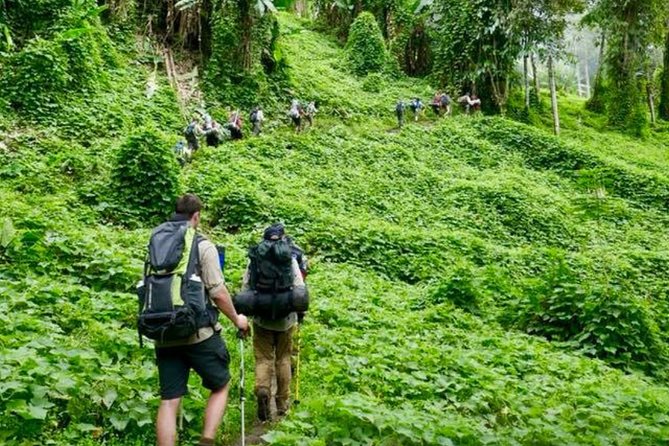
Here’s where the trek shifts from “battleproof the route” to “live inside the place.” You still hike, but the itinerary gives you time to breathe in the surroundings.
Moss Forest and Bombers campsite (Day 7)
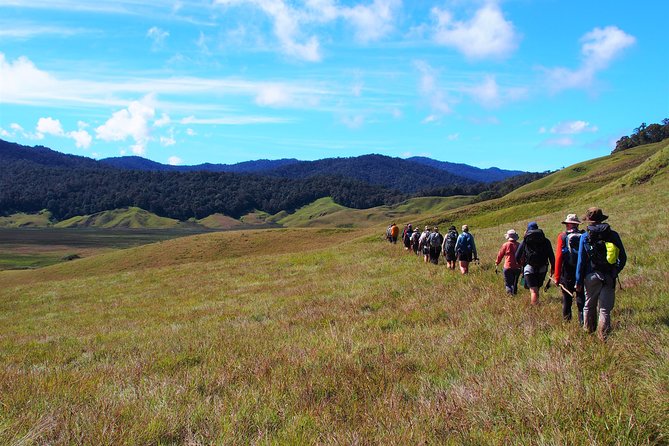
Day 7 goes through the Moss Forest toward the edge of Lake Myola 1, then crosses to the edge of the climb to Lake Myola 2. The route notes that this prairie-like landscape is an extinct volcanic crater discovered by Captain Bert Kienzle.
You then reach Bombers campsite, and the big selling point is time. The trip includes two nights at Bombers campsite so you can spend a day exploring both Myola lakes and inspecting the American P40 Kittyhawk crash site on the northern edge of the lakes.
This day-and-night pacing is a big part of the value. Many trekking tours race through Lake Myola and call it done. Here, you actually get to look around, ask questions, and absorb what the terrain looks like when it stops being “just the next climb.”
Mt Bellamy junction and Kokoda Gap (Day 8)
Day 8 takes you via a track cut by Captain Kienzle to the main Mt Bellamy track junction at 2,245m. You continue down to Kokoda Gap at 2,190m with extensive views down toward the Yodda Valley.
That’s the kind of view that changes how you understand the route. From ridges, the jungle looks continuous. From gaps, you start seeing why commanders cared about sightlines and movement corridors.
Vagebau Creek, Vabula Ridge, and delaying defenses (Day 9)
Day 9 begins at 7:15 am with a daily trek briefing, then treks to Vagebau Creek at 1,895m for morning tea. After that, it goes to the crest of Vabula Ridge at 1,905m and down to a delaying defensive position occupied by the 2/14th–2/16th battalions during their fighting.
This is a good reminder that Kokoda wasn’t only a single “battle.” It was a chain of defensive and offensive actions across different units and positions.
Day 10: Dawn Service at Isurava Memorial and the walk to Isurava Village
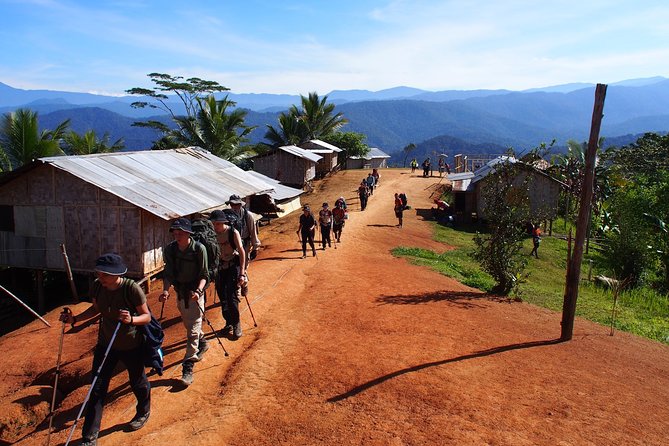
If you only remember one part of this trek, make it this.
The Dawn Service at Isurava Memorial
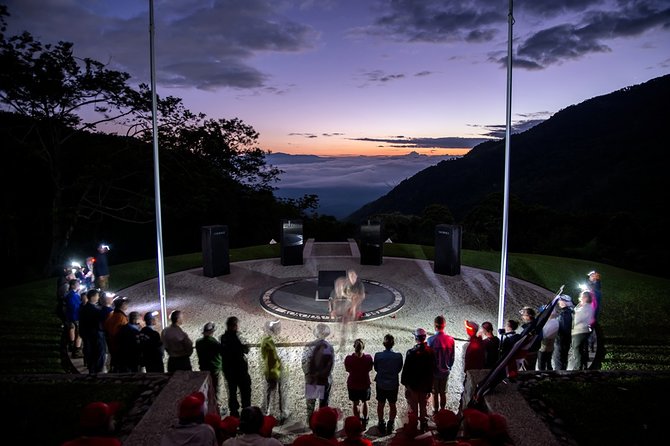
Day 10 starts very early: reveille around 4:30 am and then a Dawn Service at the Isurava Memorial at 5:00 am. The itinerary specifies a wartime briefing on the Battle for Isurava. Trekkers and PNG guides/carriers are involved.
This is the reason the trip gets such strong praise. The trek turns from “history on the trail” into remembrance with people. You’re not just hearing facts. You’re standing where events unfolded.
Trek to Isurava Village
After the service, you get morning tea (listed as around 8:00 am briefing timing) and then trek to Isurava Village at 1,360m via Etume and Ilole creeks. Expect more creek-hopping terrain and another day of purposeful walking, not a sightseeing stroll.
If you’re the kind of person who needs breaks, plan for them emotionally as well as physically. Dawn services and memorial briefings can hit harder than you expect, even if you’ve studied WWII before.
Day 11: Hoi to Kokoda, the two battles for Kokoda, and the monuments
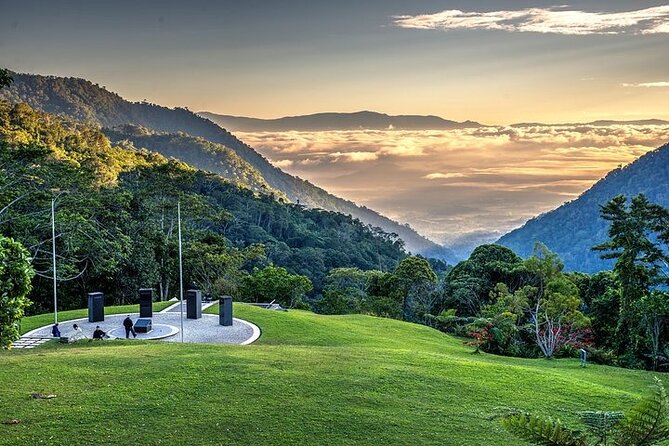
Day 11 starts at 6:00 am with a daily trek briefing. The route moves from Hoi to Kokoda at 395m AMSL via Kovello.
You inspect the plateau where the 39th Militia Battalion first met the Japanese and then get wartime briefing on the two battles for Kokoda. The day includes inspections of monuments and memorials as you close the campaign story arc.
This is the “final exam” feeling of Kokoda. By now you’ve heard the names of ridges and positions often enough that they become real. By the time you reach the last monuments, the story finally stops being abstract.
Day 12: Back to Port Moresby—finish with a flight of relief
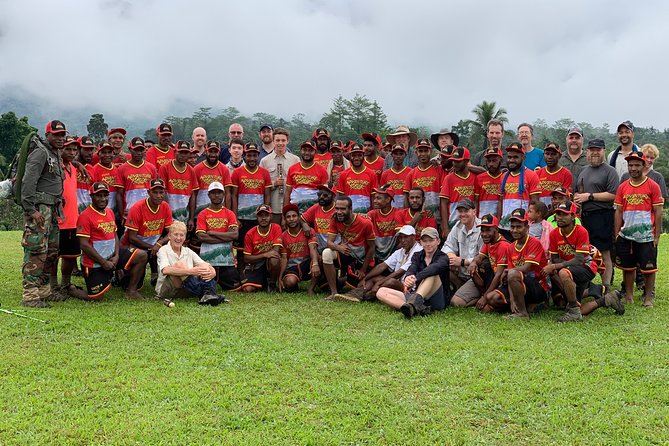
On Day 12, you get reveille at 6:00 am and check out of Sogeri Lodge at 9:00 am. Then you check in at the airport at 11:00 am.
Adventure Kokoda also includes a private charter flight between Port Moresby and Kokoda. The itinerary format doesn’t spell out the exact day for the flight in the excerpted schedule, but the key for you is simple: flight time is part of the package, so you’re not doing endless ground travel to stitch distant sections together.
Price and value: why $3,443 can make sense here
The price is $3,443. That number looks big until you compare it with what you’re actually getting.
This isn’t just a guide and a map. Included items cover the real costs of a remote multi-day trek:
- Official Kokoda Track Authority trek permit
- 1:50,000 topographic map
- All vehicle transfers in PNG
- Pre and post-trek twin-share hotel accommodation and meals
- Fresh meals on the trail, cooked and served by the PNG boss cook
- Group trekking gear like safety ropes, machetes, shovels, and tarpaulins
- Private mosquito proof tent per trekker (and yes, guides handle erecting and dismantling)
- Emergency communications: satellite phone, two UHF radios, and a 24-hour rear link to Port Moresby
- Group first aid kit with trained and experienced first aid support
- Bomana War Cemetery visit and the Isurava Dawn Service
- A specialist Australian expedition leader plus a local Koiari trek leader/carrier team
That’s why I think the value holds. The trek is expensive mainly because it’s hard to run safely and properly in this region. You’re paying for a managed operation: permits, transport, food systems, and comms.
Now for the honest drawback to keep you grounded: one trip account noted that the food was not really as good as advertised. So keep your expectations flexible. It’s still fresh and hygienically prepared, but remote cooking styles can vary from what you’re used to at home.
Who this trek suits best (and who should reconsider)
This tour is aimed at people with a strong physical fitness level. The daily pattern is early starts, steep climbs, and purposeful long days through creeks, saddles, and ridgelines. Your best match is someone who can handle discomfort without turning it into drama.
You’ll also enjoy this most if you like:
- battlefield reading and guided interpretation
- walking with structure (daily briefings, named stops)
- a respectful travel mindset around memorial sites
If you want a purely leisure nature walk, this one may feel too intense and too solemn. The Dawn Service and WWII stopovers aren’t optional extras; they’re the point.
Should you book Adventure Kokoda?
I’d book it if you want Kokoda for what it is: a physically serious hike through named WWII terrain with specialist guiding and a schedule that treats remembrance with care. The small group size (max 15), the included safety gear and emergency communications, and the multi-night Bombers campsite time around Lake Myola are the practical reasons.
But don’t book on “rainforest photo” energy. Book with the mindset that you’ll be working hard, waking early, and learning in a direct way—through the ridges, the memorials, and the dawn at Isurava Memorial.
FAQ
FAQ
Where is the meeting point for this trek?
The meeting point is Jacksons International Airport in Port Moresby.
How long is the experience?
It’s listed as 12 days (approx.).
What does this tour cost?
The price listed is $3,443.
What is the maximum group size?
The maximum is 15 travelers.
Is the Dawn Service at Isurava Memorial included?
Yes. The itinerary includes the Dawn Service Isurava Memorial as part of Day 10.
Are permits and trek authorisation included?
Yes. The tour includes the Official Kokoda Track Authority Trek Permit.
Is accommodation and food included?
Yes. There is pre and post-trek twin-share hotel accommodation and meals in PNG, plus fresh meals on the trail that are cooked and served by the PNG boss cook.
Is emergency support included?
Yes. You get a Group First Aid Kit with trained support, and emergency communications including a satellite phone, two UHF radios, and a 24-hour rear link to Port Moresby.
Is a mosquito-proof tent included?
Yes. You receive a personal mosquito proof tent per trekker, carried, erected, and dismantled by the trek guides.
Do I need to bring anti-malarial medication?
Anti-malarial medication is not included. It’s listed as prescribed by your doctor, so you’ll need to arrange it yourself.
If you want, tell me your fitness level (and hiking experience with steep climbs). I can help you judge whether the pacing in this itinerary matches your comfort zone.