REVIEW · SANTO ANTAO
Santo Antão: Trekking Cova de Paúl Volcano Crater – Ribeira de Paúl
Book on Viator →Operated by Bu Country Tours · Bookable on Viator
The crater-to-valley hike steals the show. I love how this hike starts high in Cova de Paúl and quickly turns into real, working island scenery—volcanic crater farming, plus big views over the interior and out toward the ocean. You’ll get a local guide, and it’s built around the most famous trail on Santo Antão.
What I also like is the focus on your experience, not just the route. The descent into the green valley of Paúl is steep enough to feel like a hike, yet the pace can be adjusted; one guide named Edson stood out for staying attentive to the group and sharing useful local context. You’ll also have optional time to connect the scenery to people’s daily life through a rum stop.
One thing to think about before you book: this is a real downhill trek, with uneven ground and a few spots that can be intimidating if you’re not comfortable with heights. If that’s you, I’d skip it or ask for extra guidance on the day.
In This Review
- Key highlights you’ll feel on this Santo Antão hike
- Why Cova de Paúl to Ribeira de Paúl is the classic route
- The 9:00 pickup and the mountain drive to Cova Natural Park
- Stop 1: Porto Novo to Cova Natural Park
- Stop 2: Cova de Paúl crater—where the view hits first
- Stop 3: Paul Tal and the long zigzag descent
- Rum-making context and grogue tasting: timing is everything
- Transportation and small-group size: why it affects your day
- Pace, footing, and what to bring for a steep downhill
- Price and value: what you’re paying for at $99.97
- Should you book this guided crater-to-valley trek?
- FAQ
- What time does the tour start?
- Is pickup offered?
- How long is the experience?
- How long is the hike?
- Do I need to pay an admission ticket?
- Is grogue tasting included?
- Who should avoid this tour?
- How large is the group?
- Can I cancel for a full refund?
Key highlights you’ll feel on this Santo Antão hike
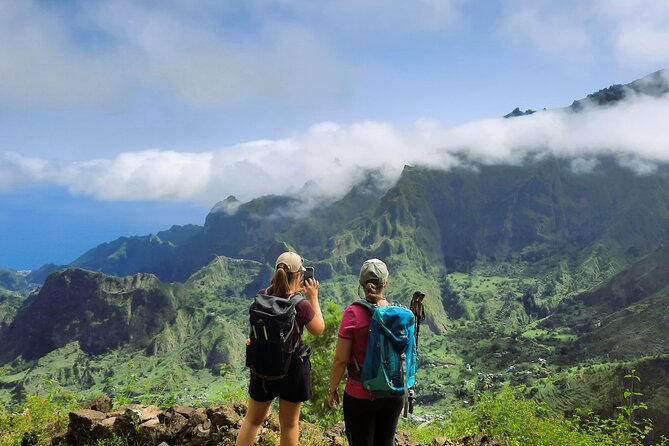
- Cova de Paúl views from around 1,100 meters: extinct crater, green interior fields, and a dramatic “look down” perspective
- A long, guided descent (about 3 hours down a stone path) that takes you through Cape Verde’s greenest valley
- Chance to spot native flora and fauna while you walk past agriculture like vineyards, sugar cane, and bananas
- Ocean views are part of the payoff, with sights reported roughly 10 kilometers out on clear days
- Rum-making context and grogue tasting (seasonal), with the production season running Jan 1 to May 31
Why Cova de Paúl to Ribeira de Paúl is the classic route
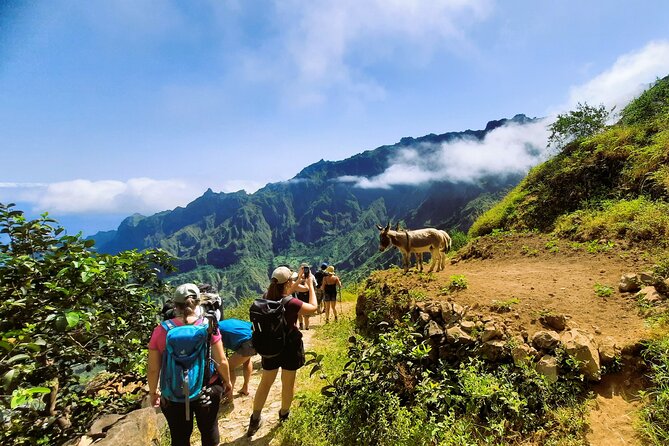
If you come to Santo Antão for hiking, you usually want the trail that most quickly shows you what makes the island different. This route does that fast. You start at a volcanic crater high above sea level, then you work your way into a valley that feels like the island’s “other world”: lush vegetation, terraced-looking fields, and a constant sense of depth as you descend.
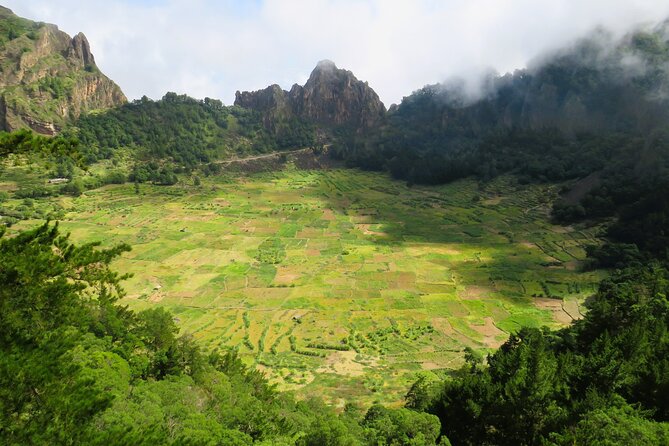
The star is the contrast. The crater is round, old, and extinct—but the interior is used for agriculture, so instead of emptiness you see fields tucked into the volcanic bowl. Then, as you move down toward Ribeira de Paúl, the green valley expands around you. It’s not just scenery; it’s a clear story of how people use the land.
And because you’re hiking with a local guide, the trail feels more like a conversation than a check-the-box activity. Edson-type guides (a name that came up in past experiences) tend to keep explanations practical—what you’re looking at, why it’s there, and where to watch your footing during the steeper sections.
The 9:00 pickup and the mountain drive to Cova Natural Park
The day starts at 9:00 am, and the tour offers pickup from accommodation in Porto Novo (and other listed areas). Expect a mountain drive before you begin hiking. This matters more than it sounds: Santo Antão’s topography changes quickly, and you’re going to feel those elevation shifts during the trek.
The drive also helps you avoid the biggest “vacation mistake” on islands like this—showing up to the start tired and underprepared. By the time you reach Cova Natural Park, you’re already oriented, and the guide can explain the route while you settle in.
Admission at the park is listed as free for this experience, which is a small but real value boost. It means you spend your money on the guided portion (transport and a guide), not on extra gate fees before you’ve even started sweating.
Stop 1: Porto Novo to Cova Natural Park
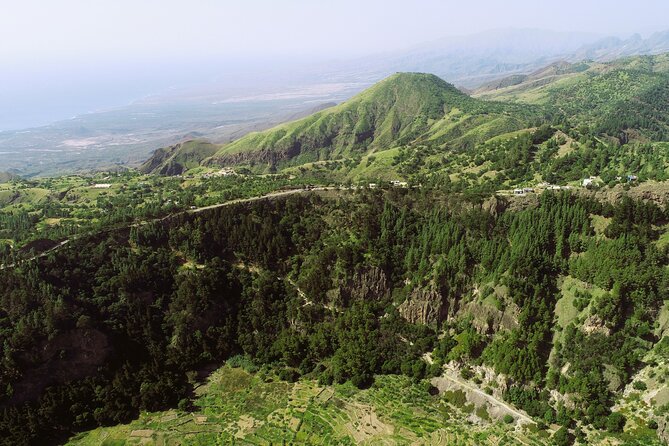
Your first transition is all about getting positioned. The tour picks you up in Porto Novo or nearby meeting areas and then drives through the mountains to reach Cova Natural Park. There’s no complicated “find your own way here” stress, which is a big plus if you’re not sure about island timing.
What to watch for during the drive: you’ll likely notice changes in vegetation as the road climbs. That’s useful context because the hike itself is about moving through ecological zones. If you’re the kind of person who likes to understand what you’re seeing, the drive sets you up to connect the dots by the time you reach the crater rim.
Stop 2: Cova de Paúl crater—where the view hits first
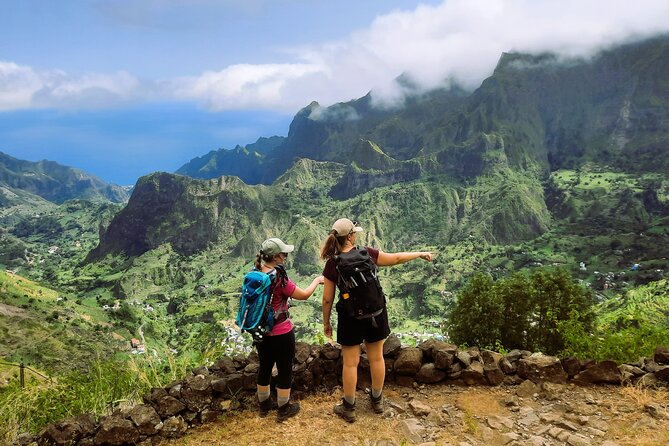
This is the stop you’ll remember. You get your first look at Cape Verde’s largest volcanic crater, Cova de Paúl. From the rim, the extinct volcano structure is obvious, but what really gets your attention is the green interior—agricultural fields spread across the crater plain.
You’ll start the main hike around 1,100 meters above sea level. From there, you drop into the crater’s interior where vegetation feels like an oasis compared to the higher, more exposed parts around the rim. In practical terms, that means your feet are working, but your eyes keep getting rewarded.
Duration note: plan on roughly a 3.5-hour hiking block connected to this segment in the overall experience. The pacing is built around reaching the crater edge for the best “stand and look” perspective—then transitioning onward down toward Paúl.
The payoff view is described as dramatic: you’re down low enough to see the green valley in depth, and in clear conditions you can also see the ocean roughly 10 kilometers away. That’s not just a pretty extra. It helps you understand why people came and stayed here—so you can see, from one spot, how the land falls away and where the island opens to the sea.
Tip for your photo and stamina strategy: if you get a moment at the rim, pause first for a slow look, then shoot. It’s easy to take pictures too early and then regret it when the second angle hits.
Stop 3: Paul Tal and the long zigzag descent
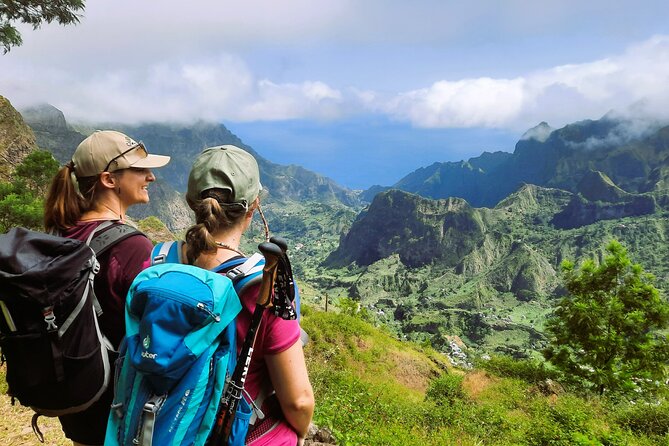
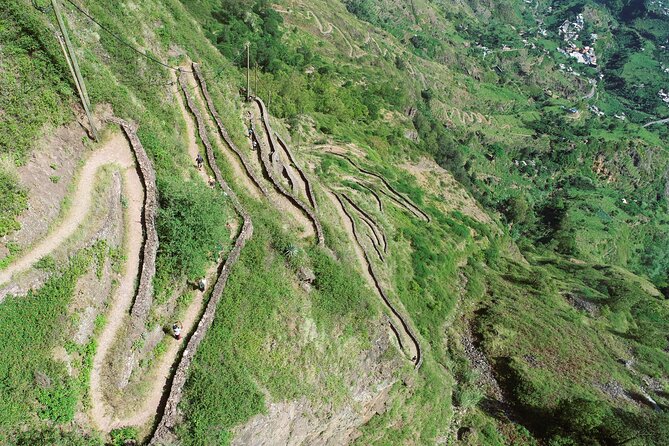
After the crater segment, the hike becomes more active. You’ll start the zigzagging downhill part via a stone path. This is where you’ll feel the trail as trail, not just scenery.
This segment is described as about 3 hours of descent, and it’s steep enough that a moderate fitness level is recommended. It’s also the part where good shoes matter. The reviews point out loose gravel over paving stones, and that’s exactly the kind of foot-level detail that can make or break your comfort. Expect traction to be variable.
What you get for that effort is the real point of the route: walking through Cape Verde’s greenest valley. As you descend, you’ll pass agriculture and learn about local plant life. You might see things like abandoned vineyards, sugar cane, and banana plantations, plus fruit and palm trees such as mango, avocados, and coconut.
This is also the part where a guide earns their pay. A strong local guide helps you notice the smaller things while you keep moving safely—native flora and fauna are mentioned, and the guide’s information can turn a tough downhill into a meaningful walk instead of just a workout.
And yes, your legs may complain afterward. One past experience noted sore legs for days, even though the hike is downhill. That’s common: controlled downhill still taxes your muscles, especially calves and quads.
Rum-making context and grogue tasting: timing is everything
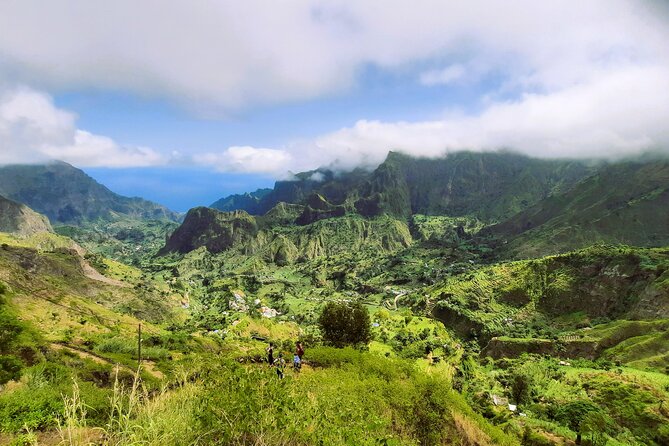
After the main descent and valley walking, the tour includes an opportunity related to local rum production. Specifically, there’s a chance to experience a local rum-making distillery and taste grogue.
Here’s the key detail you should plan around: the rum production season runs January 1 to May 31. If you’re visiting outside that window, you may still hear about the process, but the tasting context may not be the same as during the peak season.
Also, grogue tasting is optional and not included in the price. This is normal for experiences where the drink component costs extra. The best way to make it feel like value is to decide in advance whether you want to add it, and then commit once you’re there rather than thinking about money mid-hike.
The distillery stop is a nice bridge from nature to daily life. You’re not just hiking through a pretty valley; you’re connecting what you’re seeing to something Cape Verdean and local.
Transportation and small-group size: why it affects your day
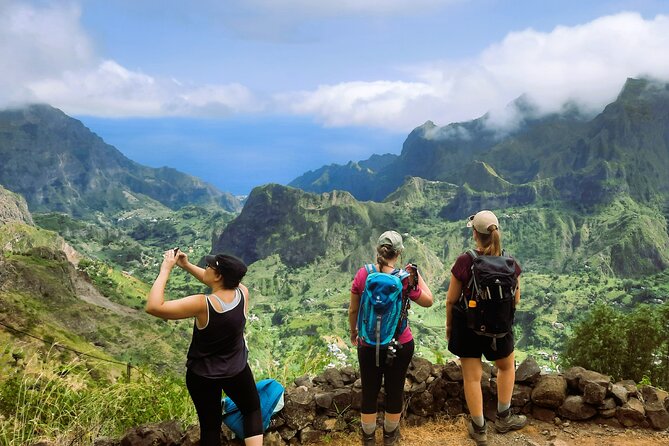
This experience caps at 15 travelers, which is a big deal on a trail like this. Small groups mean you’re less likely to get stuck behind slower hikers on narrow sections, and the guide can manage transitions—like where to pause, when to look up, and when to focus on footing.
You also get transportation included, with pickup and drop-off back to your accommodation area. That convenience matters because a hike like this is only enjoyable when you’re not stressed about the next move. Here, you can focus on the trail and let the logistics be someone else’s job.
Pace, footing, and what to bring for a steep downhill
Let’s make this practical, because the route’s success depends on comfort on uneven ground.
What the terrain sounds like on the day:
- downhill zigzags
- stone paths
- loose gravel over paving stones in at least some sections
So, bring:
- sturdy hiking shoes with solid grip
- a small daypack with water (don’t rely on guesswork)
- sun protection (you’ll be exposed at rim viewpoints)
- layers if you run cold at higher points near the crater
How to pace it:
- slow down at the first steep sections; save speed for flat-ish stretches
- keep your eyes up during view breaks, but don’t fight the trail when the path demands attention
- if you know your legs get sore easily, mention it at the start; a good guide can adjust the rhythm, and Edson-style guidance is about reading the group’s pace
Who this is best for:
- people who enjoy real hiking and don’t mind a long downhill
- anyone who wants the classic Santo Antão experience: crater rim → green valley → cultural stop
Who should think twice:
- anyone afraid of heights, since you’ll be near the crater edge at a key moment
- people with very limited mobility or who struggle with steep steps and uneven stone
Price and value: what you’re paying for at $99.97
At $99.97 per person, you’re not just buying a “walk.” You’re paying for guided interpretation, transportation, and a route that links multiple highlights in one morning block.
Here’s why it’s often good value for the money:
- Pickup and drop-off reduce hassle costs in time and stress
- Guiding service matters on this trail because you’ll want help navigating and understanding what you’re seeing
- Free admission for the park portion removes a common hidden expense
- the route delivers two big scenery zones in one go: crater viewpoints and the Paul valley descent
The only clear “watch item” on cost is alcohol. The tour notes that alcoholic beverages aren’t included, and grogue tasting is optional. If you plan to add it, set aside a little extra budget so it doesn’t feel like a surprise.
Also, booked about 27 days in advance on average. That doesn’t mean you can’t book later, but it’s a hint that this is popular during peak times—especially when the weather is ideal for visibility from the crater.
Should you book this guided crater-to-valley trek?
I’d book it if you want Santo Antão in a single focused hike: volcanic crater views, then a long descent through a working green valley, with a cultural connection at the end. If you’re the type who likes understanding what you’re looking at (not just walking for exercise), this kind of guided route tends to feel worth it quickly.
I’d hesitate if you:
- are nervous about heights and crater-edge moments
- dislike steep downhill trails with loose gravel
- are visiting outside Jan 1 to May 31 and strongly care about grogue tasting (the production season is limited)
If you’re a confident walker with moderate fitness and you like outdoors views plus local context, this is one of the most straightforward ways to get a memorable day on the island.
FAQ
What time does the tour start?
It starts at 9:00 am.
Is pickup offered?
Yes. The tour offers pickup from accommodation in Porto Novo and other listed locations.
How long is the experience?
The tour is about 5 hours in total (approx.).
How long is the hike?
The route includes about 3.5 hours of hiking connected to the crater-to-valley section, plus a downhill zigzag descent of about 3 hours.
Do I need to pay an admission ticket?
Admission is listed as free.
Is grogue tasting included?
Grogue tasting is optional and not included in the price.
Who should avoid this tour?
It’s not recommended for people who are afraid of heights, and it’s suited to travelers with moderate physical fitness.
How large is the group?
The tour has a maximum of 15 travelers.
Can I cancel for a full refund?
Yes. You can cancel up to 24 hours in advance of the start time for a full refund.