REVIEW · FUJIKAWAGUCHIKO MACHI
Private Local Hiking to enjoy the nature and culture of Mt.Fuji
Book on Viator →Operated by Yuki(ゆうき) · Bookable on Viator
Mt. Fuji, up close, for real. This private nature-and-culture hike keeps you away from the usual crowds and puts Mt. Fuji worship, geology, and everyday local life into one smooth morning-to-afternoon walk.
Two things I really like: the depth your guide brings (Yuki has climbed Mt. Fuji 40+ times) and the way the route mixes famous views with quieter spots like Saiko Lake and Aokigahara’s Jukai forest. One consideration: the views depend heavily on weather, and pickup only works for people staying in the Kawaguchiko or Fujiyoshida area.
You also get a practical hiking setup without shopping. Free rental gear includes shoes, poles, and even rain gear, which matters because the Fuji foothills can switch conditions fast. And the pace is built for real humans, not Olympian trail runners.
One more thing to plan for: it’s moderate hiking, so bring comfortable shoes even with rentals, and remember that some parts are uphill. If you’re set on seeing Fuji in perfect clarity, a cloudy day can change the feel of the hike (the tour still runs, but visibility may be less dramatic).
In This Review
- Key things to know before you go
- Why this Mt. Fuji hike feels local, not tour-bus
- The route flow from 9:00 am: lakes, shrine, forest, then viewpoint
- Fuji Omuro Sengen Shrine: the mountain’s worship begins here
- Saiko Lake and Aokigahara Jukai: quieter views and a sea of trees
- Ryugudoketsu-iriguchi lava cave and the Sankodai viewpoint hike
- Menkyo-kaiden Yoshida udon: where the hunger turns into fuel
- Fujisan Onsen Hotel Kaneyamaen: matcha and a real Japanese garden reset
- Price and logistics: what $131.38 really buys you
- Should you book this Mt. Fuji nature-and-culture hike?
- FAQ
- Do I need to bring hiking gear for this Mt. Fuji tour?
- How long is the private Mt. Fuji hike experience?
- Is pickup from my hotel included?
- What stops and sights are included in the itinerary?
- Are any admission fees included for the sites?
- What food is included, and what does it cost?
- What happens if weather is poor?
Key things to know before you go
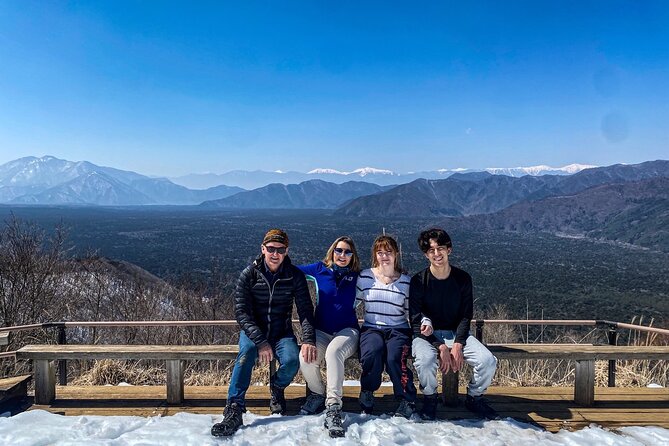
- Yuki as your guide: a certified mountain guide with Mt. Fuji climbs over 40 times, plus local know-how around the area
- Moderate, viewpoint-focused hiking: about 1 hour up and 30 minutes down, plus a longer viewpoint hike at Sankodai
- Quiet nature stops: Saiko Lake and the Aokigahara Jukai forest bring a calmer mood than the busy Fuji Five Lakes areas
- Geology meets spirituality: a lava cave and Mt. Fuji shrine sites connect volcanic history with worship traditions
- You eat locally on schedule: Yoshida udon at a spot most people won’t find alone
- Weather-aware experience: it requires good weather, with a different date or full refund if canceled for poor conditions
Why this Mt. Fuji hike feels local, not tour-bus
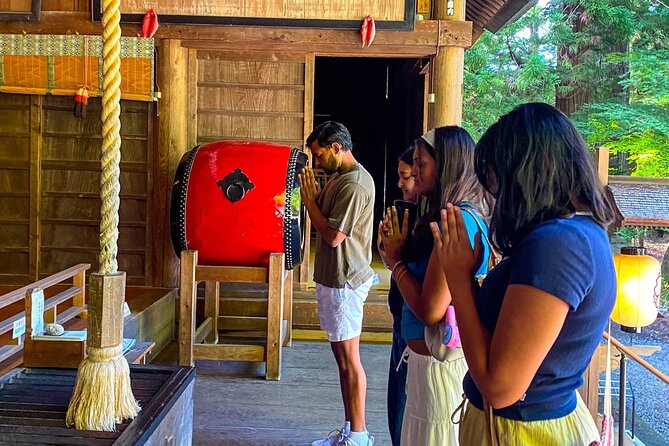
This is not a “look, photo, move on” day. You’re walking at the foot of Mt. Fuji with a licensed local guide who knows how the landscape shaped local beliefs. The vibe is practical: you get a route, you get context, and you get time to stop and actually look.
I especially like that the tour is built around meaning, not just scenery. You’ll visit a shrine connected to major eruptions and then move into quieter, older-feeling nature areas like Saiko Lake and Aokigahara’s sea of trees. It’s a rare combo: religious history and real outdoor walking in the same day.
And because it’s private, the guide can adjust how you move. That matters when the group includes different energy levels, or if clouds roll in and you need to shift where you look for Fuji.
The route flow from 9:00 am: lakes, shrine, forest, then viewpoint

The tour starts at 9:00 am and runs about 5 to 6 hours. In other words, it’s long enough to feel like a real hike day, but not so long that you feel crushed by the end. The pacing includes short stopovers for each site, then hiking segments where you can earn those payoff views.
A big “helpful for planning” detail: the itinerary includes places with free admission listed for each stop. That’s not just good for your wallet—it also keeps the day moving, since you’re not waiting at pay counters.
The order also makes sense. You begin with a classic Mt. Fuji framing angle at Lake Kawaguchiko, then pivot into quieter nature (Saiko Lake) and the deeper forest world (Aokigahara / Jukai). After that, you get geology and spirituality in a cave setting, then the viewpoint hike at Sankodai, and finally food and a garden tea break.
If you’re hoping to spot Mt. Fuji during the day, note the itinerary’s emphasis on iconic views when the weather cooperates. In fog or heavy clouds, the hike still makes sense, but the “Fuji reveal” may be softer.
Fuji Omuro Sengen Shrine: the mountain’s worship begins here
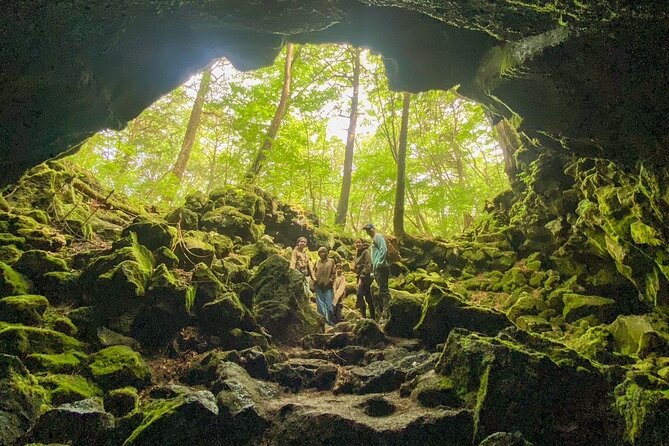
The first major site is Fuji Omuro Sengen Shrine, an ancient place tied to Mt. Fuji worship and major eruptions. The core idea is pretty straightforward and interesting: local ancestors built shrines to help settle fear and explain the volcano’s power.
You’ll spend about 15 minutes here, and entrance is listed as free. That short timing is a plus. You get the context without turning the day into a museum visit. It also sets the tone for what comes next: you’re not just walking through trees; you’re walking on a volcanic stage that shaped beliefs.
What I like about this stop is the way it gives you a lens. After seeing the shrine, the later stops—especially the lava cave and the forest shaped by eruptions—feel more connected. It’s like learning the “why” before you reach the “wow.”
Saiko Lake and Aokigahara Jukai: quieter views and a sea of trees
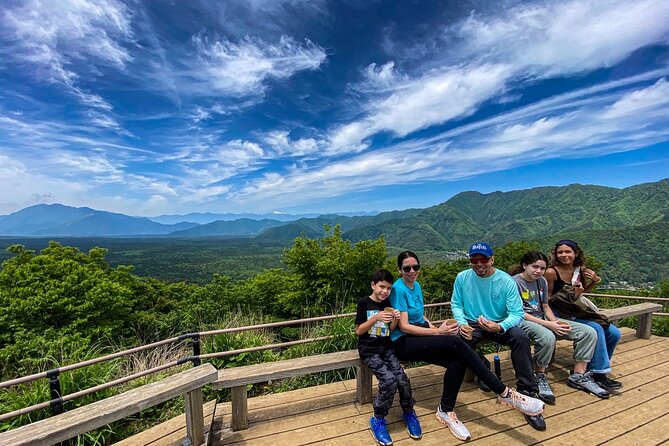
Next up is Saiko Lake, framed as much less crowded than Lake Kawaguchiko. You’ll spend about 10 minutes here. It’s a classic Fuji-five-lakes angle, but the point is the calmer mood. If you like your nature time with fewer interruptions, this is one of the best switches in the itinerary.
Then you move into Aokigahara Forest, also referred to as Jukai, meaning sea of trees. The forest was formed by a major eruption (about 1200 years ago, per the tour details). From a viewpoint, it really does get described like a sea, and you’ll see why the region earned that nickname.
This stop is short (about 15 minutes), but it’s long enough to adjust your eyes from “lake-and-mountain postcard” to “texture and shadow” forest walking. It’s also a nice contrast before the cave, because forests bring a different kind of quiet.
Practical consideration: Aokigahara is a real outdoor environment. Even on a comfortable day, be ready for cooler air under trees. The tour includes rain gear, which helps if conditions turn.
Ryugudoketsu-iriguchi lava cave and the Sankodai viewpoint hike
One of the most memorable parts is Ryugudoketsu-iriguchi, described as a sacred cave where people prayed to the goddess of Mt. Fuji before climbing. The belief was that the cave represented the goddess’s inner space—so it’s spirituality tied directly to geology, not just a random tourist stop.
You’ll spend about 30 minutes here, with free admission. A cave visit gives you a different sensory experience than lakes or forest trails. The air can feel cooler, and you’re moving from outward scenery into a more enclosed, story-rich space.
Then comes the bigger walking payoff at Sankodai. The tour notes an approach that suits outdoor beginners, with roughly about an hour hike one way to a viewpoint, and the scheduled time for the stop is 1 hour 30 minutes. This is where the day transitions from “sites” to a real effort.
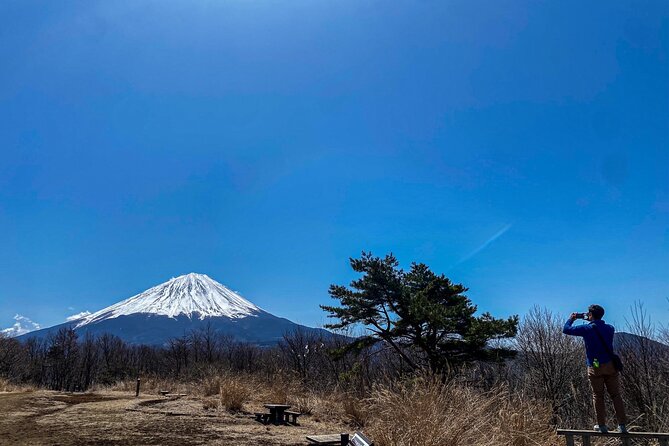
Why it’s worth it: at the viewpoint, you can enjoy Mt. Fuji plus the Jukai sea of trees, and also Lake Saiko in the same broader view. That combo is exactly the kind of payoff you don’t get if you only stick to Kawaguchiko’s main lanes.
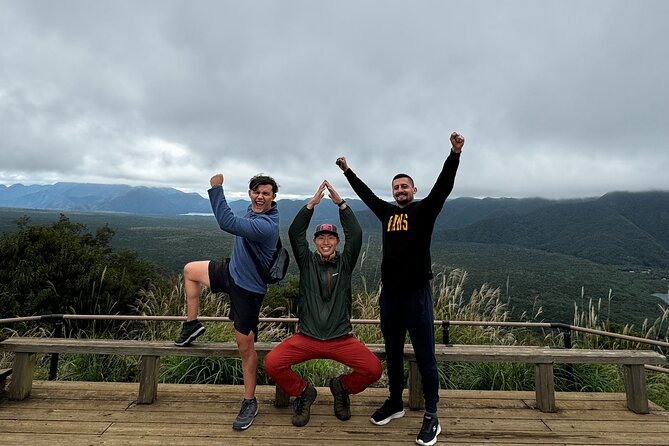
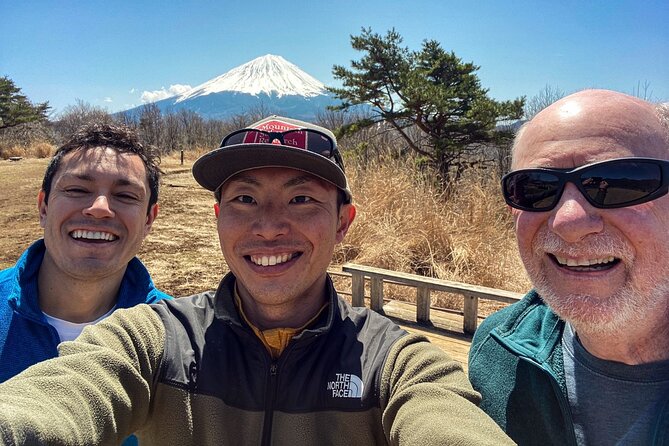
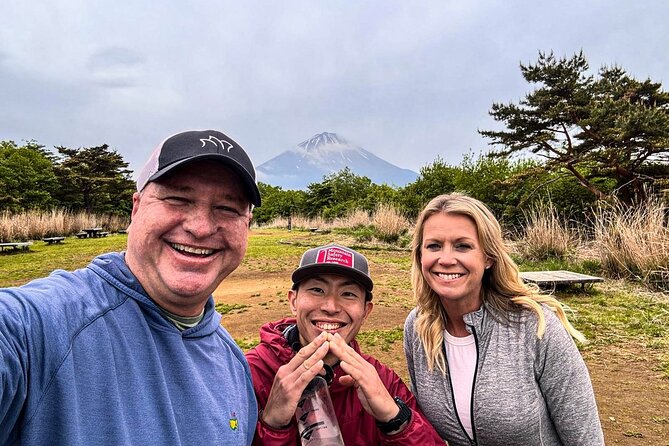
Also, keep your expectations realistic. Even with perfect pacing, Fuji visibility still depends on weather. If it’s clear, you’ll get the iconic look. If it’s cloudy, you’ll still get a powerful sense of place—just less of the mountain’s sharp outline.
Menkyo-kaiden Yoshida udon: where the hunger turns into fuel
After hiking, it’s time for Menkyo-kaiden, where you’ll eat a signature dish with your guide. The key detail here is that your guide takes you to a place tourists are less likely to find. That’s valuable because this is the kind of meal you’ll actually remember after the hike, not just after the photo.
The cost is noted around 1000 yen per person for the meal. Lunch is listed as not included, and the tour gives that general number (about JPY 1,000) so you can budget without stress.
I like that you’re not wasting daylight chasing food or guessing which restaurant is worth it. The guide handles the choice, and you get to focus on refueling and swapping hiking socks for normal-you energy.
One note: the meal stop is scheduled for about 30 minutes. If you’re starving, it helps to arrive ready—don’t treat this like a leisurely brunch.
Fujisan Onsen Hotel Kaneyamaen: matcha and a real Japanese garden reset
To end the active portion, you’ll visit Fujisan Onsen Hotel Kaneyamaen, one of the oldest hotels in Fujiyoshida. The standout here is the large Japanese garden, which the tour notes is open to the public.
Your time is about 30 minutes, with free admission. This is a smart design choice: after a viewpoint hike, you want a place where your body can cool down and your mind can reset.
You’ll get matcha in the garden setup, with an optional sweet. The optional sweet is listed as 1000 yen per person. If you’re on a tight budget, you can still enjoy matcha, just skip the extra.
This garden ending is also where the day feels complete. You’ve already learned how the region’s volcanic history connects to worship and nature. Now you’re finishing with a calm, slower cultural moment that’s very much part of how people live with Fuji, not just how they photograph it.
Price and logistics: what $131.38 really buys you
At $131.38 per person, this tour isn’t the cheapest way to see Mt. Fuji. But it’s also not trying to be. You’re paying for a private guide, private transportation, and a packed schedule that mixes multiple sites and a meal stop without you doing the planning work.
What’s included is practical: trekking shoes, trekking poles, rain jackets and pants, and gloves, plus private transportation and the guide fee. If you’ve ever tried to hike around Fuji without the right footwear, you know why this matters.
You’ll also want to factor in what’s not included. Lunch is not included (budget about 1000 yen). Insurance is not included either, so if you care about travel insurance coverage for hiking, you’ll want to arrange that separately.
Pickup is another logistics point. Pickup is offered only if you’re staying in the Kawaguchiko or Fujiyoshida area. If you’re elsewhere, you’ll need to get yourself to the meeting point area on your own.
Finally, weather. The experience requires good weather. If it’s canceled due to poor weather, you’ll be offered a different date or a full refund. That’s worth taking seriously—especially if clear Fuji views are your top goal.
Should you book this Mt. Fuji nature-and-culture hike?
Book it if you want a guided day that explains what you’re seeing. This tour works best when you like context: the shrine history, the eruption-linked forest, and the cave spirituality connected to Mt. Fuji.
I’d also book it if you want a hike with training wheels. The hiking segments are moderate, and the gear is included, which makes the day feel easier to manage. The schedule is long enough to be satisfying, but it doesn’t turn into an all-day endurance test.
Don’t book it if your priority is only iconic Mt. Fuji photos and you hate flexibility. Visibility depends on weather, and some of the experience is about nature and meaning even when the mountain isn’t perfectly in view.
If you’re deciding at the last minute, here’s my practical advice: check the forecast, wear layers, and bring a camera you don’t mind getting a bit damp. This is an active day. Then you’ll be set for a memorable mix of Fuji culture, geology, and real walking.
FAQ
Do I need to bring hiking gear for this Mt. Fuji tour?
The tour includes trekking shoes, trekking poles, rain jackets and pants, and gloves. That means you can travel light and still hike comfortably.
How long is the private Mt. Fuji hike experience?
It runs about 5 to 6 hours. The itinerary includes multiple stops plus a moderate hike with roughly 1 hour up and 30 minutes down, plus additional hiking time for the viewpoint area.
Is pickup from my hotel included?
Pickup is available only for people staying in the Kawaguchiko or Fujiyoshida area. If you’re not staying there, you’ll need to get to the tour areas on your own.
What stops and sights are included in the itinerary?
You’ll visit Lake Kawaguchiko for Fuji views, Fuji Omuro Sengen Shrine, Saiko Lake, Aokigahara Forest (Jukai), Ryugudoketsu-iriguchi (a sacred cave), and Sankodai for a viewpoint. The day also includes a local meal stop and a garden/matcha stop at Fujisan Onsen Hotel Kaneyamaen.
Are any admission fees included for the sites?
Admission tickets are listed as free for each of the itinerary stops (including the shrine, lakes, forest viewpoints, and cave). So you won’t be paying site-by-site.
What food is included, and what does it cost?
Lunch is not included in the tour price. The guide stop for the local signature food is estimated around JPY 1,000 per person. Matcha at the garden is part of the visit, and a Japanese sweet is optional at about JPY 1,000.
What happens if weather is poor?
This experience requires good weather. If it is canceled due to poor weather, you’ll be offered a different date or a full refund.