REVIEW · OLGIY
Mongolia Trekking Tour in the Altai Tavan Bogd National Park
Book on Viator →Operated by Dauren · Bookable on Viator
Altai views hit you fast. This Mongolia trekking tour in Altai Tavan Bogd National Park is one of the best-planned ways to see the big highlights near Olgii, with an English-speaking guide and private off-road transport doing the heavy lifting early.
What I like most is the mix of hard scenery and real people: you hike to glacier-and-peak viewpoints, then you’re a guest of Tuvan and Kazakh herding families, including a night in a traditional yurt. The main catch is that this is not a soft walk—expect long days, steep sections, and river crossings where there’s no bridge, so moderate fitness and solid boots matter.
In This Review
- Key points you’ll feel on the ground
- Getting to Olgii and into the Altai Tavan Bogd National Park
- Day 1 and the first camp: comfort after a long approach
- Day 2: Trekking to base camp with camel-borne baggage
- Day 3: Climbing Malchin Peak and the border feeling
- Day 4: White River trekking and a camp night by the mountains
- Day 5: Black Valley, Shamanism beliefs, and meeting a Tuvan family
- Day 6: Bear Valley, Takhilt Pass, and river crossings with no bridge
- Day 7: Meet the driver, swim-time logistics, Biluu Hill, and Khoton Lake
- Day 8: Kazakh eagle hunter family night in a yurt and Waterfall Valley hike
- Day 9: Long drive back to the province center, hotel night, farewell dinner
- Day 10: Service ends
- What’s included (and what you should plan for)
- Fitness level and hiking reality checks
- The cultural side: Tuvan and Kazakh family time that feels practical
- Mobile ticket, smart casual, and small planning tips that matter
- Should you book this Altai Tavan Bogd trekking tour?
- FAQ
- How long is the Mongolia trekking tour in Altai Tavan Bogd?
- Where does the tour start?
- Is this tour private?
- What hikes and peaks are included?
- Do I need special climbing gear for Malchin Peak?
- How is baggage handled during trekking?
- Is the White River drinkable?
- What meals are included?
- What’s included in the price, and what’s not?
Key points you’ll feel on the ground
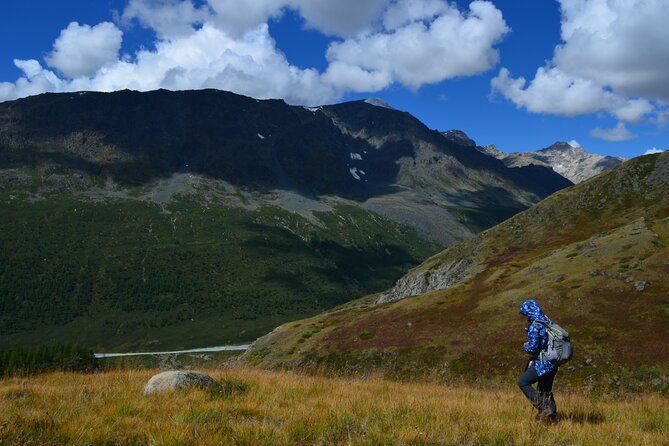
- Camel transport for baggage keeps your pack lighter, so you can focus on hiking
- Malchin Peak + the Russia-Mongolia border views come without technical climbing gear
- White River’s mineral dust makes it scenic, but not drinkable (plan water accordingly)
- Bear Valley timing and Takhilt Pass mean you’re moving through truly wild terrain
- Nomad family stays in both Tuva and Kazakh add culture that’s not staged
- Private vehicle transfers help you link hikes to lakes, swimming spots, and yurt nights efficiently
Getting to Olgii and into the Altai Tavan Bogd National Park
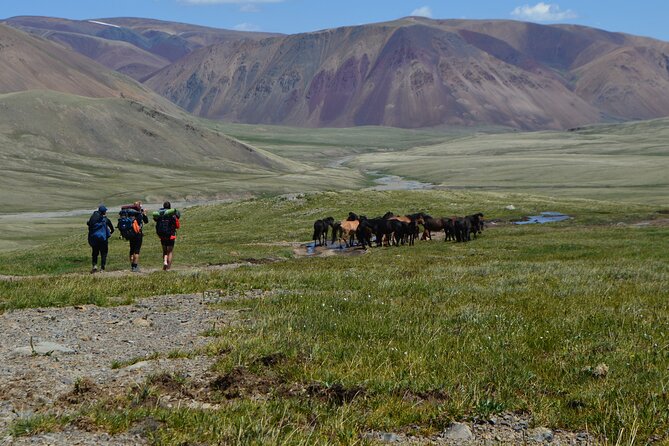
You start in Olgii, western Mongolia’s gateway to the Altai Mountains and the region’s last nomadic eagle-hunting traditions. On day one, you meet the local support team at the airport, plus an English-speaking tour guide, a local driver with an off-road vehicle, and the expedition cook—this matters because the logistics in remote Mongolia can eat your energy if your trip is poorly organized.
Then you drive about six hours to the national park area. This isn’t just travel time; it’s your warm-up. You’ll see the Altai start to open up around you, and by the time you set camp, you’re in the right headspace for trekking.
Practical note: the tour uses a private vehicle for transport inside the route, but transportation to and from attractions is listed as not included. So when you plan your own schedule, think of the tour day as starting from your pickup arrangement and the specified start time.
Day 1 and the first camp: comfort after a long approach
Day one ends with the basic setup: you arrive, camp gets organized, and you’re ready for trekking the next day. I like that the day isn’t packed with extra hikes—six hours of driving through mountain terrain is already doing a job.
One small detail that helps: you’re with a guide and cook from the start, so meals and camp routines are handled as you go. In places like Altai Tavan Bogd, that kind of rhythm keeps you from spending your mental bandwidth on problem-solving.
Dress-wise, plan for smart casual. You still want practical layers for wind and sudden temperature changes, but you don’t need alpine fashion.
Day 2: Trekking to base camp with camel-borne baggage
On day two, breakfast comes first, then you pack what you’ll carry for trekking. The key system here is that your baggage and camping equipment travel by camels, while you take a smaller kit—think lunchbox, water, and a waterproof jacket plus the trekking essentials.
This is a big value point. A camel-supported trek lets you hike longer without hauling heavy loads on your back. You’ll still feel the altitude and the terrain, but the trip’s physical demand stays focused on moving through mountain country, not dragging your entire house uphill.
The hike takes you to base camp with a panoramic view of the Altai Mountains, including Mt. Khuiten and the Potanin glacier. Even if you’ve seen mountain photos before, this is the kind of view that changes how you understand distance—peaks look both close and far at the same time.
Day 3: Climbing Malchin Peak and the border feeling
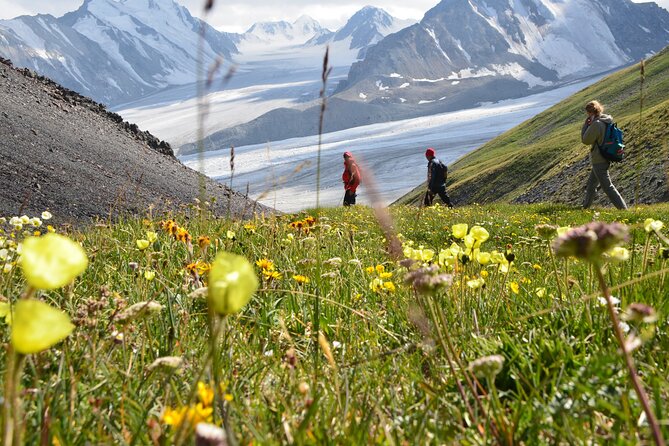
Day three is the highlight climb for many people: you go up to Malchin Peak, known as a traveler favorite. The terrain here is rugged and weather-sensitive, but the good news is it doesn’t require special climbing gear.
You do need good waterproof hiking boots. Near the top, you may find snow while other parts are mostly rock. That combination is classic Altai: stable enough for a steady hike, but slippery if your footwear isn’t up to the job.
The climb takes about six to seven hours, then you return to camp. What I’d prepare for mentally is that this day is about effort and focus—less about stopping for photos every five minutes, more about rhythm.
Also, Malchin sits right on the border between Russia and Mongolia, and that geography adds a subtle sense of place. You’re not just hiking a mountain; you’re standing in a specific edge of the world.
Day 4: White River trekking and a camp night by the mountains
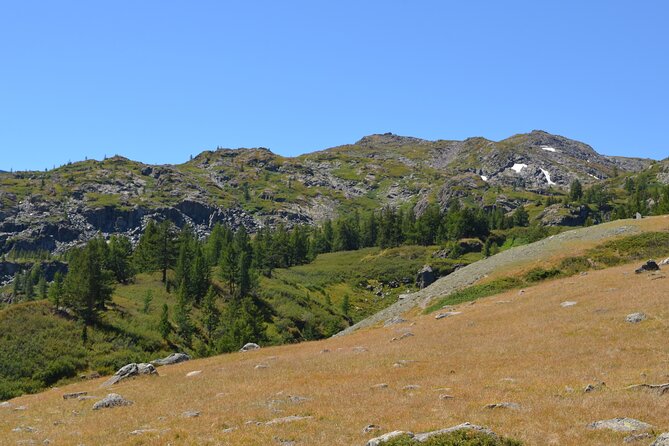
After breakfast, day four moves you back toward the national park entrance—but you take a different, more enjoyable route along the White River. The river’s color is white because of mineral dust, and the tour clearly notes it is not drinkable.
This is practical information worth respecting. When you see that milky-white look, don’t assume it’s safe. Treat the river as scenery, not water.
You’ll enjoy the contrast of the snow-capped mountain backdrop with the river’s strange color. Then you stay at a camping site, settling in and resetting for the next day’s cultural stop.
Day 5: Black Valley, Shamanism beliefs, and meeting a Tuvan family
Day five turns the dial from pure hiking to human geography. You trek to Khar Salaa, which means Black Valley. The itinerary links two neighboring valleys—White River Valley and Black Valley—both tied to nomadic Tuvan people, with their own language and culture.
This is where I see the biggest value of this tour: it isn’t just “look at a family from a distance.” You visit a Tuvan family and explore their traditions firsthand. You’re also dealing with real-world travel constraints here—time, weather, and the realities of moving through a nomadic landscape—so the encounter feels more grounded than a museum-style demonstration.
The tour mentions the region’s shamanism belief and rituals, so you might find cultural elements that are meaningful and unfamiliar. Go in with curiosity, and keep questions simple and respectful.
Day 6: Bear Valley, Takhilt Pass, and river crossings with no bridge
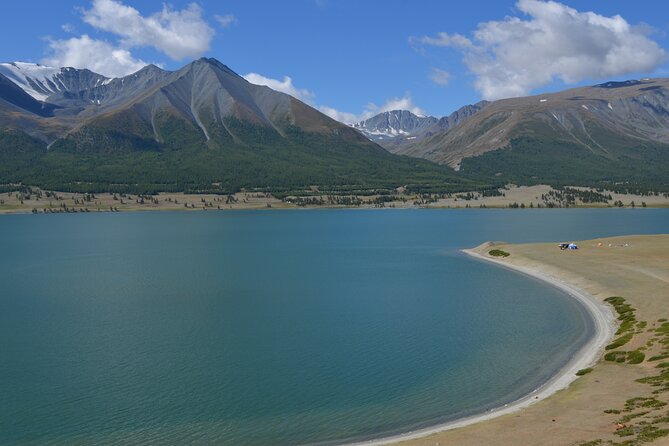
This day is for people who want maximum wild terrain. Bear Valley is described as one of the most beautiful valleys in the park, but it’s accessible only a couple of months a year. That timing matters because you’re not visiting a permanently open scenic spot—you’re catching a narrow window when the route is workable.
Before you reach the valley, you pass over the highest Takhilt Pass. Expect steep, high trails. Then it’s a long descent toward Bear Valley, with several river crossings. The itinerary is explicit: there’s no bridge, and crossings are done barefoot or by jumping very long. Your guide will take the safest way.
That detail is not small. If you’re even a little unsure about balance, cold water, or foot protection, you need to address that with your guide right away. And if you’re sensitive to wet feet or have foot issues, this is the day to think carefully about your own limits.
The payoff is the feeling of getting out into a part of the park that many routes simply can’t reach year-round.
Day 7: Meet the driver, swim-time logistics, Biluu Hill, and Khoton Lake
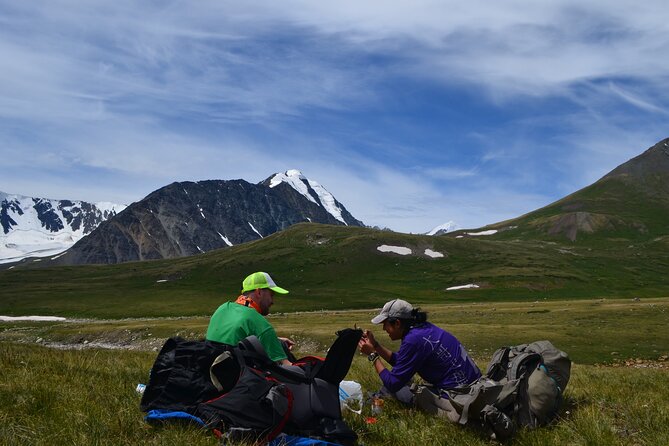
Day seven starts with a shorter hiking block—about three to four hours—then you meet the driver at the end of the valley. After that, you go further by car for about two hours.
This is when the tour adds variety: you arrive at a spot where you can swim, plus you have Biluu hill nearby for views if you climb to the top. Then you get to Khoton Lake, described as a pure mountain lake with an amazing view.
I like that the itinerary doesn’t just chain trekking days nonstop. You get a chance to rinse off, reset, and enjoy the calm of a lake setting. It’s also a good day to work on your stamina for the remaining cultural visit.
Day 8: Kazakh eagle hunter family night in a yurt and Waterfall Valley hike
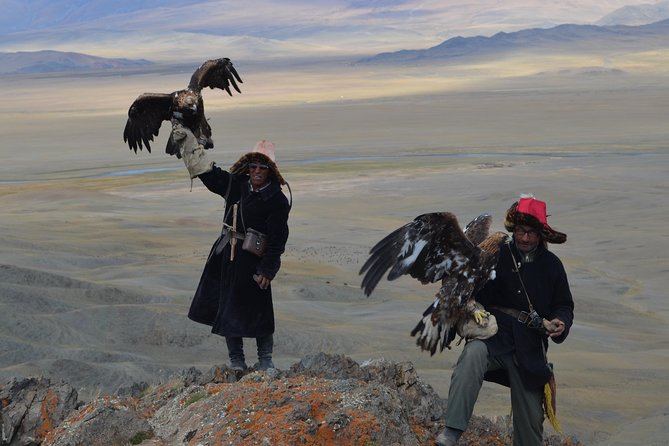
Day eight is a slow start: you can wake up with no rush. After lunch, you migrate to the next place in about a half-hour drive. Then you meet a nomadic Kazakh eagle hunter’s family and become a guest.
Afternoons bring a hike in Waterfall Valley for about three hours. Back with the family, you stay overnight in a traditional yurt, with time to explore their traditions.
This is the cultural bookend to day five. You’re comparing two related but distinct nomadic worlds—Tuvan and Kazakh—both shaped by animal herding, seasonal movement, and spiritual or practical traditions tied to the land.
As always, your attitude drives the experience: being patient, asking before photographing, and helping with simple tasks (if offered) can turn a normal visit into something you remember for years.
Day 9: Long drive back to the province center, hotel night, farewell dinner
On day nine, you return to the province center via another long drive through the Altai Mountains. For lunch, you stop in the Hovd valley.
You then stay in a hotel in town, which is a real morale boost after camping. It also makes packing up and drying gear much easier. The day ends with a farewell dinner at a local restaurant.
This hotel night is part of what makes the tour work as a full package: you don’t just keep living out of a tent until the end.
Day 10: Service ends
Day ten is straightforward: end of service and thank you for coming. The structure keeps expectations clear—no surprise “final hike” day.
What’s included (and what you should plan for)
This tour is priced at $2,300 per person for about 10 days. For this part of the world, the cost is mainly driven by remoteness: private vehicle time, a guide team, a cook, national park fees, accommodations across the route, and the camel transport system that carries your gear.
Included in the package:
- Accommodation as per itinerary
- National Park fees
- Driver/guide and transport by private vehicle
- Dinner (9), breakfast (9), lunch (9)
- All taxes, fees, and handling charges
Not included:
- Transportation to and from attractions
- Alcoholic drinks (available to purchase)
- Domestic flight tickets
So how do you judge value? If you’re trying to do Altai Tavan Bogd independently, you’d still need a guide (for routes and safety), park access, and a plan for food and equipment. This itinerary also builds in cultural hosting and animal-supported baggage handling, which are hard to replicate on your own without real local know-how.
Fitness level and hiking reality checks
The tour asks for moderate physical fitness. That’s honest. You have:
- A multi-hour peak climb to Malchin
- Steep trails over Takhilt Pass
- River crossings with no bridge in Bear Valley
- Day hikes that range up to a few hours each, plus big elevation effort on the peak day
If you’re a confident hiker with good boots and you can handle cold, wet, or slippery conditions, you’ll likely find this tour manageable. If you’re looking for easy, flat walking, you may find the pass and crossing details more challenging than you expected.
The cultural side: Tuvan and Kazakh family time that feels practical
The itinerary doesn’t treat nomad culture like a souvenir. You visit Tuvan families in the Black Valley area and later host time with a Kazakh eagle hunter family in the yurt setting.
The practical value is that family time is woven into the tour itself. You’re moving through valleys, then you slow down enough to understand how people live where the land is the calendar.
That said, cultural encounters require respect on your end. Keep your questions simple, ask before taking photos, and follow your host’s pace.
Mobile ticket, smart casual, and small planning tips that matter
The tour lists a mobile ticket, confirmation at booking, and a smart casual dress code. In the field, though, dress code doesn’t replace real trekking gear. Pack around the weather and water conditions you’ll face on mountain trails.
Here’s what I’d treat as non-negotiable based on the trek descriptions:
- Waterproof hiking boots (especially for Malchin and pass terrain)
- Waterproof jacket
- Water planning for the trek days (the White River is not drinkable)
- Comfort with uneven ground and cold/wet river crossings (Bear Valley day)
Also, the tour requires passport details at booking. Make sure your passport information is ready so the trip can be confirmed.
Should you book this Altai Tavan Bogd trekking tour?
I’d book this tour if you want one solid, well-structured way to see Altai Tavan Bogd National Park without stitching together logistics yourself. The combination of peak views, the White River route, the Bear Valley wild terrain, and a real yurt night with Tuvan and Kazakh families makes it more than a standard trek.
I would hesitate if you want low-effort hiking or if you’re uncomfortable with the day that includes river crossings with no bridge. Also, at $2,300, you should go in sure you want the full remote experience—this price makes sense when you value guides, vehicle support, national park access, and camel-borne baggage help.
If your idea of travel is part hiking, part meeting real people, and you’re okay with real mountain conditions, this trip fits well.
FAQ
How long is the Mongolia trekking tour in Altai Tavan Bogd?
The itinerary is listed as 10 days (approx.).
Where does the tour start?
The meeting time is 8:00 am in Olgii, Mongolia.
Is this tour private?
Yes. It is described as a private tour/activity, meaning only your group participates.
What hikes and peaks are included?
You hike to base camp, climb Malchin Peak, trek along the White River, visit Black Valley (Khar Salaa), go through Takhilt Pass toward Bear Valley, and hike Waterfall Valley. You also visit Khoton Lake and Biluu hill by the itinerary.
Do I need special climbing gear for Malchin Peak?
The climb to Malchin Peak is described as not requiring special climbing gear. You do need good waterproof hiking boots.
How is baggage handled during trekking?
During the trek, the itinerary says all baggage and camping equipment are transported by camels, while you carry only essentials like a lunchbox, water, and a waterproof jacket.
Is the White River drinkable?
No. The tour notes that the White River is not drinkable due to mineral dust.
What meals are included?
The package includes 9 breakfasts, 9 lunches, and 9 dinners.
What’s included in the price, and what’s not?
Included: accommodations per itinerary, national park fees, driver/guide, private vehicle transport, and meal plan counts. Not included: transportation to/from attractions, alcoholic drinks, and domestic flight tickets.