REVIEW · AEOLIAN ISLANDS
Stromboli: sunset trekking to Sciara del Fuoco – Ashàra
Book on Viator →Operated by Ashàra Etna & Stromboli Guides · Bookable on Viator
Stromboli turns the sky into a science class. This trek takes you to Sciara del Fuoco at sunset, then keeps you watching for eruptions after dark.
I love how close you get to the active lava flow—without needing to play map-and-mountain detective. I also like the way a volcanology guide keeps the hike meaningful, not just scenic, while the group moves at a pace that feels workable for the crowd.
One thing to keep in mind: the eruptions can vary from night to night, so you’re hiking for the whole experience, not a guaranteed number of blasts.
In This Review
- Key highlights worth your attention
- Why this Stromboli trek feels different from a normal hike
- Meeting at Piazza San Vincenzo and setting up for the dark
- The climb: a guided trek up to the 400m viewpoint limit
- Stops along the way: views, photos, and an old cemetery
- Strombolicchio in the mix: crossing Mediterranean scrub with sea views
- Arrival at Sciara del Fuoco: sunset color and active eruptions
- The descent in the dark: headlamp matters more than you think
- What’s included (and what you must plan yourself)
- Gear and shoes: how to pack so your feet don’t hate you
- Price and value: is $36.30 really fair?
- Who should book this sunset Sciara del Fuoco trek?
- A quick note on guides: why it can feel personal
- Should you book this Stromboli sunset trek?
- FAQ
- Where does the Stromboli sunset trek start?
- How long is the trek?
- How high do you hike?
- What’s included in the price?
- Do I need to be very fit?
- What language is the tour offered in?
- Can I get a refund if I change my plans or if weather is bad?
Key highlights worth your attention
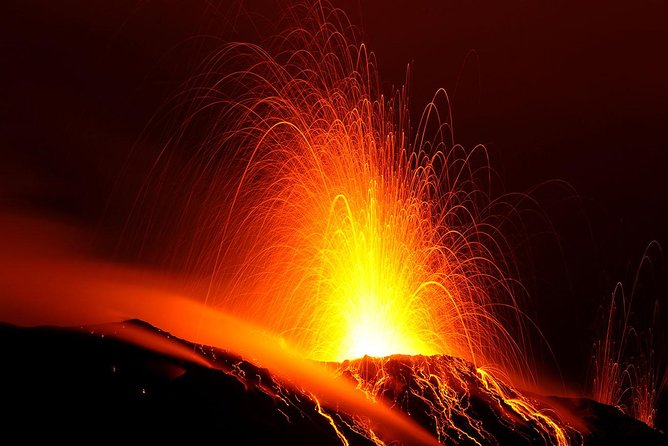
- Sciara del Fuoco at golden hour: sunset views across the Aeolian Islands, with night-sky eruptions after dark
- Guided route to the 400m limit: the hike is built around what’s allowed with volcanology guidance
- Provided safety gear: headlamp and helmet included, plus gear support that helps you manage the dark return
- Breaks that actually matter: photo moments and a stop at an old cemetery along the way
- Strombolicchio in your line of sight: the smaller volcanic island stays in view as you cross Mediterranean scrub
Why this Stromboli trek feels different from a normal hike
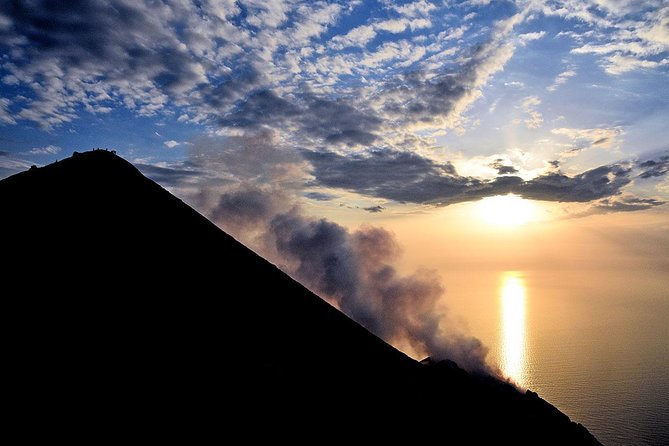
This isn’t a stroll for views and done. It’s a focused sunset-to-night experience on an active volcano, timed so you’re on the right side of the mountain for changing light. You meet before sunset, hike up with a guide, arrive for the color shift across the archipelago, then continue watching as the sky darkens.
The value is that you’re not trying to figure out logistics alone in an active volcanic area. With a guide, you get route choices that are safer and more practical, plus explanations that help you read what you’re seeing—rock formations, volcanic features, and how Stromboli behaves.
The other big win is the “small group” feeling. With a maximum of 25 people, it’s easier for everyone to keep up and for the guide to manage pacing.
Meeting at Piazza San Vincenzo and setting up for the dark
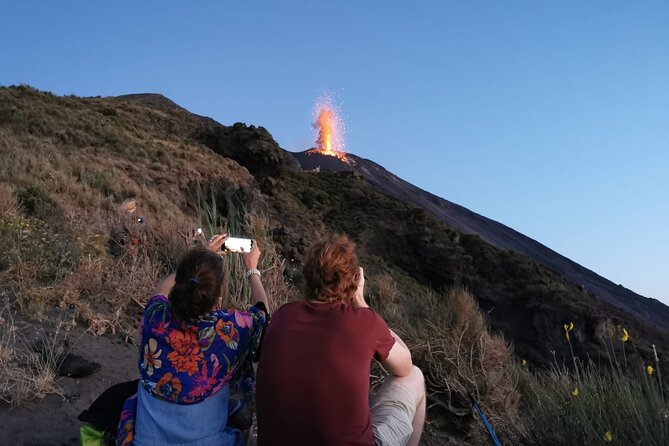
You’ll start at Piazza San Vincenzo, 98050 Stromboli ME, Italy, about 2 hours before sunset. The hike begins after a safety briefing, which matters here because you’re going up and back down in changing visibility.
This timing also affects what you should bring. Since you’ll be out for around 5 hours total and returning downhill after sunset, you’ll want to be ready for cold wind and low light. More than one person recommends bringing a light layer for the top area, because wind can bite once you’re higher up.
If you want to eat before you go, plan for it before the trek. One useful tip from past hikers: you can often grab snacks and water near the meeting area (people specifically mention Bar Ingrid as a convenient spot for topping up). Since bottled water isn’t included, don’t rely on finding it last-minute.
The climb: a guided trek up to the 400m viewpoint limit
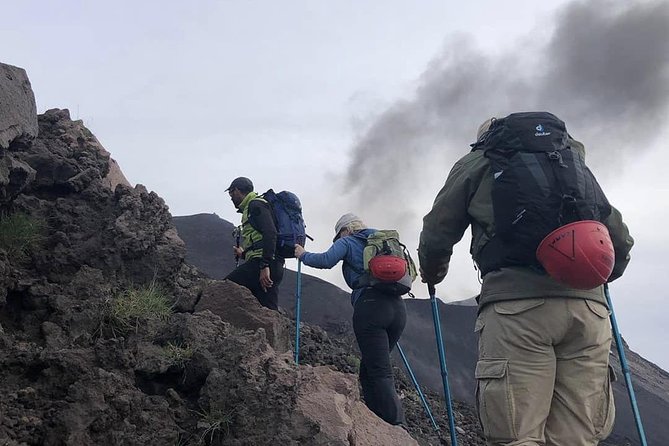
After the briefing, the hike follows a nature trail for a climb to 400 meters, the maximum altitude allowed with a volcanology guide. That limit is key. It means you’re going far enough to get the best volcanic views without pushing into areas that would be harder to manage.
You should expect a climb and then a return that still uses the same muscles. Even when the difficulty level is described as medium, it’s still a volcano hike: uneven ground, sustained walking, and real altitude gain over a few hours.
If you’re a confident hiker, you’ll likely feel it as a workout. If you’re less sure, go slower than you think at first. The guides are there for pace management, and a slower start can keep the whole hike more comfortable.
Stops along the way: views, photos, and an old cemetery
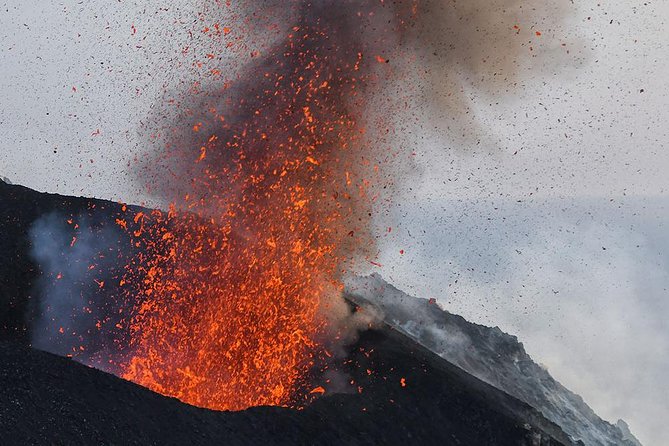
On the way up, the hike includes breaks for views and photos, plus a stop at the island’s old cemetery. That cemetery stop is more than a curiosity. It helps break up the climb and gives you a moment to reset—useful when you’re moving through scrub and rocky ground with sea air and shifting wind.
Photos are a big part of the reason you come this far. At sunset, the angle of light makes Stromboli’s volcanic features look sharper and more dramatic. Expect you’ll want time to take pictures, not just glance and keep walking.
If your goal is great photos, wear something comfortable enough that you won’t constantly adjust straps, sleeves, or gloves. You’ll be stopping and aiming a lot in wind.
Strombolicchio in the mix: crossing Mediterranean scrub with sea views
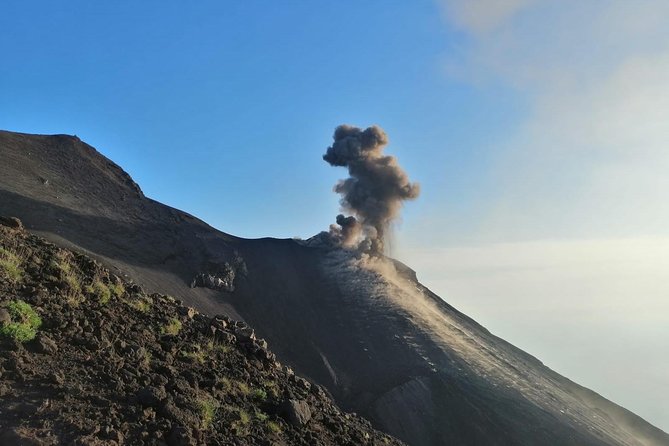
As you move along the route, you’ll cross Mediterranean scrub while the view of Strombolicchio stays with you. This is a cool detail because it makes the trek feel like more than one volcano blob. You’re seeing the archipelago’s volcanic “family” while you walk.
Strombolicchio also helps you orient yourself. When you can keep a landmark in sight, it’s easier to relax and enjoy the walk instead of scanning the ground the whole time.
Arrival at Sciara del Fuoco: sunset color and active eruptions
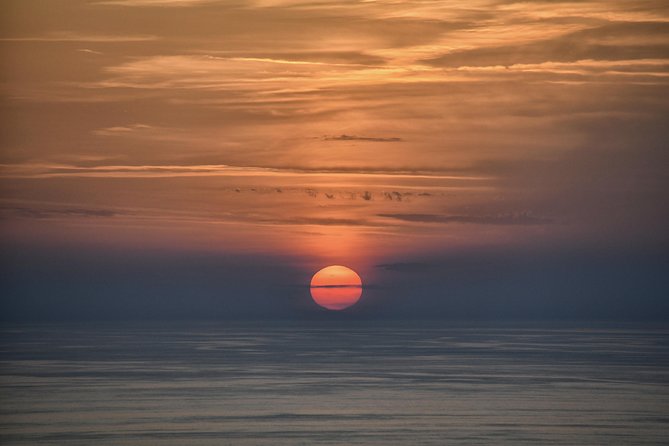
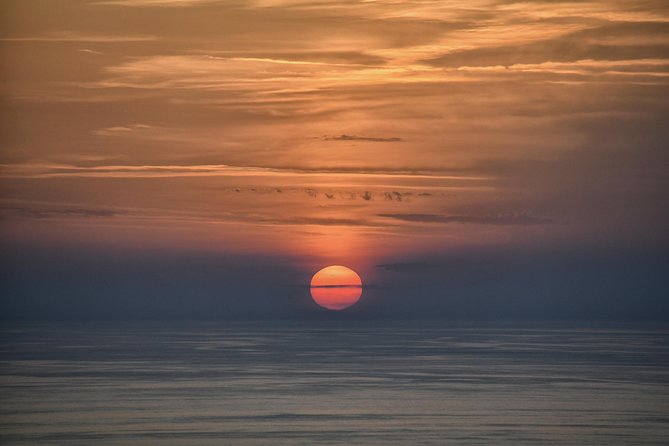
This is the payoff. Once you reach the Sciara del Fuoco panoramic arrival, you get to watch the sunset color the archipelago and then observe volcanic activity as it lights the night sky.
This is where a guide’s explanations really earn their keep. Past hikers mention volcanology-guided commentary that helps you understand what you’re seeing—how eruptions relate to the terrain and why certain rock formations appear the way they do. If you’re the type who likes to learn while you watch, this part is a strong match.
How much you’ll see can vary. Some people report frequent-looking activity, and others mention fewer eruptions on their night. The practical takeaway: go in expecting a show that can be different each time, and focus on being there when conditions shift—light first, eruptions after.
Timing also affects comfort. The top can be cold and windy once you’re waiting for eruptions. If you tend to feel chilly fast, bring a light sweater or windbreaker and keep it easy to pull on during stops.
The descent in the dark: headlamp matters more than you think
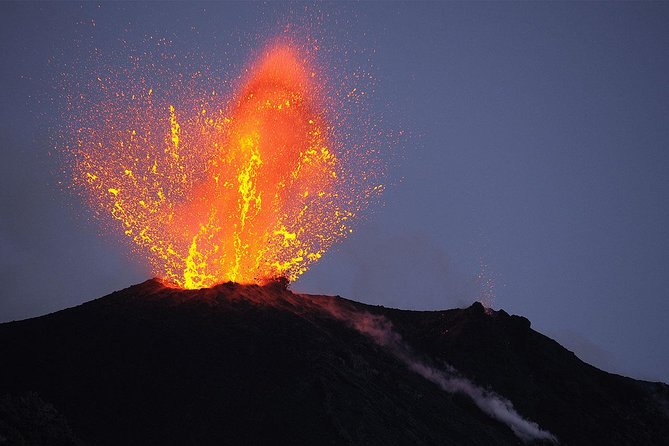
After the waiting and eruption viewing, you’ll return downhill in the dark. This is why the provided equipment is important. A headlamp helps you move safely on uneven ground without juggling a handheld light. A helmet adds another layer of safety while you’re walking in low visibility.
Even if you feel fine at the start, remember you’re tired when you start descending. Gravity helps a bit, but the ground can still be tricky. Take your time, keep your footing, and don’t rush just to finish faster.
Several hikers describe the hike as cold, and the wind can get stronger where you’re waiting. Warm layers, gloves if you like them, and comfortable shoes are not overkill here.
What’s included (and what you must plan yourself)
Included:
- Headlamp
- Helmet
What isn’t included:
- Bottled water (you should plan on bringing at least 1.5 liters, and one traveler recommends 2 liters for comfort)
Food is not included either. The trek is long enough that you’ll likely want a snack strategy. Past hikers suggest picking up something to eat before meeting up and then having enough water to last the full outing.
Here’s the simple way to handle it:
- Bring your own water in a size you can carry safely.
- Eat beforehand so you’re not hungry while you’re trying to stay focused on the sky.
- If you need a hot drink or warm meal after, save it for once you’re back down and can relax.
Gear and shoes: how to pack so your feet don’t hate you
The hike calls for footwear that can handle dirt and uneven footing. The hike is described as having mild to moderate challenge overall, but volcano terrain doesn’t feel like a groomed trail.
Hiking shoes are strongly recommended, and some hikers specifically note that they rented/borrowed boots and poles through the tour setup. Poles can help a lot on both the climb and the dark descent because they reduce strain and improve balance on uneven ground.
If you already have good hiking shoes and poles, great. If you don’t, consider this trek a good reason to travel with or borrow the right gear rather than making do with sneakers.
Also, bring something you can wear against wind. Even if you’re fine in warm coastal air, the top wait can flip your comfort quickly.
Price and value: is $36.30 really fair?
At $36.30 per person for roughly 5 hours, this is one of those experiences where the cost-to-time ratio can feel surprisingly good. You’re paying for a guided route in an active volcanic environment, plus safety gear like headlamps and helmets.
You’re also paying for the timing. Sunset trek logistics are tricky: meeting before sunset, managing the climb, and getting everyone to the right place before the eruption viewing window.
The best value signs here:
- You don’t need to plan a safe route on your own.
- You get a guide who can explain what you’re seeing while you watch.
- You’re not just hiking during daylight—you’re experiencing the volcano’s nighttime behavior.
The main value caveat is outside the operator’s control: eruption frequency can vary. You might see fewer bursts than someone else saw on a different night. Still, the sunset-to-night atmosphere and the guided access to Sciara del Fuoco are the real product.
Who should book this sunset Sciara del Fuoco trek?
This trek fits best if you:
- want an active volcano experience rather than a static viewpoint
- enjoy learning while you watch (guides often add lots of geologic and island context)
- can hike with a moderate fitness level
- don’t mind a cold, windy stop while you wait for the show
It’s a poor match if you hate cold weather layers, struggle on uneven ground, or get extremely anxious in the dark. You don’t just hike in low light—you walk back down after sunset with a headlamp.
It also makes sense for families only if the kids can handle a multi-hour hike and longer waits. One write-up mentions a parent doing it with a child around 9 years old, so it’s not automatically off-limits. But you should still judge based on your group’s comfort level on real hiking terrain.
A quick note on guides: why it can feel personal
One of the most consistently praised things is the guide experience. People mention guides who were caring, informative, and comfortable keeping the group at a good pace. Names that come up include Giuseppe and Pepe, with people describing them as geologists and strong communicators.
That matters because an active volcano is not just scenery. If a guide helps you connect the dots—what you’re seeing, why it looks that way, and how Stromboli’s activity works—the same eruption becomes more meaningful.
If you’re sensitive to communication issues, aim to go into it expecting you’ll get English explanations and ask questions when you can. The tour is offered in English.
Should you book this Stromboli sunset trek?
If your goal is a memorable Stromboli night experience—sunset views and the chance to watch eruptions—then yes, I’d book it. The combination of a guided route, safety equipment for after-dark walking, and the Sciara del Fuoco viewpoint time is exactly the kind of experience that’s hard to replicate on your own.
Book it if:
- you’re comfortable with a medium hike and a dark descent
- you bring water and layers
- you’re okay with eruption activity varying by day
Skip it if:
- you can’t handle hiking on uneven terrain
- you’re likely to feel miserable in cold wind while waiting for the show
- you want a fully predictable program with guaranteed eruption counts
FAQ
Where does the Stromboli sunset trek start?
The activity starts at Piazza San Vincenzo, 98050 Stromboli ME, Italy, and it ends back at the meeting point.
How long is the trek?
It runs about 5 hours.
How high do you hike?
You hike up to a maximum of 400 meters altitude, guided by a volcanology specialist.
What’s included in the price?
Included items are headlamp and helmet.
Do I need to be very fit?
No extreme training is required, but the trek does recommend moderate physical fitness. It includes hiking up and then returning downhill in the dark.
What language is the tour offered in?
The tour is offered in English.
Can I get a refund if I change my plans or if weather is bad?
You can cancel for a full refund if you cancel at least 24 hours before the experience’s start time. The experience also requires good weather, and if it’s canceled due to poor weather, you’ll be offered a different date or a full refund.