REVIEW · CANTERBURY
Rubicon Valley Horse Treks – 2 Hour River Trail Horse Trek
Book on Viator →Operated by Rubicon Valley Horse Treks · Bookable on Viator
One long canyon ride can beat a whole day of errands. At Rubicon Valley Horse Treks, I love how the ride runs through high-country sheep country with big views and a calm, capable guide like Chris. It’s also great that you’re in a small group of six and you can match the pace to your comfort level, even if you’re new. One thing to consider: you’ll be in the saddle for about two hours, and they do have minimum age and weight rules.
The best part for me is the mix of scenery and coaching. You ride alongside the Waimakariri River Canyon, stop at the Otarama lookout for mountain views, and get refreshment breaks plus solid help with handling your horse. Bonus: helmets are provided and worn the whole time, and wet-weather gear is available if the sky decides to change its mind.
If you’re hoping for a super-easy stroll, note that this trek includes up-and-down terrain and terraced sections, with some opportunities for trot and canter for riders who want it. Most people can do it, but you should bring a moderate level of fitness and plan for hills.
In This Review
- Key moments that make this trek worth your time
- Horseback riding by Waimakariri Canyon: what makes it feel special
- Getting started at Rubicon Valley: gear, rules, and the simple goal
- The 2-hour route: from the sheep farm to Otarama lookout
- Refreshments and photo time over the canyon
- Down the terraces: muster routes, farmland, and the real countryside feel
- Horses, control, and why the 6-person group size matters
- Price and value: what $91.47 buys you in real terms
- Who should book, and who might want to think twice
- Should you book Rubicon Valley Horse Treks?
- FAQ
- What is the duration of the 2 Hour River Trail Horse Trek?
- Where does the trek start, and do you return to the same place?
- Do I need prior horseback riding experience?
- What safety gear do you provide?
- Are there age and weight limits?
- What should I wear or bring?
- What if weather is poor?
Key moments that make this trek worth your time
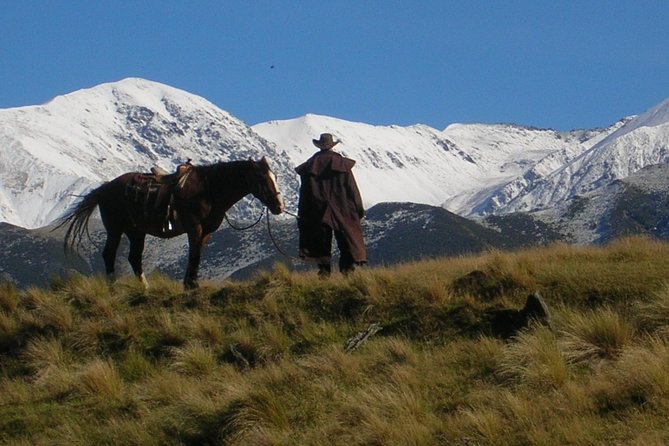
- Waimakariri Canyon views on horseback: you’re seeing the canyon at riding speed, not from a bus window.
- Otarama lookout stop: Southern Alps sightlines with photo time and refreshments.
- Small group, 6:1 guide ratio: you get more attention than on bigger rides.
- Beginner-friendly handling tips: you’ll get help early so you feel in control.
- Terrain plus optional faster riding: comfortable pace when you want it, more action when you’re ready.
- Safety gear that’s actually used: helmets required, with wet-weather gear available.
Horseback riding by Waimakariri Canyon: what makes it feel special
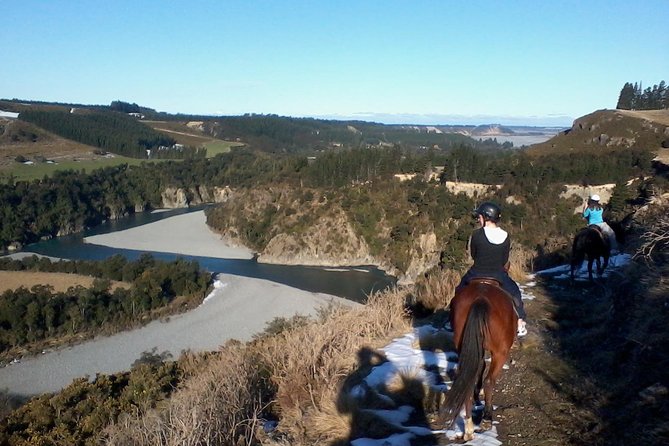
This is the kind of trip that works because it’s grounded in a real working farm. You start at a horse trek base in Springfield (near Christchurch), then move through high-country sheep land where the day-to-day landscape is shaped by muster routes, terraces, and river country. That matters, because the ride doesn’t feel like a theme-park trail. It feels like you’re traveling through the same countryside locals have been using for a long time.
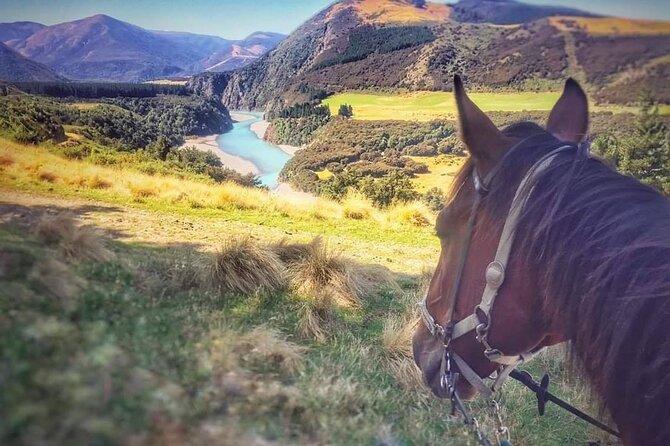
I like that the route is built around a major natural feature: the Waimakariri River Canyon. You don’t just catch a quick glimpse. You ride alongside it as you work your way toward a viewpoint, and the canyon becomes part of the rhythm of the trek—especially around the lookout stop when everyone gets a breather for photos.
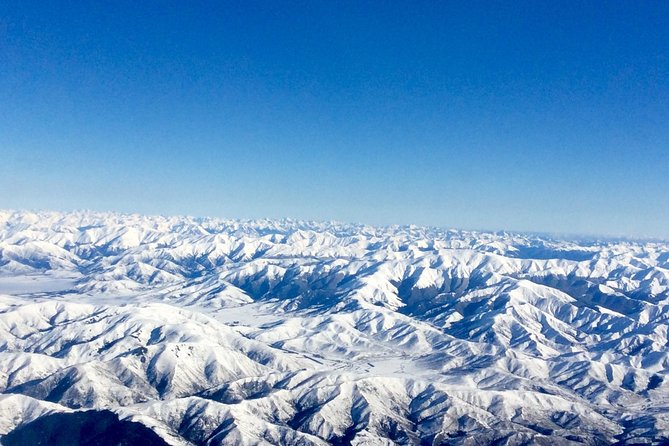
And then there’s the Southern Alps angle. The trek is timed and routed so you get mountain views over the Torlesse basin from an Otarama lookout point. Even if you’re not chasing geology facts, it’s the kind of panorama that makes you stop talking and just look. The ride gives you that without needing a long hike.
The other big reason this feels “worth it” is the human factor. The guide—typically Chris—keeps groups small and adjusts the experience. In reviews, people repeatedly mention how patient Chris is with first-timers. That’s not marketing fluff. If you’ve only been on a horse once or twice, you’ll likely appreciate the extra guidance and the way they help you build confidence fast.
Getting started at Rubicon Valley: gear, rules, and the simple goal
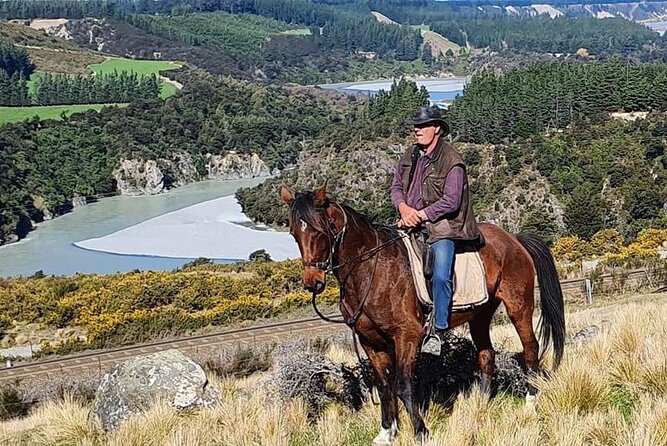
Meeting is at Rubicon Valley Horse Treks, 534 Rubicon Road, Springfield. The good news is that the trek ends back at the meeting point, so you’re not dealing with transport after you’re done riding.
Before you go out, you’ll sign a waiver. You also need the basics right from the start: sturdy closed shoes (running shoes are okay) and long trousers. Plan on closed-toe comfort more than style. Horse tack and stirrups don’t care what you packed.
Safety is handled in an unusually straightforward way: helmets are provided and must be worn at all times when riding. That’s a detail worth taking seriously because it changes the whole feel of the ride. You can focus on your footing and balance instead of worrying about what’s expected. Wet-weather gear is also available if conditions demand it.
There are a few eligibility items you should check before you buy: riders must be at least 12 years old, and children need an adult along with them. There’s also a weight limit of 120 kilos (264 lbs). If you’re close to any limit, it’s worth confirming before showing up.
Finally, groups are capped at six travelers per trek, with a guide ratio of 6:1. In practice, that means you get more attention, more quick corrections, and more time to ask questions while you’re mounted. That’s a big deal when you’re a beginner and the “how do I…” questions start piling up.
The 2-hour route: from the sheep farm to Otarama lookout
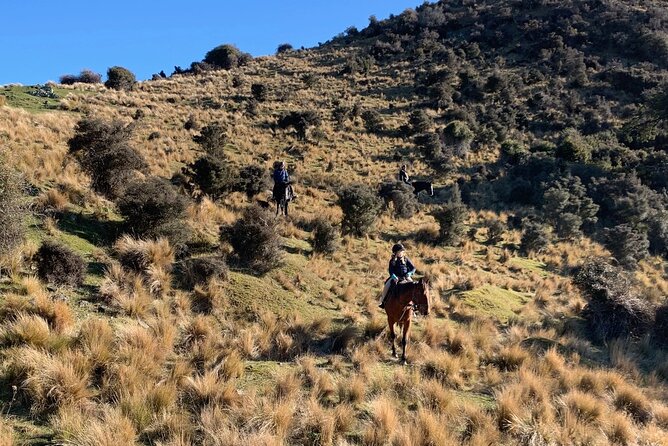
This is a two-hour guided trek, and the schedule is built around a viewpoint. You’ll set out on the high-country farm near Christchurch, riding through the valley toward the Otarama lookout point. Along the way, you’ll travel through areas associated with the Waimakariri River Canyon—specifically the snow-fed canyon corridor that gives the river its character.
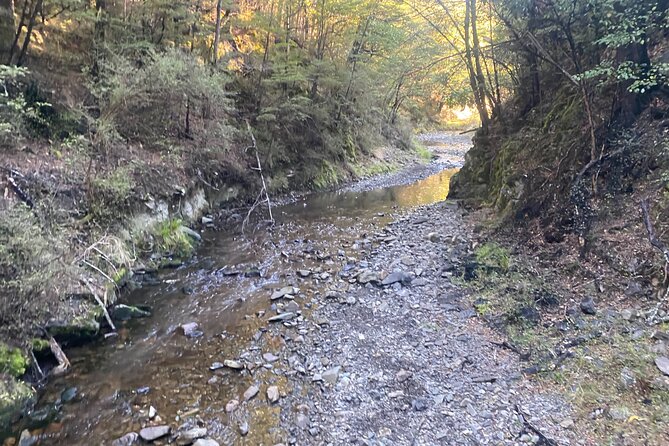
What you’ll notice first is the variety of riding surfaces and the way the trail weaves through terrain. Expect small hills and terraces. Reviews mention up-and-down sections and even a stream crossing, so don’t assume it’s flat. You’ll also feel the difference between “horse walking calmly” and “horse moving with a bit more energy,” especially as the guide settles the group.
Still, the trek is designed to be doable for both beginners and more experienced riders. The guide keeps your pace flexible. If you’re new, you can ride at a comfortable tempo. If you’ve been riding longer, you may get chances for a quicker ride—like trot or canter—when conditions and the group allow.
The Otarama lookout is the payoff point. This is where you get the mountain views over the Torlesse basin and an elevated look at the Waimakariri Canyon. The guide positions the group so you can enjoy it, not just pass through it. The viewpoint stop also sets the tone: you’re not rushing. You’re taking in the countryside while the horses pause and everyone catches their breath.
If you’re the kind of person who hates “tourist time,” this is a nice middle ground. It’s not a museum stop. It’s a riding stop—so the break feels natural.
Refreshments and photo time over the canyon
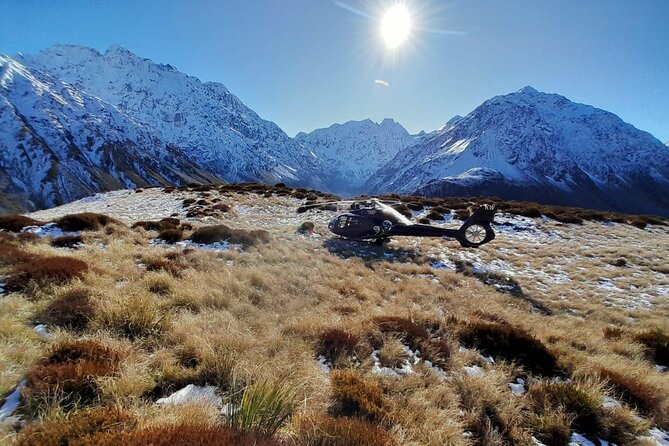
A short stop is built into the ride for refreshments and photo opportunities overlooking the canyon. You don’t need to worry about scrambling for snacks at the last minute or wondering how long you’ll be off the horse. This break is part of the plan.
For photos, the advantage is timing. Since you’ve been riding alongside the canyon, you’ll have context for what you’re seeing. That turns a simple camera shot into a “now I understand the place” moment. From the lookout, the Southern Alps angle also means you’re not just photographing rock and river—you’re getting depth in the view.
This is also when the guide’s teaching style shines. If you ask questions, you’ll likely get clear answers about how to hold the reins, how to adjust your position, or how to work with your horse at different gaits. Reviews repeatedly mention that Chris explains things well and is patient—especially when people are riding for the first time.
Down the terraces: muster routes, farmland, and the real countryside feel
After the lookout stop, the ride transitions into a downhill and farmland section. The description you should expect is: ride down the terraces, then follow a musterers trail through the farmland back toward the farm base.
This part matters because it’s where you can feel the terrain change. Terraced riding can be tricky for first-timers—not because it’s extreme, but because your body reacts differently on slopes and uneven ground. The horses help you, but you still need to stay alert with your balance and your seat.
This is also the section where you can spot how the farm shapes the route. Musterers’ trails are practical paths—made for moving animals and working land efficiently. When you ride them, the land feels less like “a scenic route” and more like functional terrain with history in the way it’s used.
If you want a little extra action, this is often where it can happen—provided you’re comfortable and the guide decides conditions are right. More experienced riders in reviews mention getting chances for faster riding like trot and canter. Beginners usually find the pace adjustable and manageable, especially after the early coaching.
And yes, you might get a stream crossing. One review calls it out as a memorable moment. If that happens during your ride, it’s usually one of those “this is New Zealand” seconds where you’re smiling even while you concentrate on not overthinking it.
Horses, control, and why the 6-person group size matters
A horse trek is one part scenery, one part teamwork. The best rides feel safe and calm, not because everything is perfect, but because the guide manages the pace and teaches you fast.
Rubicon Valley’s setup helps. The group is limited to six travelers, and the guide ratio is 6:1. That gives the guide room to check on everyone. It also reduces the chaos you can get with larger groups—where you’re stuck far from the guide and you learn only when you’re already doing it wrong.
In the reviews, people repeatedly mention feeling safe, even on a day that includes hills. Many first-time riders say the guide made them confident quickly. You can also sense that the operation takes the horses seriously—one review explicitly notes how much care Chris takes with the horses.
Here’s what you should do mentally when you arrive: treat the first minutes like your learning period. Expect to adjust to the horse’s movement, how the tack feels, and how rein handling works. Once you settle, the trek becomes fun fast. Reviews also mention horses being beautiful and not feeling like you’re riding a random mount. That’s the difference between a “put you on and wish you luck” ride and a guided experience.
Also, bring a practical mindset about attire. Long trousers reduce rub and help keep you comfortable in saddle positions. Closed shoes help with stability in the stirrups. It’s not fancy. It’s smart.
Price and value: what $91.47 buys you in real terms
At $91.47 per person, this isn’t the cheapest activity in the Christchurch region. But for what you’re getting—a guided two-hour ride in a small group with safety gear—it reads as fair value.
Here’s why the price makes sense:
- Professional guide + safety equipment are included.
- You’re riding with a maximum 6-person group and a 6:1 guide ratio.
- Wet-weather gear is included if needed.
- You’re paying for access to private land and horses that are cared for day-to-day.
- You get a planned lookout stop for photos and refreshments, not just a long trail loop.
If you compare this to a longer horseback adventure, you might feel like two hours is short. But as a first trek, it’s a sweet spot. It’s long enough to enjoy the canyon and lookout payoff. It’s short enough that beginners don’t lose the fun before they’re done.
If you already ride often, you might want more time. But even experienced riders in reviews describe enjoying trot/canter options when possible and appreciating the guide’s teaching.
Who should book, and who might want to think twice
This trek suits a wide range of riders because the guide can adjust pace. If you’re a beginner who wants a confident start, this is one of those experiences where the guide’s patience matters. The reviews are heavy on the idea that first-timers feel comfortable quickly and get coaching that sticks.
It also fits experienced riders who want a classic high-country ride with chances for faster gaits. You’re not locked into a slow walk for the whole trip. If you’re comfortable, you can likely ask for or accept more energy when conditions allow.
You might want to think twice if you:
- don’t meet the minimum age (12+) or weight limit (120 kilos/264 lbs),
- don’t have moderate fitness for hills and terraces,
- prefer completely flat, minimal-effort walking experiences.
Also, if you show up wearing the wrong shoes or short clothing, the ride won’t feel as comfortable. This is one of those tours where basic preparation pays off.
Should you book Rubicon Valley Horse Treks?
Book this if you want a guided horseback experience that’s small-group, safety-forward, and built around iconic views of the Waimakariri Canyon and the Southern Alps from the Otarama lookout. It’s a strong choice for first-time riders because Chris is described as patient and clear, and because the pace is adjustable.
Don’t book if you’re looking for a super-easy flat ride, or if you’re tight on fitness for hills and terraces. This trek gives you a real countryside ride, not a gentle promenade.
If the weather is decent, it’s an easy yes. If the day looks rainy, it’s also still worth considering because wet-weather gear is available. The experience clearly depends on good conditions, but the setup is ready for typical New Zealand changes.
FAQ
What is the duration of the 2 Hour River Trail Horse Trek?
The trek lasts about two hours.
Where does the trek start, and do you return to the same place?
You meet at Rubicon Valley Horse Treks, 534 Rubicon Road, Springfield 7681 and the activity ends back at the meeting point.
Do I need prior horseback riding experience?
No. The trek is described as suitable for all riding abilities, and it also offers more experienced riders some opportunities for faster paced riding when possible.
What safety gear do you provide?
You’ll be provided with safety helmets, and they must be worn while riding. Wet-weather gear is also available if required.
Are there age and weight limits?
Yes. Riders must be at least 12 years old and must weigh less than 120 kilos (264 lbs). Children must be accompanied by an adult.
What should I wear or bring?
Wear long trousers and sturdy closed shoes (running shoes are okay). You’ll also need to sign a waiver before departing.
What if weather is poor?
This experience requires good weather. If it’s canceled due to poor weather, you’ll be offered a different date or a full refund.