REVIEW · THIMPHU
13-Day Jomolhari Festival Trek & Cultural Immersion
Book on Viator →Operated by Raven Tours and Treks · Bookable on Viator
Bhutan can feel distant on the map, not in this trek. This 13-day route mixes temples, crafts, and farmhouse food with the Jomolhari festival high in the mountains, plus practical guided hiking to help you focus on the views and the culture. I especially like the way the day-by-day flow keeps giving you real Bhutan moments off the main trail, from Bhutan Post postcards to archery and butter-lamp rituals. One thing to weigh: the trek needs a moderate fitness level, and weather matters in the Himalaya, so you should plan for flexibility.
The trip starts with a private transfer and warm airport welcome, then ramps up from Thimphu city stops into Punakha, Paro, and finally 5 intense trekking days that land you in festival country. If you’re the type who worries about handing control to a tour company, note that this one is set up as a private experience for just your group, with logistics handled (including tents, kitchen crew, and porters), so you can stay present instead of managing the details. I also found the human touch in how the team communicates—there’s even a staff member named Deepak showing up in the company’s review responses.
In This Review
- Key highlights to expect
- From Paro airport to Bhutan Post: day 1 sets the tone
- Thimphu on a schedule: yoga court, takin, and the archery ground
- Punakha: dzong views, farmhouse cooking, rafting, and monk rituals
- Rice-field hikes and forest trails: days 4–5 build stamina kindly
- Paro Taktsang hike plus hot stone bath: the right kind of hard
- Trek days and camps: Jomolhari Festival country, without guesswork
- Festival day at the highlands: masks, performances, and wearing the tradition
- Big pass day: Bongtsho La and Takhung La
- Back to Paro: Thombu Shong descent, wellness, and the final unwind
- Price and value: what $5,880.60 buys in real-world terms
- Who this trek fits best (and who should reconsider)
- FAQ
- FAQ
- How long is the Jomolhari Festival Trek & Cultural Immersion?
- Where does the tour start and end?
- Is pickup included?
- What level of fitness do you need?
- Is this tour private?
- Are meals included?
- Are entrance fees included?
- What’s not included in the price?
- Does weather affect the trek?
Key highlights to expect
- Jomolhari Mountain Festival access in the highlands, with mask dances and traditional performances
- Built-in cultural practice, from painting at a traditional art school to dressing in kira or gho for the festival
- Hands-on Punakha cooking at Aum Leki’s Farmhouse, then you eat what you help make
- Proper trek logistics with branded warm tents, dining tent setup, porters, and a kitchen crew
- Iconic Bhutan stops without rushing: Paro Taktsang hike and Thimphu’s archery scene
- Recovery moments like the hot stone bath and a Bhutanese wellness treatment in Paro
From Paro airport to Bhutan Post: day 1 sets the tone
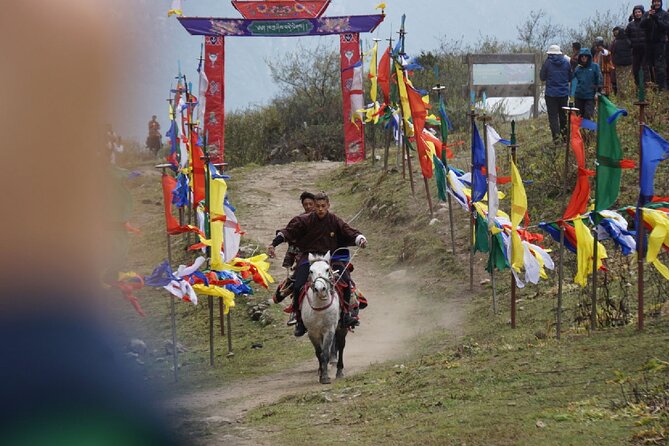
Day 1 feels like Bhutan teaching you its rhythm. You land at Paro International Airport, get met by your guide, and head out right away in a private SUV or van. The first win is that you’re not stuck in a long briefing while your jet lag tries to win. You’re walking.
You start with a visit to Tachogang Lhakhang Bridge, then cross into a riverside temple setting. It’s a short stop, but it does something important: it orients you to how sacred spaces often sit in everyday travel routes. Next, you get to Bhutan Post. You’re not just sightseeing; you’re picking stamps and sending postcards using your own photo. If you like travel keepsakes that aren’t another magnet, this is a great use of time.
Then comes Choki Traditional Art School. You can try painting and sculpting, while you watch local students work. Even if you’re not an artist, you’ll learn fast by copying small techniques and paying attention to how the tools are used. I like this kind of “do it” cultural stop because it makes the rest of the trip more meaningful. You’re preparing your eyes for the details you’ll see later—masks, textiles, butter-lamp lighting, prayer-flag-style rituals.
Possible drawback to keep in mind: day 1 is packed, so build in a little patience if you’re sensitive to early starts.
Thimphu on a schedule: yoga court, takin, and the archery ground
Your Thimphu day reads like a perfect sampler platter—only it’s not random. It’s organized around what Bhutan does best: spiritual practice, living nature, and community sports.
Morning begins with Wangdi-tse Monastery, followed by a courtyard yoga session. Even with limited time, the monastery setting helps the yoga feel connected rather than just “a class.” Then you head to Motithang Takin Preserve to meet Bhutan’s national animal. The takin is playful and gentle in the way that makes you smile fast, and the preserve visit keeps the day grounded in real living culture rather than only stone and prayer.
After that, you visit Buddha Dordenma—an encounter designed for quiet attention. Then you move into everyday Bhutan life with the Centenary Farmers Market. It’s a chance to see local produce and handicrafts, and it also gives you a mental reset before returning to city browsing.
Your afternoon includes a break at Ambient Cafe, then a Thimphu city stroll around Norzin Lam with boutiques and cafés. You finish with Changlimithang Stadium & Archery Ground, where you can actually witness Bhutan’s national sport. Watching archery here feels different than watching it on a screen. It’s part of community identity.
What this day does well for your trek: it builds comfort with Bhutan’s pace before altitude and long hiking take over. You’ll also learn how to read the environment—people here walk with intent, and you’ll notice it as your days get harder.
Punakha: dzong views, farmhouse cooking, rafting, and monk rituals
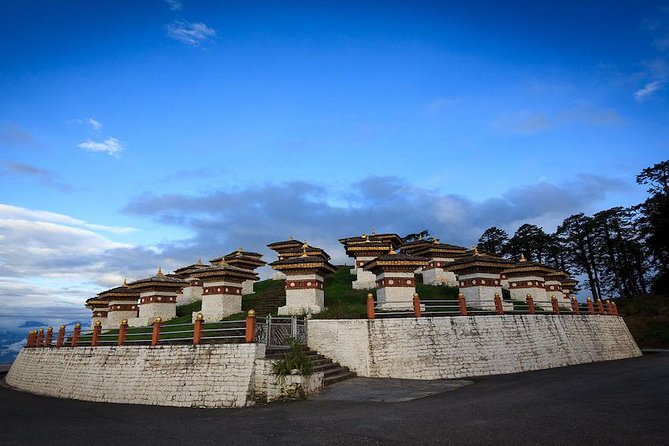
Punakha is where the trip turns from “seeing Bhutan” to “being in Bhutan.” The day pairs big, iconic places with hands-on moments.
First stop: Dochula Pass, where you’ll see 108 chortens framed by Himalayan panoramas. It’s a classic Bhutan photo viewpoint, but the bigger value is how it anchors your sense of place before you go lower and wetter in Punakha. Next, you visit Punakha Dzong, the riverside fortress known as a happiness-focused landmark in Bhutanese tradition.
Then you shift into a cooking class at Aum Leki’s Farmhouse. This is one of the most practical cultural experiences on the whole trip because it teaches how meals are built, not just what meals look like. You prepare traditional recipes with a Bhutanese family and then share the meal together. You’ll taste more because your hands helped make it.
Afternoon activities lean outdoors: a rafting/kayaking adventure on the Mo Chhu River gives you a change of pace and real physical energy without turning it into a “party” day. Later, you get Raven’s signature experience at Raven’s-style ritual time—private blessings, butter lamp lighting, archery, and interaction with monks. You’re not just watching ceremony from a respectful distance; you’re participating in ways that are explained and structured.
Finally, you visit a local school and spend time with students. That stop lands well because it reminds you that Bhutan’s culture is carried by everyday people, not only festival performers.
Consideration: you’ll be juggling multiple activities in one day, so choose comfortable layers and be ready for weather changes.
Rice-field hikes and forest trails: days 4–5 build stamina kindly
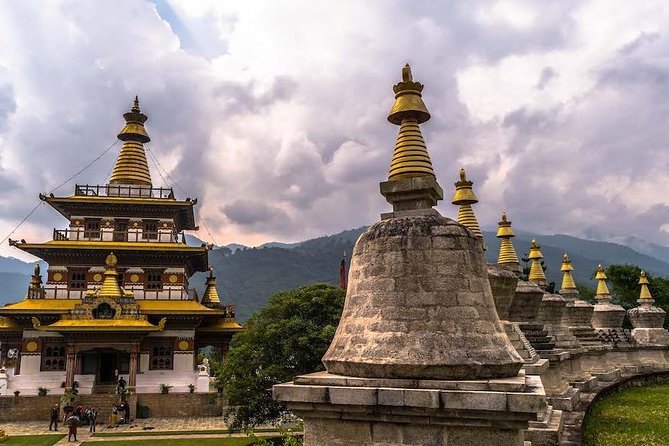
After the Punakha intensity, days 4 and 5 act like training days disguised as culture.
Day 4 begins with a hike through rice fields to Khamsum Yulley Namgyal Chorten. It’s listed as about two hours, and you’ll feel it in your legs—but the valley views make it easier to keep moving. Next you stop at Khuruthang for tea and snacks by the river at Garuda Café. This is a classic Bhutan pacing trick: you earn breaks, and the breaks aren’t just sitting—they’re resetting your body and your attention.
Later you reach more trail time at Lungchotse Hiking Trail, which is a scenic forest and ridge route with panoramic Himalayan views. You’re walking through a mix of trees and open ridges, so your mind stays busy as you alternate between shade and big-air sightlines. You also stop at a café at the Bend for tea and snacks, so you end the day feeling fed, not frazzled.
Why these days matter: they help you transition from city and river activities into the long walking rhythm you need for the Jomolhari trek. You’ll learn how your body responds before the altitude camps.
Paro Taktsang hike plus hot stone bath: the right kind of hard
Paro Taktsang (Tiger’s Nest) is Bhutan’s most famous cliffside temple, and your trip gives it a guided hike over about seven hours. You should treat this as a serious hiking day, even if you’re fit. The path can be steep, and you’ll want good shoes and a steady pace.
The real value is not just reaching the temple—it’s the guided context so you understand what you’re seeing as you climb. When you’re at Paro later, you get a Traditional Hot Stone Bath with herbal soaking in the evening. That’s a smart pairing after Taktsang: it helps your muscles cool down and feel less angry the next day.
After the bath, you still get leisure time in Paro for handicraft shops and cafés. That’s important too. Recovery isn’t only physical; it’s mental. You’ll want a “normal” stroll day right before your mountains days start.
Trek days and camps: Jomolhari Festival country, without guesswork
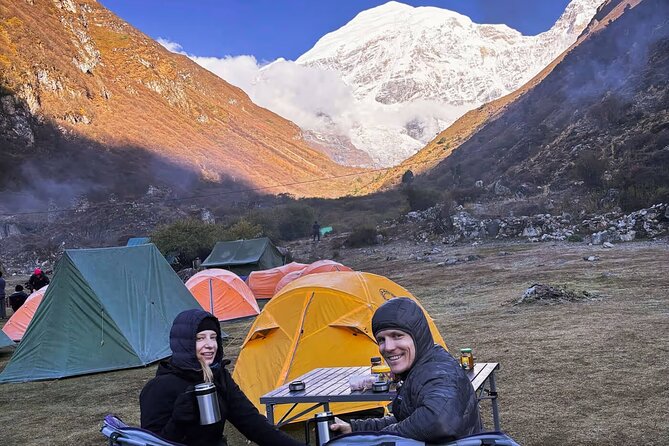
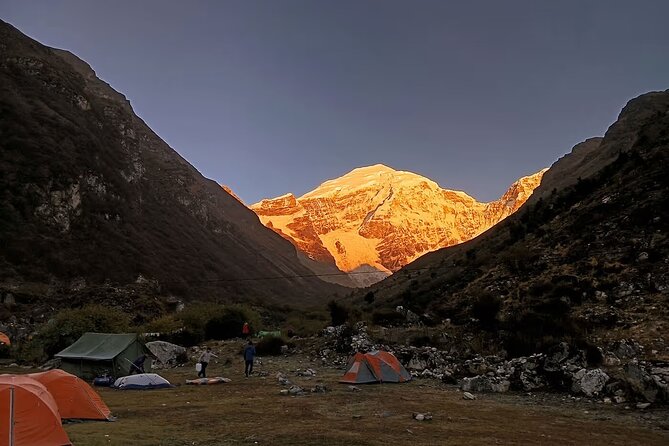
Now the big move: Days 7–11 are built around the Jomolhari trek, plus the festival timing. The trip is clear about what each day’s trekking time looks like and where the camps sit.
On Day 7, you start your journey along river valleys and forest trails through pine and rhododendron areas. You hike to Thangthangkha Camp (listed as about seven hours). This is the day that helps your body accept the rhythm of uphill walking plus the “camp life” feel.
Day 8 shifts into Jomolhari Base Camp / the trek to Jangothang. You get a gradual ascent through highland valleys with yak pastures. It’s listed as 5–6 hours trekking with camp around 4,080m. This is also when the festival experience starts feeling close—not just as an idea, but as an event unfolding in the highlands.
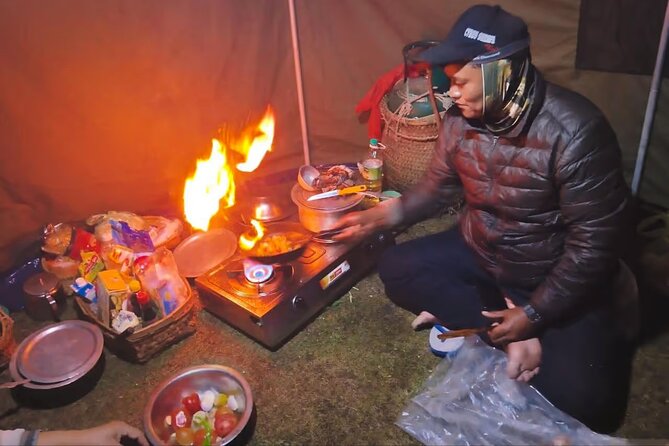
Here’s the big advantage of this tour format: you’re not carrying your own high-altitude logistics. You’ll have branded warm tents, porters, a kitchen crew, and a dining tent setup. That means you can focus on hiking safely and on noticing the small cultural signals around camp.
Festival day at the highlands: masks, performances, and wearing the tradition
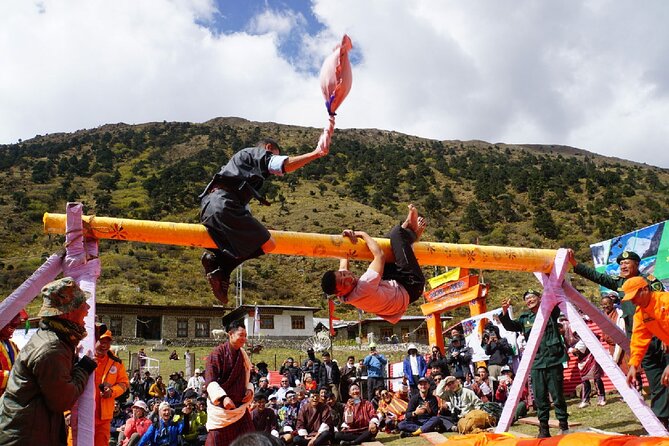
Day 9 is the payoff day: the Jomolhari Mountain Festival. You’ll spend the full day immersed in mask dances, cultural performances, and highland traditions. There’s also guidance for dress-up time. You’re encouraged to wear Bhutanese attire—kira or gho—so you connect more deeply and get better photos.
This matters because festivals in Bhutan are not just costumes on display. They’re part of living ritual practice. When you dress for it, you’re participating in a shared moment rather than viewing it from the outside.
Also, the festival timing works with the trekking schedule. You’re not sprinting to make it happen. Your itinerary builds you up to the day so your energy matches the event.
Practical tip to you: bring a layer that works in cold air. The festival might be lively, but the mountains still run cold after dusk.
Big pass day: Bongtsho La and Takhung La
Days 10 and 11 are the hardest stretches because they focus on ascent across mountain passes.
Day 10 is a long trek from Jangothang (about 7–8 hours). You cross Bongtsho La Pass around 4,890m, with views of Mt. Jomolhari and neighboring peaks. The altitude alone makes these hours feel slower, even if your pace stays steady. You also get a sense of the high ridge world—open air, strong light, and a wide view that makes the work feel worth it.
Day 11 continues with another pass crossing: from Soi Yaksa through alpine ridges and meadows into quieter highlands (about 6–7 hours). You cross Takhung La Pass around 4,520m. Then the day ends with highland meadows as your landing zone.
These days are why moderate fitness matters. You don’t need to be a mountaineer, but you do need to be comfortable with long hiking hours and thin-air challenges. If you have any knee or cardio issues, you’ll want to plan your pacing carefully.
Back to Paro: Thombu Shong descent, wellness, and the final unwind
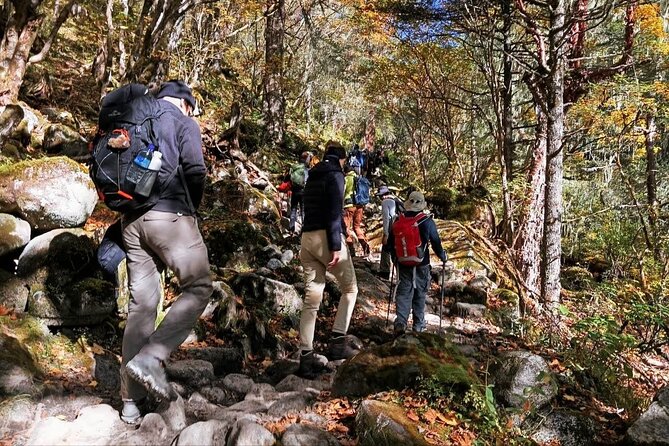
Day 12 switches back to a lower-elevation feel. You trek from Thombu Shong down to Sharna (listed as about 7–8 hours trekking, around 2,850m). The descent day is often mentally tough because your legs work hard controlling steps downhill. Use short strides and don’t let speed steal your focus.
After that, you get a scenic drive back to Paro. The tour includes time for a Bhutanese wellness treatment—about one hour—to help your body reset after days of long walking and camp cold.
Finally, Day 13 is a straightforward wrap: private transfer to Paro International Airport, with time to take off with memories of Bhutan’s culture, landscapes, and festivals.
Price and value: what $5,880.60 buys in real-world terms
At $5,880.60 per person, this is not an inexpensive trip. But you’re paying for a setup that handles a lot of heavy lifting.
You get:
- All meals (including breakfast and dinners) plus tea, coffee, and snacks at hand-selected café stops and during the trekking days.
- Private transportation with A/C and heaters on the vehicle side.
- Seven nights of lodging across boutique hotels, eco-lodges, and family farmhouses.
- Full trekking logistics: warm tents, porters, kitchen crew, and dining tent.
- Entrance fees for monasteries, museums, and parks.
- Bhutan visa fee and Sustainable Development Fee, plus applicable taxes and surcharges.
- Bottled water during the tour.
- Signature Raven experiences, including things like a dress-up photo moment, tree planting, archery participation, hot stone bath, and butter-lamp elements.
This is the key value point for you: high-cost, high-effort travel isn’t only the flight and hotel bill. It’s the logistical complexity—tents, food systems, guides, entrance fees, and timed cultural access.
What you should self-check before booking: the trip calls for moderate fitness. If you’re unsure, this is the kind of itinerary where your body’s readiness matters more than willpower.
Who this trek fits best (and who should reconsider)
This is a strong match if you want:
- A guided, private experience for your group rather than a mixed crowd
- The Jomolhari festival experience paired with days of steady trekking
- Cultural activities that include doing things (like art school work and farmhouse cooking), not just watching
- A tour structure where tents and meals remove most of the logistics stress
This may be less ideal if:
- You dislike long travel days and multi-activity schedules
- You’re not comfortable with 6–8 hour trekking days plus high passes
- You want complete independence day to day (this is clearly a guided, handled-by-the-team setup)
FAQ
FAQ
How long is the Jomolhari Festival Trek & Cultural Immersion?
It runs for about 13 days, combining Bhutan sightseeing and highland trekking with the Jomolhari Mountain Festival.
Where does the tour start and end?
It starts with a Paro International Airport arrival day and ends with a private transfer to Paro International Airport on the final day.
Is pickup included?
Yes. The tour offers pickup and private transfers by SUV or van (and a larger bus for bigger group sizes if applicable).
What level of fitness do you need?
The tour recommends a moderate physical fitness level, since several days include long trekking hours and high-altitude passes.
Is this tour private?
Yes. It’s described as private, meaning only your group participates.
Are meals included?
Yes. All meals are included, and the tour also provides tea, coffee, and snacks at stops listed in the itinerary.
Are entrance fees included?
Yes. Entrance fees for monasteries, museums, and parks are included, along with government fees like the visa fee and Sustainable Development Fee.
What’s not included in the price?
International flights, travel insurance, alcoholic beverages, personal expenses and souvenirs, bank/credit card transaction fees, and gratuities (not mandatory) are not included.
Does weather affect the trek?
Yes. The experience requires good weather, and if it’s canceled due to poor weather, you’re offered a different date or a full refund.
If you want, tell me your trekking experience level and travel month, and I’ll help you sanity-check whether the pass days and timing feel right for you.